Showing posts with label Pastors. Show all posts
Wednesday, February 3, 2021
The Four Chaplains
The Four Chaplains were four United States Army chaplains who gave their lives to save other soldiers during the sinking of the USAT Dorchester during World War II. They helped other soldiers board lifeboats and gave up their own life jackets when the supply ran out; 230 of the 904 men aboard the ship were rescued. Life jackets offered little protection from hypothermia which killed most men in the water. Water temperature was 34 °F (1 °C) and air temperature was 36 °F (2 °C). By the time additional rescue ships arrived "...hundreds of dead bodies were seen floating on the water, kept up by their life jackets."
The chaplains, who all held the rank of lieutenant, were the Methodist Reverend George L. Fox, the Jewish Rabbi Alexander D. Goode, the Roman Catholic Priest John P. Washington and the Reformed Church in America Reverend Clark V. Poling. They were sailing on the USAT Dorchester troop transport on February 3, 1943, when the vessel, travelling in convoy, was torpedoed by the German submarine U-223 in the North Atlantic. As the vessel sank, the four chaplains calmed the frightened soldiers and sailors, aided in the evacuation of the ship, and helped guide wounded men to safety. The chaplains also gave up their own life jackets.
As I swam away from the ship, I looked back. The flares had lighted everything. The bow came up high and she slid under. The last thing I saw, the Four Chaplains were up there praying for the safety of the men. They had done everything they could. I did not see them again. They themselves did not have a chance without their life jackets.—Grady Clark, survivor
On December 19, 1944, all four chaplains were posthumously awarded the Purple Heart and the Distinguished Service Cross. The Four Chaplains' Medal was established by act of Congress on July 14, 1960, and was presented posthumously to their next of kin by Secretary of the Army Wilber M. Brucker at Ft. Myer, Virginia on January 18, 1961.
The chaplains were also honored with a stamp, issued in 1948 and by an act of Congress designating February 3 as "Four Chaplains Day."
The Dorchester Chaplains - 3 February
The Collect
Holy God, who didst inspire the Dorchester Chaplains to be models of steadfast sacrificial love in a tragic and terrifying time: Help us to follow their example, that their courageous ministry may inspire chaplains and all who serve, to recognize thy presence in the midst of peril; through Jesus Christ our Savior, who livest and reignest with thee and the Holy Ghost, one God, for ever and ever. Amen.
The Epistle - Romans 8:15-19, 38-39
For ye have not received the spirit of bondage again to fear; but ye have received the Spirit of adoption, whereby we cry, Abba, Father. The Spirit itself beareth witness with our spirit, that we are the children of God: And if children, then heirs; heirs of God, and joint-heirs with Christ; if so be that we suffer with him, that we may be also glorified together. For I reckon that the sufferings of this present time are not worthy to be compared with the glory which shall be revealed in us. For the earnest expectation of the creature waiteth for the manifestation of the sons of God. For I am persuaded, that neither death, nor life, nor angels, nor principalities, nor powers, nor things present, nor things to come, Nor height, nor depth, nor any other creature, shall be able to separate us from the love of God, which is in Christ Jesus our Lord.
The Holy Gospel - St. John 15:9-14
As the Father hath loved me, so have I loved you: continue ye in my love. If ye keep my commandments, ye shall abide in my love; even as I have kept my Father’s commandments, and abide in his love. These things have I spoken unto you, that my joy might remain in you, and that your joy might be full. This is my commandment, That ye love one another, as I have loved you. Greater love hath no man than this, that a man lay down his life for his friends. Ye are my friends, if ye do whatsoever I command you.
+
Labels:
Christians,
Civil Holidays,
Commemoration,
Faithful,
History,
Holidays,
Jew,
Liturgy,
Memorials,
Pastors,
Prayer,
Priest,
Protestant,
Roman Catholic,
Soldiers,
USA,
War
Tuesday, December 22, 2020
Dwight Lyman Moody
Dwight Lyman Ryther Moody's father died when he was four years old. He became a shoe salesman in Boston and moved to Chicago after his conversion in 1856 where he participated in a Sunday School and a Methodist Church mission group. He founded his own Sunday school there, in 1863 he opened a new Sunday school in the market hall with 1500 pupils and over 60 teachers. Since 1860 he was full-time chairman of the local Christian Association of Young Men and head of his spiritual work. From 1861 he founded a group of 150 clergy and laity, who performed pastoral work among soldiers and prisoners of war. In 1867 he set off for England, where 20,000 people attended the farewell event of the evangelization. His preaching trips in the US were increasingly popular, from 1870 it also involved the singer Ira David Sankey. In a renewed evangelism in England from 1873 to 1875 gathered in the end in London about 50,000 people. These successes in turn strengthened his evangelism work in the United States.
Moody's biggest plan was to use the World's Fair in Chicago for evangelism. Since 1876 he lived in his hometown Northfield , where he founded in 1879 a first seminar for schoolgirls; 1881 followed the Mount Hermon School for young men, 1889 also a Bible Institute in Chicago. Through further evangelism in England between 1881 and 1884 and 1891/92 he exercised great influence there, with his writings he worked to the European mainland.
Moody preached in the course of forty years in front of 20 to 50 million people to his central themes of penance, faith, justification, and rebirth. His organizational skills enabled all local pastors to be encouraged to work together in an alliance when preparing and conducting his crusades.
Dwight L. Moody - 22 December - Evangelist
O God, who hast brought us near to an innumerable company of angels and to the spirits of just people made perfect: Grant us during our earthly pilgrimage to abide in their fellowship, and in our heavenly country to become partakers of their joy; through Jesus Christ our Lord, who liveth and reigneth with thee and the Holy Ghost, one God, now and for ever. Amen.
The Epistle - Philippians 4:4-9
The Holy Gospel - St. Luke 6:17-23
+
Friday, September 18, 2020
George MacDonald
is not very well known in today the Rev. MacDonald had an impact on one of the greatest generations of Christian writers and apologists including C.S. Lewis, J.R.R. Tolkien and G.K. Chesterton.
Born on December 10, 1824 at Huntly, Aberdeenshire, Scotland, the son of a farmer, and one of the MacDonalds of Glen Coe, the Doric dialect of the area appears in the dialog of some of his non-fantasy novels. He was raised in the Congregationalist denomination but had problems with aspects of Calvinist doctrine, such as predestination.
MacDonald took a degree from the University of Aberdeen and then to Highbury College (London) to prepare for the ministry in the Congregational Church.
In 1850 he was appointed Pastor of Trinity Church (Arundel), but due to the lack of strict adherence to Calvinist principles in his preaching, he soon fell out of favor with that congregation. Later he moved to Manchester to do ministerial work, but had to leave for health reasons.
With leaving his full-time work in ministry, MacDonald began to spend more time writing, editing and lecturing, including a trip to the United States in 1872-1873, where he befriended Mark Twain, Henry Wadsworth Longfellow and Walt Whitman. Most of the great British and American writers of the 19th century where either acquaintances or friends of MacDonald, including Dickens and Tennyson.
MacDonald though best known for his fantasy writing, had a great impact on Christian theology and apologetics with his work Unspoken Sermons.
MacDonald died 18 September 1905 in Ashtead, Surrey, England and is Bordighera, Italy next to his wife. MacDonald's legacy was carried on by his son Greville MacDonald (a medical specialist and novelist) and his grandson Philip MacDonald (a screenwriter).
Prayer.
Heavenly Father who bestowest gifts and talents upon men, we thank thee for blessing us with those who use their gifts for thy service and glory; remember Lord thy servant George MacDonald and by his example, we may also be useful to thee with the talents that thou hast given unto us. This we ask in the name of Our Lord and Saviour, Jesus Christ. Amen.
Reference and Resources:
http://en.wikipedia.org/wiki/George_MacDonald
http://www.ccel.org/m/macdonald
†
Saturday, July 18, 2020
Paul Schneider
Schneider was born in Pferdsfeld, Germany in 1897, the second of three sons born to Gustav-Adolf Schneider and Elisabeth Schnorr. He had a strong love for his mother and a great respect for his father, who was a pastor and an ardent patriot. Following military service in World War I,
Schneider began his theological studies and was ordained in Hochelheim in 1925. The following year, he married Margarete Dieterich, the daughter of a pastor. In 1927, the couple had their first son, followed by a daughter and four more sons.
When President Paul von Hindenburg named Adolf Hitler Chancellor in 1933, Schneider was the pastor of the Hochelheim congregation, having succeeded his father who died in 1926. Initially, Pastor Schneider believed that the new Chancellor, with the help of divine guidance, would lead Germany into a bright future. It did not take long for him to perceive the true character of Adolf Hitler and the Nazi regime. Schneider did not stand by idly as Nazi leaders ridiculed the morality of the Church. In writing and in preaching, he protested against the vitriol directed against the Church by Nazi officials. Pastor Schneider received no backing from his consistory of the old-Prussian Ecclesiastical Province of the Rhineland, then seated in Koblenz. On the contrary, in order to placate Nazi officials who complained about Pastor Schneider, the consistory transferred him to a remote region of Germany.
Early in 1934, Schneider and his family moved to Dickenschied, where he became a pastor to the Dickenschied and Womrath congregations. That same year, Pastor Schneider became a member of the Confessing Church, a Protestant organization that opposed Adolf Hitler and the Nazi regime. On one occasion at the funeral of a Hitler youth boy a Nazi official said in his speech that the deceased would now be a member of the heavenly storm of Horst Wessel. Pastor Schneider responded that he would not know if a heavenly storm of Horst Wessel existed but the Lord would bless the boy and take him into his realm. After this, the Nazi leader came forward and repeated his words. Pastor Schneider then responded sharply that he would not allow God's word to be adulterated during a Christian ceremony. As a result, he was arrested for one week in June 1934.
In March 1935, Nazi officials took Pastor Schneider into “protective custody” (Schutzhaft), a Nazi euphemism for “arrest” without any judicial warrant. They held him for a few days because he insisted on reading from the pulpit the synodal criticism of the government’s policy toward the Church.
Local Nazi officials summoned Schneider for interrogations twelve times during the winter of 1935/1936. He continued to speak his mind and follow the dictates of his conscience. Some of his friends pleaded with him to avoid confrontation with the Nazis. He responded that he did not seek martyrdom, but that he had to follow his Lord. His primary responsibility was to prepare his family for eternal life – not to ensure their material well-being.
In spring 1937, with the support of members of his presbytery, Pastor Schneider began the process of excommunicating parishioners who, because of their allegiance to the Nazi Party, engaged in conduct which violated congregational discipline. Complaints to Nazi officials by the censured led to the arrest of Pastor Schneider. Following two months in the Koblenz prison, officials released him with the warning not to return to the Rhineland, where his home and parish were located. Pastor Schneider knew that, if he returned to his flock, it would mean imprisonment in a concentration camp. Yet, the night before his release, he read in his Bible the story concerning the crisis confronted by Deborah. When Deborah summoned the twelve tribes together to confront the common enemy, only Naphtali and Zebulun responded. Pastor Schneider saw in this Old Testament story [Judges 5:18] a parallel to the crisis which the Church confronted in Nazi Germany, and he concluded that even if his was a minority voice, he must act in harmony with his conscience, and protest.
Following his release from prison, Pastor Schneider spent two months with his wife and a few family members and friends in Baden-Baden and in Eschbach. He and Margarete returned home for Harvest Thanksgiving (German: Erntedankfest) on October 3, 1937. Pastor Schneider was able to celebrate this occasion with his Dickenschied congregation, but local police arrested him as he journeyed to Womrath for an evening worship service.
Schneider was incarcerated in Buchenwald, near Weimar, on November 27, 1937, just a few months after the camp opened. In the labor commandos, Pastor Schneider watched out for his fellow inmates. After being sentenced to solitary confinement, he preached the good news of the Gospel from the window of his prison cell. He was moved to the cell when he refused to remove his beret in honour of Hitler on the Führer's birthday, April 20, 1938, and to salute the swastika flag. He explained his behaviour by saying "I cannot salute this criminal symbol". He also refused, as he had done earlier, the Hitler salute, saying that "you can only receive salvation (Heil) from the Lord and not from a human being". From his cell, Schneider accused his captors and encouraged his fellow inmates. On one occasion on Easter Sunday, when thousands of prisoners were assembled for mustering, despite being severely handicapped by the previous torture he climbed to the cell window and shouted: "Comrades, listen to me. This is Pastor Schneider. People are tortured and murdered here. So the Lord says, 'I am the resurrection and the life!'" His speech was interrupted by his tormentors. As others had pleaded years earlier, the man who mopped the floors in the solitary confinement building begged Schneider, "Please stop provoking the SS against you... They will beat you to death if you continue preaching from your cell window".
On July 18, 1939, Schneider was murdered with a lethal injection of strophanthin in the camp infirmary. Camp officials notified Margarete Schneider of her husband’s death and she made the long journey from Dickenschied to retrieve his body in a sealed coffin. Despite Gestapo surveillance, hundreds of people and around two hundred fellow pastors attended Pastor Schneider’s funeral, including many members of the Confessing Church. One of the pastors preached at the graveside, “May God grant that the witness of your shepherd, our brother, remain with you and continue to impact on future generations and that it remain vital and bear fruit in the entire Christian Church”.
Paul Schneider - 18 July - Pastor, Confessor, Martyr
The Collect
O Almighty God, by whose grace and power thy holy martyr Paul Schneider, triumphed over suffering and was faithful even unto death: Grant us, who now remember him with thanksgiving, to be so faithful in our witness to thee in this world, that we may receive with him the crown of life; through Jesus Christ our Lord, who liveth and reigneth with thee and the Holy Ghost, one God, for ever and ever. Amen.
The Lesson - Revelation 7:1317
The Holy Gospel - St. Luke 12:212
+
Monday, February 3, 2020
The Four Chaplains
The Four Chaplains were four United States Army chaplains who gave their lives to save other soldiers during the sinking of the USAT Dorchester during World War II. They helped other soldiers board lifeboats and gave up their own life jackets when the supply ran out; 230 of the 904 men aboard the ship were rescued. Life jackets offered little protection from hypothermia which killed most men in the water. Water temperature was 34 °F (1 °C) and air temperature was 36 °F (2 °C). By the time additional rescue ships arrived "...hundreds of dead bodies were seen floating on the water, kept up by their life jackets."
The chaplains, who all held the rank of lieutenant, were the Methodist Reverend George L. Fox, the Jewish Rabbi Alexander D. Goode, the Roman Catholic Priest John P. Washington and the Reformed Church in America Reverend Clark V. Poling. They were sailing on the USAT Dorchester troop transport on February 3, 1943, when the vessel, travelling in convoy, was torpedoed by the German submarine U-223 in the North Atlantic. As the vessel sank, the four chaplains calmed the frightened soldiers and sailors, aided in the evacuation of the ship, and helped guide wounded men to safety. The chaplains also gave up their own life jackets.
As I swam away from the ship, I looked back. The flares had lighted everything. The bow came up high and she slid under. The last thing I saw, the Four Chaplains were up there praying for the safety of the men. They had done everything they could. I did not see them again. They themselves did not have a chance without their life jackets.—Grady Clark, survivor
On December 19, 1944, all four chaplains were posthumously awarded the Purple Heart and the Distinguished Service Cross. The Four Chaplains' Medal was established by act of Congress on July 14, 1960, and was presented posthumously to their next of kin by Secretary of the Army Wilber M. Brucker at Ft. Myer, Virginia on January 18, 1961.
The chaplains were also honored with a stamp, issued in 1948 and by an act of Congress designating February 3 as "Four Chaplains Day."
The Dorchester Chaplains - 3 February
The Collect
Holy God, who didst inspire the Dorchester Chaplains to be models of steadfast sacrificial love in a tragic and terrifying time: Help us to follow their example, that their courageous ministry may inspire chaplains and all who serve, to recognize thy presence in the midst of peril; through Jesus Christ our Savior, who livest and reignest with thee and the Holy Ghost, one God, for ever and ever. Amen.
The Epistle - Romans 8:15-19, 38-39
For ye have not received the spirit of bondage again to fear; but ye have received the Spirit of adoption, whereby we cry, Abba, Father. The Spirit itself beareth witness with our spirit, that we are the children of God: And if children, then heirs; heirs of God, and joint-heirs with Christ; if so be that we suffer with him, that we may be also glorified together. For I reckon that the sufferings of this present time are not worthy to be compared with the glory which shall be revealed in us. For the earnest expectation of the creature waiteth for the manifestation of the sons of God. For I am persuaded, that neither death, nor life, nor angels, nor principalities, nor powers, nor things present, nor things to come, Nor height, nor depth, nor any other creature, shall be able to separate us from the love of God, which is in Christ Jesus our Lord.
The Holy Gospel - St. John 15:9-14
As the Father hath loved me, so have I loved you: continue ye in my love. If ye keep my commandments, ye shall abide in my love; even as I have kept my Father’s commandments, and abide in his love. These things have I spoken unto you, that my joy might remain in you, and that your joy might be full. This is my commandment, That ye love one another, as I have loved you. Greater love hath no man than this, that a man lay down his life for his friends. Ye are my friends, if ye do whatsoever I command you.
+
Labels:
Christians,
Civil Holidays,
Commemoration,
Faithful,
History,
Holidays,
Jew,
Liturgy,
Memorials,
Pastors,
Prayer,
Priest,
Protestant,
Roman Catholic,
Soldiers,
USA,
War
Sunday, December 22, 2019
Dwight Lyman Moody
Dwight Lyman Ryther Moody's father died when he was four years old. He became a shoe salesman in Boston and moved to Chicago after his conversion in 1856 where he participated in a Sunday School and a Methodist Church mission group. He founded his own Sunday school there, in 1863 he opened a new Sunday school in the market hall with 1500 pupils and over 60 teachers. Since 1860 he was full-time chairman of the local Christian Association of Young Men and head of his spiritual work. From 1861 he founded a group of 150 clergy and laity, who performed pastoral work among soldiers and prisoners of war. In 1867 he set off for England, where 20,000 people attended the farewell event of the evangelization. His preaching trips in the US were increasingly popular, from 1870 it also involved the singer Ira David Sankey. In a renewed evangelism in England from 1873 to 1875 gathered in the end in London about 50,000 people. These successes in turn strengthened his evangelism work in the United States.
Moody's biggest plan was to use the World's Fair in Chicago for evangelism. Since 1876 he lived in his hometown Northfield , where he founded in 1879 a first seminar for schoolgirls; 1881 followed the Mount Hermon School for young men, 1889 also a Bible Institute in Chicago. Through further evangelism in England between 1881 and 1884 and 1891/92 he exercised great influence there, with his writings he worked to the European mainland.
Moody preached in the course of forty years in front of 20 to 50 million people to his central themes of penance, faith, justification, and rebirth. His organizational skills enabled all local pastors to be encouraged to work together in an alliance when preparing and conducting his crusades.
Dwight L. Moody - 22 December - Evangelist
O God, who hast brought us near to an innumerable company of angels and to the spirits of just people made perfect: Grant us during our earthly pilgrimage to abide in their fellowship, and in our heavenly country to become partakers of their joy; through Jesus Christ our Lord, who liveth and reigneth with thee and the Holy Ghost, one God, now and for ever. Amen.
The Epistle - Philippians 4:4-9
The Holy Gospel - St. Luke 6:17-23
+
Thursday, July 18, 2019
Paul Schneider
Schneider was born in Pferdsfeld, Germany in 1897, the second of three sons born to Gustav-Adolf Schneider and Elisabeth Schnorr. He had a strong love for his mother and a great respect for his father, who was a pastor and an ardent patriot. Following military service in World War I,
Schneider began his theological studies and was ordained in Hochelheim in 1925. The following year, he married Margarete Dieterich, the daughter of a pastor. In 1927, the couple had their first son, followed by a daughter and four more sons.
When President Paul von Hindenburg named Adolf Hitler Chancellor in 1933, Schneider was the pastor of the Hochelheim congregation, having succeeded his father who died in 1926. Initially, Pastor Schneider believed that the new Chancellor, with the help of divine guidance, would lead Germany into a bright future. It did not take long for him to perceive the true character of Adolf Hitler and the Nazi regime. Schneider did not stand by idly as Nazi leaders ridiculed the morality of the Church. In writing and in preaching, he protested against the vitriol directed against the Church by Nazi officials. Pastor Schneider received no backing from his consistory of the old-Prussian Ecclesiastical Province of the Rhineland, then seated in Koblenz. On the contrary, in order to placate Nazi officials who complained about Pastor Schneider, the consistory transferred him to a remote region of Germany.
Early in 1934, Schneider and his family moved to Dickenschied, where he became a pastor to the Dickenschied and Womrath congregations. That same year, Pastor Schneider became a member of the Confessing Church, a Protestant organization that opposed Adolf Hitler and the Nazi regime. On one occasion at the funeral of a Hitler youth boy a Nazi official said in his speech that the deceased would now be a member of the heavenly storm of Horst Wessel. Pastor Schneider responded that he would not know if a heavenly storm of Horst Wessel existed but the Lord would bless the boy and take him into his realm. After this, the Nazi leader came forward and repeated his words. Pastor Schneider then responded sharply that he would not allow God's word to be adulterated during a Christian ceremony. As a result, he was arrested for one week in June 1934.
In March 1935, Nazi officials took Pastor Schneider into “protective custody” (Schutzhaft), a Nazi euphemism for “arrest” without any judicial warrant. They held him for a few days because he insisted on reading from the pulpit the synodal criticism of the government’s policy toward the Church.
Local Nazi officials summoned Schneider for interrogations twelve times during the winter of 1935/1936. He continued to speak his mind and follow the dictates of his conscience. Some of his friends pleaded with him to avoid confrontation with the Nazis. He responded that he did not seek martyrdom, but that he had to follow his Lord. His primary responsibility was to prepare his family for eternal life – not to ensure their material well-being.
In spring 1937, with the support of members of his presbytery, Pastor Schneider began the process of excommunicating parishioners who, because of their allegiance to the Nazi Party, engaged in conduct which violated congregational discipline. Complaints to Nazi officials by the censured led to the arrest of Pastor Schneider. Following two months in the Koblenz prison, officials released him with the warning not to return to the Rhineland, where his home and parish were located. Pastor Schneider knew that, if he returned to his flock, it would mean imprisonment in a concentration camp. Yet, the night before his release, he read in his Bible the story concerning the crisis confronted by Deborah. When Deborah summoned the twelve tribes together to confront the common enemy, only Naphtali and Zebulun responded. Pastor Schneider saw in this Old Testament story [Judges 5:18] a parallel to the crisis which the Church confronted in Nazi Germany, and he concluded that even if his was a minority voice, he must act in harmony with his conscience, and protest.
Following his release from prison, Pastor Schneider spent two months with his wife and a few family members and friends in Baden-Baden and in Eschbach. He and Margarete returned home for Harvest Thanksgiving (German: Erntedankfest) on October 3, 1937. Pastor Schneider was able to celebrate this occasion with his Dickenschied congregation, but local police arrested him as he journeyed to Womrath for an evening worship service.
Schneider was incarcerated in Buchenwald, near Weimar, on November 27, 1937, just a few months after the camp opened. In the labor commandos, Pastor Schneider watched out for his fellow inmates. After being sentenced to solitary confinement, he preached the good news of the Gospel from the window of his prison cell. He was moved to the cell when he refused to remove his beret in honour of Hitler on the Führer's birthday, April 20, 1938, and to salute the swastika flag. He explained his behaviour by saying "I cannot salute this criminal symbol". He also refused, as he had done earlier, the Hitler salute, saying that "you can only receive salvation (Heil) from the Lord and not from a human being". From his cell, Schneider accused his captors and encouraged his fellow inmates. On one occasion on Easter Sunday, when thousands of prisoners were assembled for mustering, despite being severely handicapped by the previous torture he climbed to the cell window and shouted: "Comrades, listen to me. This is Pastor Schneider. People are tortured and murdered here. So the Lord says, 'I am the resurrection and the life!'" His speech was interrupted by his tormentors. As others had pleaded years earlier, the man who mopped the floors in the solitary confinement building begged Schneider, "Please stop provoking the SS against you... They will beat you to death if you continue preaching from your cell window".
On July 18, 1939, Schneider was murdered with a lethal injection of strophanthin in the camp infirmary. Camp officials notified Margarete Schneider of her husband’s death and she made the long journey from Dickenschied to retrieve his body in a sealed coffin. Despite Gestapo surveillance, hundreds of people and around two hundred fellow pastors attended Pastor Schneider’s funeral, including many members of the Confessing Church. One of the pastors preached at the graveside, “May God grant that the witness of your shepherd, our brother, remain with you and continue to impact on future generations and that it remain vital and bear fruit in the entire Christian Church”.
Paul Schneider - 18 July - Pastor, Confessor, Martyr
The Collect
O Almighty God, by whose grace and power thy holy martyr Paul Schneider, triumphed over suffering and was faithful even unto death: Grant us, who now remember him with thanksgiving, to be so faithful in our witness to thee in this world, that we may receive with him the crown of life; through Jesus Christ our Lord, who liveth and reigneth with thee and the Holy Ghost, one God, for ever and ever. Amen.
The Lesson - Revelation 7:1317
The Holy Gospel - St. Luke 12:212
+
Schneider began his theological studies and was ordained in Hochelheim in 1925. The following year, he married Margarete Dieterich, the daughter of a pastor. In 1927, the couple had their first son, followed by a daughter and four more sons.
When President Paul von Hindenburg named Adolf Hitler Chancellor in 1933, Schneider was the pastor of the Hochelheim congregation, having succeeded his father who died in 1926. Initially, Pastor Schneider believed that the new Chancellor, with the help of divine guidance, would lead Germany into a bright future. It did not take long for him to perceive the true character of Adolf Hitler and the Nazi regime. Schneider did not stand by idly as Nazi leaders ridiculed the morality of the Church. In writing and in preaching, he protested against the vitriol directed against the Church by Nazi officials. Pastor Schneider received no backing from his consistory of the old-Prussian Ecclesiastical Province of the Rhineland, then seated in Koblenz. On the contrary, in order to placate Nazi officials who complained about Pastor Schneider, the consistory transferred him to a remote region of Germany.
Early in 1934, Schneider and his family moved to Dickenschied, where he became a pastor to the Dickenschied and Womrath congregations. That same year, Pastor Schneider became a member of the Confessing Church, a Protestant organization that opposed Adolf Hitler and the Nazi regime. On one occasion at the funeral of a Hitler youth boy a Nazi official said in his speech that the deceased would now be a member of the heavenly storm of Horst Wessel. Pastor Schneider responded that he would not know if a heavenly storm of Horst Wessel existed but the Lord would bless the boy and take him into his realm. After this, the Nazi leader came forward and repeated his words. Pastor Schneider then responded sharply that he would not allow God's word to be adulterated during a Christian ceremony. As a result, he was arrested for one week in June 1934.
In March 1935, Nazi officials took Pastor Schneider into “protective custody” (Schutzhaft), a Nazi euphemism for “arrest” without any judicial warrant. They held him for a few days because he insisted on reading from the pulpit the synodal criticism of the government’s policy toward the Church.
Local Nazi officials summoned Schneider for interrogations twelve times during the winter of 1935/1936. He continued to speak his mind and follow the dictates of his conscience. Some of his friends pleaded with him to avoid confrontation with the Nazis. He responded that he did not seek martyrdom, but that he had to follow his Lord. His primary responsibility was to prepare his family for eternal life – not to ensure their material well-being.
In spring 1937, with the support of members of his presbytery, Pastor Schneider began the process of excommunicating parishioners who, because of their allegiance to the Nazi Party, engaged in conduct which violated congregational discipline. Complaints to Nazi officials by the censured led to the arrest of Pastor Schneider. Following two months in the Koblenz prison, officials released him with the warning not to return to the Rhineland, where his home and parish were located. Pastor Schneider knew that, if he returned to his flock, it would mean imprisonment in a concentration camp. Yet, the night before his release, he read in his Bible the story concerning the crisis confronted by Deborah. When Deborah summoned the twelve tribes together to confront the common enemy, only Naphtali and Zebulun responded. Pastor Schneider saw in this Old Testament story [Judges 5:18] a parallel to the crisis which the Church confronted in Nazi Germany, and he concluded that even if his was a minority voice, he must act in harmony with his conscience, and protest.
Following his release from prison, Pastor Schneider spent two months with his wife and a few family members and friends in Baden-Baden and in Eschbach. He and Margarete returned home for Harvest Thanksgiving (German: Erntedankfest) on October 3, 1937. Pastor Schneider was able to celebrate this occasion with his Dickenschied congregation, but local police arrested him as he journeyed to Womrath for an evening worship service.
Schneider was incarcerated in Buchenwald, near Weimar, on November 27, 1937, just a few months after the camp opened. In the labor commandos, Pastor Schneider watched out for his fellow inmates. After being sentenced to solitary confinement, he preached the good news of the Gospel from the window of his prison cell. He was moved to the cell when he refused to remove his beret in honour of Hitler on the Führer's birthday, April 20, 1938, and to salute the swastika flag. He explained his behaviour by saying "I cannot salute this criminal symbol". He also refused, as he had done earlier, the Hitler salute, saying that "you can only receive salvation (Heil) from the Lord and not from a human being". From his cell, Schneider accused his captors and encouraged his fellow inmates. On one occasion on Easter Sunday, when thousands of prisoners were assembled for mustering, despite being severely handicapped by the previous torture he climbed to the cell window and shouted: "Comrades, listen to me. This is Pastor Schneider. People are tortured and murdered here. So the Lord says, 'I am the resurrection and the life!'" His speech was interrupted by his tormentors. As others had pleaded years earlier, the man who mopped the floors in the solitary confinement building begged Schneider, "Please stop provoking the SS against you... They will beat you to death if you continue preaching from your cell window".
On July 18, 1939, Schneider was murdered with a lethal injection of strophanthin in the camp infirmary. Camp officials notified Margarete Schneider of her husband’s death and she made the long journey from Dickenschied to retrieve his body in a sealed coffin. Despite Gestapo surveillance, hundreds of people and around two hundred fellow pastors attended Pastor Schneider’s funeral, including many members of the Confessing Church. One of the pastors preached at the graveside, “May God grant that the witness of your shepherd, our brother, remain with you and continue to impact on future generations and that it remain vital and bear fruit in the entire Christian Church”.
Paul Schneider - 18 July - Pastor, Confessor, Martyr
The Collect
O Almighty God, by whose grace and power thy holy martyr Paul Schneider, triumphed over suffering and was faithful even unto death: Grant us, who now remember him with thanksgiving, to be so faithful in our witness to thee in this world, that we may receive with him the crown of life; through Jesus Christ our Lord, who liveth and reigneth with thee and the Holy Ghost, one God, for ever and ever. Amen.
The Lesson - Revelation 7:1317
The Holy Gospel - St. Luke 12:212
+
Saturday, December 22, 2018
Dwight Lyman Moody
Dwight Lyman Ryther Moody's father died when he was four years old. He became a shoe salesman in Boston and moved to Chicago after his conversion in 1856 where he participated in a Sunday School and a Methodist Church mission group. He founded his own Sunday school there, in 1863 he opened a new Sunday school in the market hall with 1500 pupils and over 60 teachers. Since 1860 he was full-time chairman of the local Christian Association of Young Men and head of his spiritual work. From 1861 he founded a group of 150 clergy and laity, who performed pastoral work among soldiers and prisoners of war. In 1867 he set off for England, where 20,000 people attended the farewell event of the evangelization. His preaching trips in the US were increasingly popular, from 1870 it also involved the singer Ira David Sankey. In a renewed evangelism in England from 1873 to 1875 gathered in the end in London about 50,000 people. These successes in turn strengthened his evangelism work in the United States.
Moody's biggest plan was to use the World's Fair in Chicago for evangelism. Since 1876 he lived in his hometown Northfield , where he founded in 1879 a first seminar for schoolgirls; 1881 followed the Mount Hermon School for young men, 1889 also a Bible Institute in Chicago. Through further evangelism in England between 1881 and 1884 and 1891/92 he exercised great influence there, with his writings he worked to the European mainland.
Moody preached in the course of forty years in front of 20 to 50 million people to his central themes of penance, faith, justification, and rebirth. His organizational skills enabled all local pastors to be encouraged to work together in an alliance when preparing and conducting his crusades.
Dwight L. Moody - 22 December - Evangelist
O God, who hast brought us near to an innumerable company of angels and to the spirits of just people made perfect: Grant us during our earthly pilgrimage to abide in their fellowship, and in our heavenly country to become partakers of their joy; through Jesus Christ our Lord, who liveth and reigneth with thee and the Holy Ghost, one God, now and for ever. Amen.
The Epistle - Philippians 4:4-9
The Holy Gospel - St. Luke 6:17-23
+
Friday, December 22, 2017
Dwight Lyman Moody
Dwight Lyman Ryther Moody's father died when he was four years old. He became a shoe salesman in Boston and moved to Chicago after his conversion in 1856 where he participated in a Sunday School and a Methodist Church mission group. He founded his own Sunday school there, in 1863 he opened a new Sunday school in the market hall with 1500 pupils and over 60 teachers. Since 1860 he was full-time chairman of the local Christian Association of Young Men and head of his spiritual work. From 1861 he founded a group of 150 clergy and laity, who performed pastoral work among soldiers and prisoners of war. In 1867 he set off for England, where 20,000 people attended the farewell event of the evangelization. His preaching trips in the US were increasingly popular, from 1870 it also involved the singer Ira David Sankey. In a renewed evangelism in England from 1873 to 1875 gathered in the end in London about 50,000 people. These successes in turn strengthened his evangelism work in the United States.
Moody's biggest plan was to use the World's Fair in Chicago for evangelism. Since 1876 he lived in his hometown Northfield , where he founded in 1879 a first seminar for schoolgirls; 1881 followed the Mount Hermon School for young men, 1889 also a Bible Institute in Chicago. Through further evangelism in England between 1881 and 1884 and 1891/92 he exercised great influence there, with his writings he worked to the European mainland.
Moody preached in the course of forty years in front of 20 to 50 million people to his central themes of penance, faith, justification, and rebirth. His organizational skills enabled all local pastors to be encouraged to work together in an alliance when preparing and conducting his crusades.
Dwight L. Moody - 22 December - Evangelist
O God, who hast brought us near to an innumerable company of angels and to the spirits of just people made perfect: Grant us during our earthly pilgrimage to abide in their fellowship, and in our heavenly country to become partakers of their joy; through Jesus Christ our Lord, who liveth and reigneth with thee and the Holy Ghost, one God, now and for ever. Amen.
The Epistle - Philippians 4:4-9
The Holy Gospel - St. Luke 6:17-23
+
Monday, September 18, 2017
George MacDonald
is not very well known in today the Rev. MacDonald had an impact on one of the greatest generations of Christian writers and apologists including C.S. Lewis, J.R.R. Tolkien and G.K. Chesterton.
Born on December 10, 1824 at Huntly, Aberdeenshire, Scotland, the son of a farmer, and one of the MacDonalds of Glen Coe, the Doric dialect of the area appears in the dialog of some of his non-fantasy novels. He was raised in the Congregationalist denomination but had problems with aspects of Calvinist doctrine, such as predestination.
MacDonald took a degree from the University of Aberdeen and then to Highbury College (London) to prepare for the ministry in the Congregational Church.
In 1850 he was appointed Pastor of Trinity Church (Arundel), but due to the lack of strict adherence to Calvinist principles in his preaching, he soon fell out of favor with that congregation. Later he moved to Manchester to do ministerial work, but had to leave for health reasons.
With leaving his full-time work in ministry, MacDonald began to spend more time writing, editing and lecturing, including a trip to the United States in 1872-1873, where he befriended Mark Twain, Henry Wadsworth Longfellow and Walt Whitman. Most of the great British and American writers of the 19th century where either acquaintances or friends of MacDonald, including Dickens and Tennyson.
MacDonald though best known for his fantasy writing, had a great impact on Christian theology and apologetics with his work Unspoken Sermons.
MacDonald died 18 September 1905 in Ashtead, Surrey, England and is Bordighera, Italy next to his wife. MacDonald's legacy was carried on by his son Greville MacDonald (a medical specialist and novelist) and his grandson Philip MacDonald (a screenwriter).
Prayer.
Heavenly Father who bestowest gifts and talents upon men, we thank thee for blessing us with those who use their gifts for thy service and glory; remember Lord thy servant George MacDonald and by his example, we may also be useful to thee with the talents that thou hast given unto us. This we ask in the name of Our Lord and Saviour, Jesus Christ. Amen.
Reference and Resources:
http://en.wikipedia.org/wiki/George_MacDonald
http://www.ccel.org/m/macdonald
†
Tuesday, July 18, 2017
Paul Schneider
Schneider was born in Pferdsfeld, Germany in 1897, the second of three sons born to Gustav-Adolf Schneider and Elisabeth Schnorr. He had a strong love for his mother and a great respect for his father, who was a pastor and an ardent patriot. Following military service in World War I,
Schneider began his theological studies and was ordained in Hochelheim in 1925. The following year, he married Margarete Dieterich, the daughter of a pastor. In 1927, the couple had their first son, followed by a daughter and four more sons.
When President Paul von Hindenburg named Adolf Hitler Chancellor in 1933, Schneider was the pastor of the Hochelheim congregation, having succeeded his father who died in 1926. Initially, Pastor Schneider believed that the new Chancellor, with the help of divine guidance, would lead Germany into a bright future. It did not take long for him to perceive the true character of Adolf Hitler and the Nazi regime. Schneider did not stand by idly as Nazi leaders ridiculed the morality of the Church. In writing and in preaching, he protested against the vitriol directed against the Church by Nazi officials. Pastor Schneider received no backing from his consistory of the old-Prussian Ecclesiastical Province of the Rhineland, then seated in Koblenz. On the contrary, in order to placate Nazi officials who complained about Pastor Schneider, the consistory transferred him to a remote region of Germany.
Early in 1934, Schneider and his family moved to Dickenschied, where he became a pastor to the Dickenschied and Womrath congregations. That same year, Pastor Schneider became a member of the Confessing Church, a Protestant organization that opposed Adolf Hitler and the Nazi regime. On one occasion at the funeral of a Hitler youth boy a Nazi official said in his speech that the deceased would now be a member of the heavenly storm of Horst Wessel. Pastor Schneider responded that he would not know if a heavenly storm of Horst Wessel existed but the Lord would bless the boy and take him into his realm. After this, the Nazi leader came forward and repeated his words. Pastor Schneider then responded sharply that he would not allow God's word to be adulterated during a Christian ceremony. As a result, he was arrested for one week in June 1934.
In March 1935, Nazi officials took Pastor Schneider into “protective custody” (Schutzhaft), a Nazi euphemism for “arrest” without any judicial warrant. They held him for a few days because he insisted on reading from the pulpit the synodal criticism of the government’s policy toward the Church.
Local Nazi officials summoned Schneider for interrogations twelve times during the winter of 1935/1936. He continued to speak his mind and follow the dictates of his conscience. Some of his friends pleaded with him to avoid confrontation with the Nazis. He responded that he did not seek martyrdom, but that he had to follow his Lord. His primary responsibility was to prepare his family for eternal life – not to ensure their material well-being.
In spring 1937, with the support of members of his presbytery, Pastor Schneider began the process of excommunicating parishioners who, because of their allegiance to the Nazi Party, engaged in conduct which violated congregational discipline. Complaints to Nazi officials by the censured led to the arrest of Pastor Schneider. Following two months in the Koblenz prison, officials released him with the warning not to return to the Rhineland, where his home and parish were located. Pastor Schneider knew that, if he returned to his flock, it would mean imprisonment in a concentration camp. Yet, the night before his release, he read in his Bible the story concerning the crisis confronted by Deborah. When Deborah summoned the twelve tribes together to confront the common enemy, only Naphtali and Zebulun responded. Pastor Schneider saw in this Old Testament story [Judges 5:18] a parallel to the crisis which the Church confronted in Nazi Germany, and he concluded that even if his was a minority voice, he must act in harmony with his conscience, and protest.
Following his release from prison, Pastor Schneider spent two months with his wife and a few family members and friends in Baden-Baden and in Eschbach. He and Margarete returned home for Harvest Thanksgiving (German: Erntedankfest) on October 3, 1937. Pastor Schneider was able to celebrate this occasion with his Dickenschied congregation, but local police arrested him as he journeyed to Womrath for an evening worship service.
Schneider was incarcerated in Buchenwald, near Weimar, on November 27, 1937, just a few months after the camp opened. In the labor commandos, Pastor Schneider watched out for his fellow inmates. After being sentenced to solitary confinement, he preached the good news of the Gospel from the window of his prison cell. He was moved to the cell when he refused to remove his beret in honour of Hitler on the Führer's birthday, April 20, 1938, and to salute the swastika flag. He explained his behaviour by saying "I cannot salute this criminal symbol". He also refused, as he had done earlier, the Hitler salute, saying that "you can only receive salvation (Heil) from the Lord and not from a human being". From his cell, Schneider accused his captors and encouraged his fellow inmates. On one occasion on Easter Sunday, when thousands of prisoners were assembled for mustering, despite being severely handicapped by the previous torture he climbed to the cell window and shouted: "Comrades, listen to me. This is Pastor Schneider. People are tortured and murdered here. So the Lord says, 'I am the resurrection and the life!'" His speech was interrupted by his tormentors. As others had pleaded years earlier, the man who mopped the floors in the solitary confinement building begged Schneider, "Please stop provoking the SS against you... They will beat you to death if you continue preaching from your cell window".
On July 18, 1939, Schneider was murdered with a lethal injection of strophanthin in the camp infirmary. Camp officials notified Margarete Schneider of her husband’s death and she made the long journey from Dickenschied to retrieve his body in a sealed coffin. Despite Gestapo surveillance, hundreds of people and around two hundred fellow pastors attended Pastor Schneider’s funeral, including many members of the Confessing Church. One of the pastors preached at the graveside, “May God grant that the witness of your shepherd, our brother, remain with you and continue to impact on future generations and that it remain vital and bear fruit in the entire Christian Church”.
Paul Schneider - 18 July - Pastor, Confessor, Martyr
The Collect
O Almighty God, by whose grace and power thy holy martyr Paul Schneider, triumphed over suffering and was faithful even unto death: Grant us, who now remember him with thanksgiving, to be so faithful in our witness to thee in this world, that we may receive with him the crown of life; through Jesus Christ our Lord, who liveth and reigneth with thee and the Holy Ghost, one God, for ever and ever. Amen.
The Lesson - Revelation 7:1317
The Holy Gospel - St. Luke 12:212
+
Schneider began his theological studies and was ordained in Hochelheim in 1925. The following year, he married Margarete Dieterich, the daughter of a pastor. In 1927, the couple had their first son, followed by a daughter and four more sons.
When President Paul von Hindenburg named Adolf Hitler Chancellor in 1933, Schneider was the pastor of the Hochelheim congregation, having succeeded his father who died in 1926. Initially, Pastor Schneider believed that the new Chancellor, with the help of divine guidance, would lead Germany into a bright future. It did not take long for him to perceive the true character of Adolf Hitler and the Nazi regime. Schneider did not stand by idly as Nazi leaders ridiculed the morality of the Church. In writing and in preaching, he protested against the vitriol directed against the Church by Nazi officials. Pastor Schneider received no backing from his consistory of the old-Prussian Ecclesiastical Province of the Rhineland, then seated in Koblenz. On the contrary, in order to placate Nazi officials who complained about Pastor Schneider, the consistory transferred him to a remote region of Germany.
Early in 1934, Schneider and his family moved to Dickenschied, where he became a pastor to the Dickenschied and Womrath congregations. That same year, Pastor Schneider became a member of the Confessing Church, a Protestant organization that opposed Adolf Hitler and the Nazi regime. On one occasion at the funeral of a Hitler youth boy a Nazi official said in his speech that the deceased would now be a member of the heavenly storm of Horst Wessel. Pastor Schneider responded that he would not know if a heavenly storm of Horst Wessel existed but the Lord would bless the boy and take him into his realm. After this, the Nazi leader came forward and repeated his words. Pastor Schneider then responded sharply that he would not allow God's word to be adulterated during a Christian ceremony. As a result, he was arrested for one week in June 1934.
In March 1935, Nazi officials took Pastor Schneider into “protective custody” (Schutzhaft), a Nazi euphemism for “arrest” without any judicial warrant. They held him for a few days because he insisted on reading from the pulpit the synodal criticism of the government’s policy toward the Church.
Local Nazi officials summoned Schneider for interrogations twelve times during the winter of 1935/1936. He continued to speak his mind and follow the dictates of his conscience. Some of his friends pleaded with him to avoid confrontation with the Nazis. He responded that he did not seek martyrdom, but that he had to follow his Lord. His primary responsibility was to prepare his family for eternal life – not to ensure their material well-being.
In spring 1937, with the support of members of his presbytery, Pastor Schneider began the process of excommunicating parishioners who, because of their allegiance to the Nazi Party, engaged in conduct which violated congregational discipline. Complaints to Nazi officials by the censured led to the arrest of Pastor Schneider. Following two months in the Koblenz prison, officials released him with the warning not to return to the Rhineland, where his home and parish were located. Pastor Schneider knew that, if he returned to his flock, it would mean imprisonment in a concentration camp. Yet, the night before his release, he read in his Bible the story concerning the crisis confronted by Deborah. When Deborah summoned the twelve tribes together to confront the common enemy, only Naphtali and Zebulun responded. Pastor Schneider saw in this Old Testament story [Judges 5:18] a parallel to the crisis which the Church confronted in Nazi Germany, and he concluded that even if his was a minority voice, he must act in harmony with his conscience, and protest.
Following his release from prison, Pastor Schneider spent two months with his wife and a few family members and friends in Baden-Baden and in Eschbach. He and Margarete returned home for Harvest Thanksgiving (German: Erntedankfest) on October 3, 1937. Pastor Schneider was able to celebrate this occasion with his Dickenschied congregation, but local police arrested him as he journeyed to Womrath for an evening worship service.
Schneider was incarcerated in Buchenwald, near Weimar, on November 27, 1937, just a few months after the camp opened. In the labor commandos, Pastor Schneider watched out for his fellow inmates. After being sentenced to solitary confinement, he preached the good news of the Gospel from the window of his prison cell. He was moved to the cell when he refused to remove his beret in honour of Hitler on the Führer's birthday, April 20, 1938, and to salute the swastika flag. He explained his behaviour by saying "I cannot salute this criminal symbol". He also refused, as he had done earlier, the Hitler salute, saying that "you can only receive salvation (Heil) from the Lord and not from a human being". From his cell, Schneider accused his captors and encouraged his fellow inmates. On one occasion on Easter Sunday, when thousands of prisoners were assembled for mustering, despite being severely handicapped by the previous torture he climbed to the cell window and shouted: "Comrades, listen to me. This is Pastor Schneider. People are tortured and murdered here. So the Lord says, 'I am the resurrection and the life!'" His speech was interrupted by his tormentors. As others had pleaded years earlier, the man who mopped the floors in the solitary confinement building begged Schneider, "Please stop provoking the SS against you... They will beat you to death if you continue preaching from your cell window".
On July 18, 1939, Schneider was murdered with a lethal injection of strophanthin in the camp infirmary. Camp officials notified Margarete Schneider of her husband’s death and she made the long journey from Dickenschied to retrieve his body in a sealed coffin. Despite Gestapo surveillance, hundreds of people and around two hundred fellow pastors attended Pastor Schneider’s funeral, including many members of the Confessing Church. One of the pastors preached at the graveside, “May God grant that the witness of your shepherd, our brother, remain with you and continue to impact on future generations and that it remain vital and bear fruit in the entire Christian Church”.
Paul Schneider - 18 July - Pastor, Confessor, Martyr
The Collect
O Almighty God, by whose grace and power thy holy martyr Paul Schneider, triumphed over suffering and was faithful even unto death: Grant us, who now remember him with thanksgiving, to be so faithful in our witness to thee in this world, that we may receive with him the crown of life; through Jesus Christ our Lord, who liveth and reigneth with thee and the Holy Ghost, one God, for ever and ever. Amen.
The Lesson - Revelation 7:1317
The Holy Gospel - St. Luke 12:212
+
Sunday, September 18, 2016
George MacDonald
is not very well known in today the Rev. MacDonald had an impact on one of the greatest generations of Christian writers and apologists including C.S. Lewis, J.R.R. Tolkien and G.K. Chesterton.Born on December 10, 1824 at Huntly, Aberdeenshire, Scotland, the son of a farmer, and one of the MacDonalds of Glen Coe, the Doric dialect of the area appears in the dialog of some of his non-fantasy novels. He was raised in the Congregationalist denomination but had problems with aspects of Calvinist doctrine, such as predestination.
MacDonald took a degree from the University of Aberdeen and then to Highbury College (London) to prepare for the ministry in the Congregational Church.
In 1850 he was appointed Pastor of Trinity Church (Arundel), but due to the lack of strict adherence to Calvinist principles in his preaching, he soon fell out of favor with that congregation. Later he moved to Manchester to do ministerial work, but had to leave for health reasons.
With leaving his full-time work in ministry, MacDonald began to spend more time writing, editing and lecturing, including a trip to the United States in 1872-1873, where he befriended Mark Twain, Henry Wadsworth Longfellow and Walt Whitman. Most of the great British and American writers of the 19th century where either acquaintances or friends of MacDonald, including Dickens and Tennyson.
MacDonald though best known for his fantasy writing, had a great impact on Christian theology and apologetics with his work Unspoken Sermons.
MacDonald died 18 September 1905 in Ashtead, Surrey, England and is Bordighera, Italy next to his wife. MacDonald's legacy was carried on by his son Greville MacDonald (a medical specialist and novelist) and his grandson Philip MacDonald (a screenwriter).
Prayer.
Heavenly Father who bestowest gifts and talents upon men, we thank thee for blessing us with those who use thier gifts for thy service and glory; remember Lord thy servant George MacDonald and by his example, we may also be useful to thee with the talents that thou hast given unto us. This we ask in the name of Our Lord and Saviour, Jesus Christ. Amen.
Reference and Resources:
http://en.wikipedia.org/wiki/George_MacDonald
http://www.ccel.org/m/macdonald
†
Monday, July 18, 2016
Paul Schneider
Schneider was born in Pferdsfeld, Germany in 1897, the second of three sons born to Gustav-Adolf Schneider and Elisabeth Schnorr. He had a strong love for his mother and a great respect for his father, who was a pastor and an ardent patriot. Following military service in World War I,
Schneider began his theological studies and was ordained in Hochelheim in 1925. The following year, he married Margarete Dieterich, the daughter of a pastor. In 1927, the couple had their first son, followed by a daughter and four more sons.
When President Paul von Hindenburg named Adolf Hitler Chancellor in 1933, Schneider was the pastor of the Hochelheim congregation, having succeeded his father who died in 1926. Initially, Pastor Schneider believed that the new Chancellor, with the help of divine guidance, would lead Germany into a bright future. It did not take long for him to perceive the true character of Adolf Hitler and the Nazi regime. Schneider did not stand by idly as Nazi leaders ridiculed the morality of the Church. In writing and in preaching, he protested against the vitriol directed against the Church by Nazi officials. Pastor Schneider received no backing from his consistory of the old-Prussian Ecclesiastical Province of the Rhineland, then seated in Koblenz. On the contrary, in order to placate Nazi officials who complained about Pastor Schneider, the consistory transferred him to a remote region of Germany.
Early in 1934, Schneider and his family moved to Dickenschied, where he became a pastor to the Dickenschied and Womrath congregations. That same year, Pastor Schneider became a member of the Confessing Church, a Protestant organization that opposed Adolf Hitler and the Nazi regime. On one occasion at the funeral of a Hitler youth boy a Nazi official said in his speech that the deceased would now be a member of the heavenly storm of Horst Wessel. Pastor Schneider responded that he would not know if a heavenly storm of Horst Wessel existed but the Lord would bless the boy and take him into his realm. After this, the Nazi leader came forward and repeated his words. Pastor Schneider then responded sharply that he would not allow God's word to be adulterated during a Christian ceremony. As a result, he was arrested for one week in June 1934.
In March 1935, Nazi officials took Pastor Schneider into “protective custody” (Schutzhaft), a Nazi euphemism for “arrest” without any judicial warrant. They held him for a few days because he insisted on reading from the pulpit the synodal criticism of the government’s policy toward the Church.
Local Nazi officials summoned Schneider for interrogations twelve times during the winter of 1935/1936. He continued to speak his mind and follow the dictates of his conscience. Some of his friends pleaded with him to avoid confrontation with the Nazis. He responded that he did not seek martyrdom, but that he had to follow his Lord. His primary responsibility was to prepare his family for eternal life – not to ensure their material well-being.
In spring 1937, with the support of members of his presbytery, Pastor Schneider began the process of excommunicating parishioners who, because of their allegiance to the Nazi Party, engaged in conduct which violated congregational discipline. Complaints to Nazi officials by the censured led to the arrest of Pastor Schneider. Following two months in the Koblenz prison, officials released him with the warning not to return to the Rhineland, where his home and parish were located. Pastor Schneider knew that, if he returned to his flock, it would mean imprisonment in a concentration camp. Yet, the night before his release, he read in his Bible the story concerning the crisis confronted by Deborah. When Deborah summoned the twelve tribes together to confront the common enemy, only Naphtali and Zebulun responded. Pastor Schneider saw in this Old Testament story [Judges 5:18] a parallel to the crisis which the Church confronted in Nazi Germany, and he concluded that even if his was a minority voice, he must act in harmony with his conscience, and protest.
Following his release from prison, Pastor Schneider spent two months with his wife and a few family members and friends in Baden-Baden and in Eschbach. He and Margarete returned home for Harvest Thanksgiving (German: Erntedankfest) on October 3, 1937. Pastor Schneider was able to celebrate this occasion with his Dickenschied congregation, but local police arrested him as he journeyed to Womrath for an evening worship service.
Schneider was incarcerated in Buchenwald, near Weimar, on November 27, 1937, just a few months after the camp opened. In the labor commandos, Pastor Schneider watched out for his fellow inmates. After being sentenced to solitary confinement, he preached the good news of the Gospel from the window of his prison cell. He was moved to the cell when he refused to remove his beret in honour of Hitler on the Führer's birthday, April 20, 1938, and to salute the swastika flag. He explained his behaviour by saying "I cannot salute this criminal symbol". He also refused, as he had done earlier, the Hitler salute, saying that "you can only receive salvation (Heil) from the Lord and not from a human being". From his cell, Schneider accused his captors and encouraged his fellow inmates. On one occasion on Easter Sunday, when thousands of prisoners were assembled for mustering, despite being severely handicapped by the previous torture he climbed to the cell window and shouted: "Comrades, listen to me. This is Pastor Schneider. People are tortured and murdered here. So the Lord says, 'I am the resurrection and the life!'" His speech was interrupted by his tormentors. As others had pleaded years earlier, the man who mopped the floors in the solitary confinement building begged Schneider, "Please stop provoking the SS against you... They will beat you to death if you continue preaching from your cell window".
On July 18, 1939, Schneider was murdered with a lethal injection of strophanthin in the camp infirmary. Camp officials notified Margarete Schneider of her husband’s death and she made the long journey from Dickenschied to retrieve his body in a sealed coffin. Despite Gestapo surveillance, hundreds of people and around two hundred fellow pastors attended Pastor Schneider’s funeral, including many members of the Confessing Church. One of the pastors preached at the graveside, “May God grant that the witness of your shepherd, our brother, remain with you and continue to impact on future generations and that it remain vital and bear fruit in the entire Christian Church”.
Paul Schneider - 18 July - Pastor, Confessor, Martyr
The Collect
O Almighty God, by whose grace and power thy holy martyr Paul Schneider, triumphed over suffering and was faithful even unto death: Grant us, who now remember him with thanksgiving, to be so faithful in our witness to thee in this world, that we may receive with him the crown of life; through Jesus Christ our Lord, who liveth and reigneth with thee and the Holy Ghost, one God, for ever and ever. Amen.
The Lesson - Revelation 7:1317
The Holy Gospel - St. Luke 12:212
+
Schneider began his theological studies and was ordained in Hochelheim in 1925. The following year, he married Margarete Dieterich, the daughter of a pastor. In 1927, the couple had their first son, followed by a daughter and four more sons.
When President Paul von Hindenburg named Adolf Hitler Chancellor in 1933, Schneider was the pastor of the Hochelheim congregation, having succeeded his father who died in 1926. Initially, Pastor Schneider believed that the new Chancellor, with the help of divine guidance, would lead Germany into a bright future. It did not take long for him to perceive the true character of Adolf Hitler and the Nazi regime. Schneider did not stand by idly as Nazi leaders ridiculed the morality of the Church. In writing and in preaching, he protested against the vitriol directed against the Church by Nazi officials. Pastor Schneider received no backing from his consistory of the old-Prussian Ecclesiastical Province of the Rhineland, then seated in Koblenz. On the contrary, in order to placate Nazi officials who complained about Pastor Schneider, the consistory transferred him to a remote region of Germany.
Early in 1934, Schneider and his family moved to Dickenschied, where he became a pastor to the Dickenschied and Womrath congregations. That same year, Pastor Schneider became a member of the Confessing Church, a Protestant organization that opposed Adolf Hitler and the Nazi regime. On one occasion at the funeral of a Hitler youth boy a Nazi official said in his speech that the deceased would now be a member of the heavenly storm of Horst Wessel. Pastor Schneider responded that he would not know if a heavenly storm of Horst Wessel existed but the Lord would bless the boy and take him into his realm. After this, the Nazi leader came forward and repeated his words. Pastor Schneider then responded sharply that he would not allow God's word to be adulterated during a Christian ceremony. As a result, he was arrested for one week in June 1934.
In March 1935, Nazi officials took Pastor Schneider into “protective custody” (Schutzhaft), a Nazi euphemism for “arrest” without any judicial warrant. They held him for a few days because he insisted on reading from the pulpit the synodal criticism of the government’s policy toward the Church.
Local Nazi officials summoned Schneider for interrogations twelve times during the winter of 1935/1936. He continued to speak his mind and follow the dictates of his conscience. Some of his friends pleaded with him to avoid confrontation with the Nazis. He responded that he did not seek martyrdom, but that he had to follow his Lord. His primary responsibility was to prepare his family for eternal life – not to ensure their material well-being.
In spring 1937, with the support of members of his presbytery, Pastor Schneider began the process of excommunicating parishioners who, because of their allegiance to the Nazi Party, engaged in conduct which violated congregational discipline. Complaints to Nazi officials by the censured led to the arrest of Pastor Schneider. Following two months in the Koblenz prison, officials released him with the warning not to return to the Rhineland, where his home and parish were located. Pastor Schneider knew that, if he returned to his flock, it would mean imprisonment in a concentration camp. Yet, the night before his release, he read in his Bible the story concerning the crisis confronted by Deborah. When Deborah summoned the twelve tribes together to confront the common enemy, only Naphtali and Zebulun responded. Pastor Schneider saw in this Old Testament story [Judges 5:18] a parallel to the crisis which the Church confronted in Nazi Germany, and he concluded that even if his was a minority voice, he must act in harmony with his conscience, and protest.
Following his release from prison, Pastor Schneider spent two months with his wife and a few family members and friends in Baden-Baden and in Eschbach. He and Margarete returned home for Harvest Thanksgiving (German: Erntedankfest) on October 3, 1937. Pastor Schneider was able to celebrate this occasion with his Dickenschied congregation, but local police arrested him as he journeyed to Womrath for an evening worship service.
Schneider was incarcerated in Buchenwald, near Weimar, on November 27, 1937, just a few months after the camp opened. In the labor commandos, Pastor Schneider watched out for his fellow inmates. After being sentenced to solitary confinement, he preached the good news of the Gospel from the window of his prison cell. He was moved to the cell when he refused to remove his beret in honour of Hitler on the Führer's birthday, April 20, 1938, and to salute the swastika flag. He explained his behaviour by saying "I cannot salute this criminal symbol". He also refused, as he had done earlier, the Hitler salute, saying that "you can only receive salvation (Heil) from the Lord and not from a human being". From his cell, Schneider accused his captors and encouraged his fellow inmates. On one occasion on Easter Sunday, when thousands of prisoners were assembled for mustering, despite being severely handicapped by the previous torture he climbed to the cell window and shouted: "Comrades, listen to me. This is Pastor Schneider. People are tortured and murdered here. So the Lord says, 'I am the resurrection and the life!'" His speech was interrupted by his tormentors. As others had pleaded years earlier, the man who mopped the floors in the solitary confinement building begged Schneider, "Please stop provoking the SS against you... They will beat you to death if you continue preaching from your cell window".
On July 18, 1939, Schneider was murdered with a lethal injection of strophanthin in the camp infirmary. Camp officials notified Margarete Schneider of her husband’s death and she made the long journey from Dickenschied to retrieve his body in a sealed coffin. Despite Gestapo surveillance, hundreds of people and around two hundred fellow pastors attended Pastor Schneider’s funeral, including many members of the Confessing Church. One of the pastors preached at the graveside, “May God grant that the witness of your shepherd, our brother, remain with you and continue to impact on future generations and that it remain vital and bear fruit in the entire Christian Church”.
Paul Schneider - 18 July - Pastor, Confessor, Martyr
The Collect
O Almighty God, by whose grace and power thy holy martyr Paul Schneider, triumphed over suffering and was faithful even unto death: Grant us, who now remember him with thanksgiving, to be so faithful in our witness to thee in this world, that we may receive with him the crown of life; through Jesus Christ our Lord, who liveth and reigneth with thee and the Holy Ghost, one God, for ever and ever. Amen.
The Lesson - Revelation 7:1317
The Holy Gospel - St. Luke 12:212
+
Friday, September 18, 2015
George MacDonald
is not very well known in today the Rev. MacDonald had an impact on one of the greatest generations of Christian writers and apologists including C.S. Lewis, J.R.R. Tolkien and G.K. Chesterton.Born on December 10, 1824 at Huntly, Aberdeenshire, Scotland, the son of a farmer, and one of the MacDonalds of Glen Coe, the Doric dialect of the area appears in the dialog of some of his non-fantasy novels. He was raised in the Congregationalist denomination but had problems with aspects of Calvinist doctrine, such as predestination.
MacDonald took a degree from the University of Aberdeen and then to Highbury College (London) to prepare for the ministry in the Congregational Church.
In 1850 he was appointed Pastor of Trinity Church (Arundel), but due to the lack of strict adherence to Calvinist principles in his preaching, he soon fell out of favor with that congregation. Later he moved to Manchester to do ministerial work, but had to leave for health reasons.
With leaving his full-time work in ministry, MacDonald began to spend more time writing, editing and lecturing, including a trip to the United States in 1872-1873, where he befriended Mark Twain, Henry Wadsworth Longfellow and Walt Whitman. Most of the great British and American writers of the 19th century where either acquaintances or friends of MacDonald, including Dickens and Tennyson.
MacDonald though best known for his fantasy writing, had a great impact on Christian theology and apologetics with his work Unspoken Sermons.
MacDonald died 18 September 1905 in Ashtead, Surrey, England and is Bordighera, Italy next to his wife. MacDonald's legacy was carried on by his son Greville MacDonald (a medical specialist and novelist) and his grandson Philip MacDonald (a screenwriter).
Prayer.
Heavenly Father who bestowest gifts and talents upon men, we thank thee for blessing us with those who use thier gifts for thy service and glory; remember Lord thy servant George MacDonald and by his example, we may also be useful to thee with the talents that thou hast given unto us. This we ask in the name of Our Lord and Saviour, Jesus Christ. Amen.
Reference and Resources:
http://en.wikipedia.org/wiki/George_MacDonald
http://www.ccel.org/m/macdonald
†
Monday, August 31, 2015
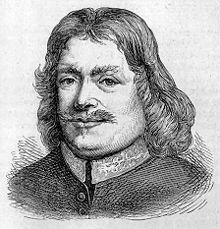
John Bunyan
In 1655, Bunyan became a deacon and began preaching, with marked success from the start. In 1658 he was indicted for preaching without a license. The authorities were fairly tolerant of him for a while, and he did not suffer imprisonment until November of 1660, when he was taken to the county jail in Silver Street, Bedford, and there confined (with the exception of a few weeks in 1666) for 12 years until January 1672. Bunyan afterward became pastor of the Bedford church. In March of 1675 he was again imprisoned for preaching publicly without a license, this time being held in the Bedford town jail. In just six months this time he was freed, (no doubt the authorities were growing weary of providing Bunyan with free shelter and food) and he was not bothered again by the authorities.
John Bunyan wrote The Pilgrim's Progress in two parts, of which the first appeared at London in 1678,which he had begun during his imprisonment in 1676. The second part appeared in 1684. The earliest edition in which the two parts were combined in one volume came out in 1728. A third part falsely attributed to Bunyan appeared in 1693. The Pilgrim's Progressis the most successful allegory ever written, and like the Bible has been extensively translated into other languages.
John Bunyan wrote many other books, including one which discussed his inner life and reveals his preparation for his appointed work is Grace Abounding to the Chief of Sinners (1666). Bunyan became a popular preacher as well as a very voluminous author, though most of his works consist of expanded sermons. In theology he was a Puritan, but not a partisan. He was no scholar, except of the English Bible, but that he knew thoroughly. He also drew much influence from Martin Luther's Commentary on the Epistle to the Galatians.
Some time before his final release from prison Bunyan became involved in a controversy with two theologians of his day: Kiffin and Paul. In 1673 he published his Differences in Judgement about Water-Baptism no Bar to Communion, in which he took the ground that "the Church of Christ hath not warrant to keep out of the communion the Christian that is discovered to be a visible saint of the word, the Christian that walketh according to his own light with God." While he agreed as a Baptist that water baptism was God's ordinance, he refused to make "an idol of it," and he disagreed with those who would dis-fellowship from Christians who did not adhere to water baptism
Kiffin and Paul published a rejoinder in Serious Reflections (London, 1673), in which they set forth the argument in favor of the restriction of the Lord's Supper to baptized believers. The controversy resulted in the Particular (Calvinistic) Baptists leaving the question of communion with the unbaptized open. Bunyan's church permitted pedobaptists (those who baptize children, such as the Calvinistic Presbyterian Church) to fellowship and eventually, Bunyan’s church even became a pedobaptist church.
On a trip to London, John Bunyan caught a severe cold, and he died at the house of a friend at Snow Hill on August 31, 1688. His grave lies in the cemetery at Bunhill Fields in London.
Propers for John Bunyan - Pastor and Writer
The Collect.
Almighty God, who by thy Holy Spirit dost give to some the word of wisdom, to others the word of knowledge, and to others the word of faith: We praise thy name for the gifts of grace manifested in thy servant John Bunyan, and we pray that by his teaching we may be led to a fuller knowledge of the truth which thou has revealed in thy Son our Saviour Jesus Christ, who liveth and reigneth with thee and the same Spirit, one God, now and for ever. Amen.
The Lesson - Ezekiel 34:11-16.
For thus saith the Lord GOD; Behold, I, even I, will both search my sheep, and seek them out. As a shepherd seeketh out his flock in the day that he is among his sheep that are scattered; so will I seek out my sheep, and will deliver them out of all places where they have been scattered in the cloudy and dark day. And I will bring them out from the people, and gather them from the countries, and will bring them to their own land, and feed them upon the mountains of Israel by the rivers, and in all the inhabited places of the country. I will feed them in a good pasture, and upon the high mountains of Israel shall their fold be: there shall they lie in a good fold, and in a fat pasture shall they feed upon the mountains of Israel. I will feed my flock, and I will cause them to lie down, saith the Lord GOD. I will seek that which was lost, and bring again that which was driven away, and will bind up that which was broken, and will strengthen that which was sick: but I will destroy the fat and the strong; I will feed them with judgment.
The Holy Gospel - St. John 21:15-19.
So when they had dined, Jesus saith to Simon Peter, Simon, son of Jonas, lovest thou me more than these? He saith unto him, Yea, Lord; thou knowest that I love thee. He saith unto him, Feed my lambs. He saith to him again the second time, Simon, son of Jonas, lovest thou me? He saith unto him, Yea, Lord; thou knowest that I love thee. He saith unto him, Feed my sheep. He saith unto him the third time, Simon, son of Jonas, lovest thou me? Peter was grieved because he said unto him the third time, Lovest thou me? And he said unto him, Lord, thou knowest all things; thou knowest that I love thee. Jesus saith unto him, Feed my sheep. Verily, verily, I say unto thee, When thou wast young, thou girdedst thyself, and walkedst whither thou wouldest: but when thou shalt be old, thou shalt stretch forth thy hands, and another shall gird thee, and carry thee whither thou wouldest not. This spake he, signifying by what death he should glorify God. And when he had spoken this, he saith unto him, Follow me.
Reference and Resources:
http://elvis.rowan.edu/~kilroy/JEK/08/30.html
+
Saturday, July 18, 2015
Paul Schneider
Schneider was born in Pferdsfeld, Germany in 1897, the second of three sons born to Gustav-Adolf Schneider and Elisabeth Schnorr. He had a strong love for his mother and a great respect for his father, who was a pastor and an ardent patriot. Following military service in World War I,
Schneider began his theological studies and was ordained in Hochelheim in 1925. The following year, he married Margarete Dieterich, the daughter of a pastor. In 1927, the couple had their first son, followed by a daughter and four more sons.
When President Paul von Hindenburg named Adolf Hitler Chancellor in 1933, Schneider was the pastor of the Hochelheim congregation, having succeeded his father who died in 1926. Initially, Pastor Schneider believed that the new Chancellor, with the help of divine guidance, would lead Germany into a bright future. It did not take long for him to perceive the true character of Adolf Hitler and the Nazi regime. Schneider did not stand by idly as Nazi leaders ridiculed the morality of the Church. In writing and in preaching, he protested against the vitriol directed against the Church by Nazi officials. Pastor Schneider received no backing from his consistory of the old-Prussian Ecclesiastical Province of the Rhineland, then seated in Koblenz. On the contrary, in order to placate Nazi officials who complained about Pastor Schneider, the consistory transferred him to a remote region of Germany.
Early in 1934, Schneider and his family moved to Dickenschied, where he became pastor to the Dickenschied and Womrath congregations. That same year, Pastor Schneider became a member of the Confessing Church, a Protestant organization that opposed Adolf Hitler and the Nazi regime. On one occasion at the funeral of a Hitler youth boy a Nazi official said in his speech that the deceased would now be member of the heavenly storm of Horst Wessel. Pastor Schneider responded that he would not know if a heavenly storm of Horst Wessel existed but the Lord would bless the boy and take him into his realm. After this, the Nazi leader came forward and repeated his words. Pastor Schneider then responded sharply that he would not allow God's word to be adulterated during a Christian ceremony. As a result he was arrested for one week in June 1934.
In March 1935, Nazi officials took Pastor Schneider into “protective custody” (Schutzhaft), a Nazi euphemism for “arrest” without any judicial warrant. They held him for a few days because he insisted on reading from the pulpit the synodal criticism of the government’s policy toward the Church.
Local Nazi officials summoned Schneider for interrogations twelve times during the winter of 1935/1936. He continued to speak his mind and follow the dictates of his conscience. Some of his friends pleaded with him to avoid confrontation with the Nazis. He responded that he did not seek martyrdom, but that he had to follow his Lord. His primary responsibility was to prepare his family for eternal life – not to insure their material well-being.
In spring 1937, with the support of members of his presbytery, Pastor Schneider began the process of excommunicating parishioners who, because of their allegiance to the Nazi Party, engaged in conduct which violated congregational discipline. Complaints to Nazi officials by the censured led to the arrest of Pastor Schneider. Following two months in the Koblenz prison, officials released him with the warning not to return to the Rhineland, where his home and parish were located. Pastor Schneider knew that, if he returned to his flock, it would mean imprisonment in a concentration camp. Yet, the night before his release, he read in his Bible the story concerning the crisis confronted by Deborah. When Deborah summoned the twelve tribes together to confront the common enemy, only Naphtali and Zebulun responded. Pastor Schneider saw in this Old Testament story [Judges 5:18] a parallel to the crisis which the Church confronted in Nazi Germany, and he concluded that even if his was a minority voice, he must act in harmony with his conscience, and protest.
Following his release from prison, Pastor Schneider spent two months with his wife and a few family members and friends in Baden-Baden and in Eschbach. He and Margarete returned home for Harvest Thanksgiving (German: Erntedankfest) on October 3, 1937. Pastor Schneider was able to celebrate this occasion with his Dickenschied congregation, but local police arrested him as he journeyed to Womrath for an evening worship service.
Schneider was incarcerated in Buchenwald, near Weimar, on November 27, 1937, just a few months after the camp opened. In the labor commandos, Pastor Schneider watched out for his fellow inmates. After being sentenced to solitary confinement, he preached the good news of the Gospel from the window of his prison cell. He was moved to the cell when he refused to remove his beret in honour of Hitler on the Führer's birthday, April 20, 1938 and to salute the swastika flag. He explained his behaviour by saying "I cannot salute this criminal symbol". He also refused, as he had done earlier, the Hitler salute, saying that "you can only receive salvation (Heil) from the Lord and not from a human being". From his cell, Schneider accused his captors and encouraged his fellow inmates. On one occasion on Easter Sunday, when thousands of prisoners were assembled for mustering, despite being severely handicapped by previous torture he climbed to the cell window and shouted: "Comrades, listen to me. This is Pastor Schneider. People are tortured and murdered here. So the Lord says, 'I am the resurrection and the life!'" His speech was interrupted by his tormentors. As others had pleaded years earlier, the man who mopped the floors in the solitary confinement building begged Schneider, "Please stop provoking the SS against you... They will beat you to death if you continue preaching from your cell window".
On July 18, 1939, Schneider was murdered with a lethal injection of strophanthin in the camp infirmary. Camp officials notified Margarete Schneider of her husband’s death and she made the long journey from Dickenschied to retrieve his body in a sealed coffin. Despite Gestapo surveillance, hundreds of people and around two hundred fellow pastors attended Pastor Schneider’s funeral, including many members of the Confessing Church. One of the pastors preached at the grave side, “May God grant that the witness of your shepherd, our brother, remain with you and continue to impact on future generations and that it remain vital and bear fruit in the entire Christian Church”.
Paul Schneider - 18 July - Pastor, Confessor, Martyr
The Collect
O Almighty God, by whose grace and power thy holy martyr Paul Schneider, triumphed over suffering and was faithful even unto death: Grant us, who now remember him with thanksgiving, to be so faithful in our witness to thee in this world, that we may receive with him the crown of life; through Jesus Christ our Lord, who liveth and reigneth with thee and the Holy Ghost, one God, for ever and ever. Amen.
The Lesson - Revelation 7:1317
The Holy Gospel - St. Luke 12:212
+
Schneider began his theological studies and was ordained in Hochelheim in 1925. The following year, he married Margarete Dieterich, the daughter of a pastor. In 1927, the couple had their first son, followed by a daughter and four more sons.
When President Paul von Hindenburg named Adolf Hitler Chancellor in 1933, Schneider was the pastor of the Hochelheim congregation, having succeeded his father who died in 1926. Initially, Pastor Schneider believed that the new Chancellor, with the help of divine guidance, would lead Germany into a bright future. It did not take long for him to perceive the true character of Adolf Hitler and the Nazi regime. Schneider did not stand by idly as Nazi leaders ridiculed the morality of the Church. In writing and in preaching, he protested against the vitriol directed against the Church by Nazi officials. Pastor Schneider received no backing from his consistory of the old-Prussian Ecclesiastical Province of the Rhineland, then seated in Koblenz. On the contrary, in order to placate Nazi officials who complained about Pastor Schneider, the consistory transferred him to a remote region of Germany.
Early in 1934, Schneider and his family moved to Dickenschied, where he became pastor to the Dickenschied and Womrath congregations. That same year, Pastor Schneider became a member of the Confessing Church, a Protestant organization that opposed Adolf Hitler and the Nazi regime. On one occasion at the funeral of a Hitler youth boy a Nazi official said in his speech that the deceased would now be member of the heavenly storm of Horst Wessel. Pastor Schneider responded that he would not know if a heavenly storm of Horst Wessel existed but the Lord would bless the boy and take him into his realm. After this, the Nazi leader came forward and repeated his words. Pastor Schneider then responded sharply that he would not allow God's word to be adulterated during a Christian ceremony. As a result he was arrested for one week in June 1934.
In March 1935, Nazi officials took Pastor Schneider into “protective custody” (Schutzhaft), a Nazi euphemism for “arrest” without any judicial warrant. They held him for a few days because he insisted on reading from the pulpit the synodal criticism of the government’s policy toward the Church.
Local Nazi officials summoned Schneider for interrogations twelve times during the winter of 1935/1936. He continued to speak his mind and follow the dictates of his conscience. Some of his friends pleaded with him to avoid confrontation with the Nazis. He responded that he did not seek martyrdom, but that he had to follow his Lord. His primary responsibility was to prepare his family for eternal life – not to insure their material well-being.
In spring 1937, with the support of members of his presbytery, Pastor Schneider began the process of excommunicating parishioners who, because of their allegiance to the Nazi Party, engaged in conduct which violated congregational discipline. Complaints to Nazi officials by the censured led to the arrest of Pastor Schneider. Following two months in the Koblenz prison, officials released him with the warning not to return to the Rhineland, where his home and parish were located. Pastor Schneider knew that, if he returned to his flock, it would mean imprisonment in a concentration camp. Yet, the night before his release, he read in his Bible the story concerning the crisis confronted by Deborah. When Deborah summoned the twelve tribes together to confront the common enemy, only Naphtali and Zebulun responded. Pastor Schneider saw in this Old Testament story [Judges 5:18] a parallel to the crisis which the Church confronted in Nazi Germany, and he concluded that even if his was a minority voice, he must act in harmony with his conscience, and protest.
Following his release from prison, Pastor Schneider spent two months with his wife and a few family members and friends in Baden-Baden and in Eschbach. He and Margarete returned home for Harvest Thanksgiving (German: Erntedankfest) on October 3, 1937. Pastor Schneider was able to celebrate this occasion with his Dickenschied congregation, but local police arrested him as he journeyed to Womrath for an evening worship service.
Schneider was incarcerated in Buchenwald, near Weimar, on November 27, 1937, just a few months after the camp opened. In the labor commandos, Pastor Schneider watched out for his fellow inmates. After being sentenced to solitary confinement, he preached the good news of the Gospel from the window of his prison cell. He was moved to the cell when he refused to remove his beret in honour of Hitler on the Führer's birthday, April 20, 1938 and to salute the swastika flag. He explained his behaviour by saying "I cannot salute this criminal symbol". He also refused, as he had done earlier, the Hitler salute, saying that "you can only receive salvation (Heil) from the Lord and not from a human being". From his cell, Schneider accused his captors and encouraged his fellow inmates. On one occasion on Easter Sunday, when thousands of prisoners were assembled for mustering, despite being severely handicapped by previous torture he climbed to the cell window and shouted: "Comrades, listen to me. This is Pastor Schneider. People are tortured and murdered here. So the Lord says, 'I am the resurrection and the life!'" His speech was interrupted by his tormentors. As others had pleaded years earlier, the man who mopped the floors in the solitary confinement building begged Schneider, "Please stop provoking the SS against you... They will beat you to death if you continue preaching from your cell window".
On July 18, 1939, Schneider was murdered with a lethal injection of strophanthin in the camp infirmary. Camp officials notified Margarete Schneider of her husband’s death and she made the long journey from Dickenschied to retrieve his body in a sealed coffin. Despite Gestapo surveillance, hundreds of people and around two hundred fellow pastors attended Pastor Schneider’s funeral, including many members of the Confessing Church. One of the pastors preached at the grave side, “May God grant that the witness of your shepherd, our brother, remain with you and continue to impact on future generations and that it remain vital and bear fruit in the entire Christian Church”.
Paul Schneider - 18 July - Pastor, Confessor, Martyr
The Collect
O Almighty God, by whose grace and power thy holy martyr Paul Schneider, triumphed over suffering and was faithful even unto death: Grant us, who now remember him with thanksgiving, to be so faithful in our witness to thee in this world, that we may receive with him the crown of life; through Jesus Christ our Lord, who liveth and reigneth with thee and the Holy Ghost, one God, for ever and ever. Amen.
The Lesson - Revelation 7:1317
The Holy Gospel - St. Luke 12:212
+
Thursday, September 18, 2014
George MacDonald
is not very well known in today the Rev. MacDonald had an impact on one of the greatest generations of Christian writers and apologists including C.S. Lewis, J.R.R. Tolkien and G.K. Chesterton.Born on December 10, 1824 at Huntly, Aberdeenshire, Scotland, the son of a farmer, and one of the MacDonalds of Glen Coe, the Doric dialect of the area appears in the dialog of some of his non-fantasy novels. He was raised in the Congregationalist denomination but had problems with aspects of Calvinist doctrine, such as predestination.
MacDonald took a degree from the University of Aberdeen and then to Highbury College (London) to prepare for the ministry in the Congregational Church.
In 1850 he was appointed Pastor of Trinity Church (Arundel), but due to the lack of strict adherence to Calvinist principles in his preaching, he soon fell out of favor with that congregation. Later he moved to Manchester to do ministerial work, but had to leave for health reasons.
With leaving his full-time work in ministry, MacDonald began to spend more time writing, editing and lecturing, including a trip to the United States in 1872-1873, where he befriended Mark Twain, Henry Wadsworth Longfellow and Walt Whitman. Most of the great British and American writers of the 19th century where either acquaintances or friends of MacDonald, including Dickens and Tennyson.
MacDonald though best known for his fantasy writing, had a great impact on Christian theology and apologetics with his work Unspoken Sermons.
MacDonald died 18 September 1905 in Ashtead, Surrey, England and is Bordighera, Italy next to his wife. MacDonald's legacy was carried on by his son Greville MacDonald (a medical specialist and novelist) and his grandson Philip MacDonald (a screenwriter).
Prayer.
Heavenly Father who bestowest gifts and talents upon men, we thank thee for blessing us with those who use thier gifts for thy service and glory; remember Lord thy servant George MacDonald and by his example, we may also be useful to thee with the talents that thou hast given unto us. This we ask in the name of Our Lord and Saviour, Jesus Christ. Amen.
Reference and Resources:
http://en.wikipedia.org/wiki/George_MacDonald
http://www.ccel.org/m/macdonald
†
Sunday, August 31, 2014
John Bunyan
In 1655, Bunyan became a deacon and began preaching, with marked success from the start. In 1658 he was indicted for preaching without a license. The authorities were fairly tolerant of him for a while, and he did not suffer imprisonment until November of 1660, when he was taken to the county jail in Silver Street, Bedford, and there confined (with the exception of a few weeks in 1666) for 12 years until January 1672. Bunyan afterward became pastor of the Bedford church. In March of 1675 he was again imprisoned for preaching publicly without a license, this time being held in the Bedford town jail. In just six months this time he was freed, (no doubt the authorities were growing weary of providing Bunyan with free shelter and food) and he was not bothered again by the authorities.
John Bunyan wrote The Pilgrim's Progress in two parts, of which the first appeared at London in 1678,which he had begun during his imprisonment in 1676. The second part appeared in 1684. The earliest edition in which the two parts were combined in one volume came out in 1728. A third part falsely attributed to Bunyan appeared in 1693. The Pilgrim's Progressis the most successful allegory ever written, and like the Bible has been extensively translated into other languages.
John Bunyan wrote many other books, including one which discussed his inner life and reveals his preparation for his appointed work is Grace Abounding to the Chief of Sinners (1666). Bunyan became a popular preacher as well as a very voluminous author, though most of his works consist of expanded sermons. In theology he was a Puritan, but not a partisan. He was no scholar, except of the English Bible, but that he knew thoroughly. He also drew much influence from Martin Luther's Commentary on the Epistle to the Galatians.
Some time before his final release from prison Bunyan became involved in a controversy with two theologians of his day: Kiffin and Paul. In 1673 he published his Differences in Judgement about Water-Baptism no Bar to Communion, in which he took the ground that "the Church of Christ hath not warrant to keep out of the communion the Christian that is discovered to be a visible saint of the word, the Christian that walketh according to his own light with God." While he agreed as a Baptist that water baptism was God's ordinance, he refused to make "an idol of it," and he disagreed with those who would dis-fellowship from Christians who did not adhere to water baptism
Kiffin and Paul published a rejoinder in Serious Reflections (London, 1673), in which they set forth the argument in favor of the restriction of the Lord's Supper to baptized believers. The controversy resulted in the Particular (Calvinistic) Baptists leaving the question of communion with the unbaptized open. Bunyan's church permitted pedobaptists (those who baptize children, such as the Calvinistic Presbyterian Church) to fellowship and eventually, Bunyan’s church even became a pedobaptist church.
On a trip to London, John Bunyan caught a severe cold, and he died at the house of a friend at Snow Hill on August 31, 1688. His grave lies in the cemetery at Bunhill Fields in London.
Propers for John Bunyan - Pastor and Writer
The Collect.
Almighty God, who by thy Holy Spirit dost give to some the word of wisdom, to others the word of knowledge, and to others the word of faith: We praise thy name for the gifts of grace manifested in thy servant John Bunyan, and we pray that by his teaching we may be led to a fuller knowledge of the truth which thou has revealed in thy Son our Saviour Jesus Christ, who liveth and reigneth with thee and the same Spirit, one God, now and for ever. Amen.
The Lesson - Ezekiel 34:11-16.
For thus saith the Lord GOD; Behold, I, even I, will both search my sheep, and seek them out. As a shepherd seeketh out his flock in the day that he is among his sheep that are scattered; so will I seek out my sheep, and will deliver them out of all places where they have been scattered in the cloudy and dark day. And I will bring them out from the people, and gather them from the countries, and will bring them to their own land, and feed them upon the mountains of Israel by the rivers, and in all the inhabited places of the country. I will feed them in a good pasture, and upon the high mountains of Israel shall their fold be: there shall they lie in a good fold, and in a fat pasture shall they feed upon the mountains of Israel. I will feed my flock, and I will cause them to lie down, saith the Lord GOD. I will seek that which was lost, and bring again that which was driven away, and will bind up that which was broken, and will strengthen that which was sick: but I will destroy the fat and the strong; I will feed them with judgment.
The Holy Gospel - St. John 21:15-19.
So when they had dined, Jesus saith to Simon Peter, Simon, son of Jonas, lovest thou me more than these? He saith unto him, Yea, Lord; thou knowest that I love thee. He saith unto him, Feed my lambs. He saith to him again the second time, Simon, son of Jonas, lovest thou me? He saith unto him, Yea, Lord; thou knowest that I love thee. He saith unto him, Feed my sheep. He saith unto him the third time, Simon, son of Jonas, lovest thou me? Peter was grieved because he said unto him the third time, Lovest thou me? And he said unto him, Lord, thou knowest all things; thou knowest that I love thee. Jesus saith unto him, Feed my sheep. Verily, verily, I say unto thee, When thou wast young, thou girdedst thyself, and walkedst whither thou wouldest: but when thou shalt be old, thou shalt stretch forth thy hands, and another shall gird thee, and carry thee whither thou wouldest not. This spake he, signifying by what death he should glorify God. And when he had spoken this, he saith unto him, Follow me.
Reference and Resources:
http://elvis.rowan.edu/~kilroy/JEK/08/30.html
+
Wednesday, September 18, 2013
George MacDonald
is not very well known in today the Rev. MacDonald had an impact on one of the greatest generations of Christian writers and apologists including C.S. Lewis, J.R.R. Tolkien and G.K. Chesterton.Born on December 10, 1824 at Huntly, Aberdeenshire, Scotland, the son of a farmer, and one of the MacDonalds of Glen Coe, the Doric dialect of the area appears in the dialog of some of his non-fantasy novels. He was raised in the Congregationalist denomination but had problems with aspects of Calvinist doctrine, such as predestination.
MacDonald took a degree from the University of Aberdeen and then to Highbury College (London) to prepare for the ministry in the Congregational Church.
In 1850 he was appointed Pastor of Trinity Church (Arundel), but due to the lack of strict adherence to Calvinist principles in his preaching, he soon fell out of favor with that congregation. Later he moved to Manchester to do ministerial work, but had to leave for health reasons.
With leaving his full-time work in ministry, MacDonald began to spend more time writing, editing and lecturing, including a trip to the United States in 1872-1873, where he befriended Mark Twain, Henry Wadsworth Longfellow and Walt Whitman. Most of the great British and American writers of the 19th century where either acquaintances or friends of MacDonald, including Dickens and Tennyson.
MacDonald though best known for his fantasy writing, had a great impact on Christian theology and apologetics with his work Unspoken Sermons.
MacDonald died 18 September 1905 in Ashtead, Surrey, England and is Bordighera, Italy next to his wife. MacDonald's legacy was carried on by his son Greville MacDonald (a medical specialist and novelist) and his grandson Philip MacDonald (a screenwriter).
Prayer.
Heavenly Father who bestowest gifts and talents upon men, we thank thee for blessing us with those who use thier gifts for thy service and glory; remember Lord thy servant George MacDonald and by his example, we may also be useful to thee with the talents that thou hast given unto us. This we ask in the name of Our Lord and Saviour, Jesus Christ. Amen.
Reference and Resources:
http://en.wikipedia.org/wiki/George_MacDonald
http://www.ccel.org/m/macdonald
†
Saturday, August 31, 2013
John Bunyan
In 1655, Bunyan became a deacon and began preaching, with marked success from the start. In 1658 he was indicted for preaching without a license. The authorities were fairly tolerant of him for a while, and he did not suffer imprisonment until November of 1660, when he was taken to the county jail in Silver Street, Bedford, and there confined (with the exception of a few weeks in 1666) for 12 years until January 1672. Bunyan afterward became pastor of the Bedford church. In March of 1675 he was again imprisoned for preaching publicly without a license, this time being held in the Bedford town jail. In just six months this time he was freed, (no doubt the authorities were growing weary of providing Bunyan with free shelter and food) and he was not bothered again by the authorities.
John Bunyan wrote The Pilgrim's Progress in two parts, of which the first appeared at London in 1678,which he had begun during his imprisonment in 1676. The second part appeared in 1684. The earliest edition in which the two parts were combined in one volume came out in 1728. A third part falsely attributed to Bunyan appeared in 1693. The Pilgrim's Progressis the most successful allegory ever written, and like the Bible has been extensively translated into other languages.
John Bunyan wrote many other books, including one which discussed his inner life and reveals his preparation for his appointed work is Grace Abounding to the Chief of Sinners (1666). Bunyan became a popular preacher as well as a very voluminous author, though most of his works consist of expanded sermons. In theology he was a Puritan, but not a partisan. He was no scholar, except of the English Bible, but that he knew thoroughly. He also drew much influence from Martin Luther's Commentary on the Epistle to the Galatians.
Some time before his final release from prison Bunyan became involved in a controversy with two theologians of his day: Kiffin and Paul. In 1673 he published his Differences in Judgement about Water-Baptism no Bar to Communion, in which he took the ground that "the Church of Christ hath not warrant to keep out of the communion the Christian that is discovered to be a visible saint of the word, the Christian that walketh according to his own light with God." While he agreed as a Baptist that water baptism was God's ordinance, he refused to make "an idol of it," and he disagreed with those who would dis-fellowship from Christians who did not adhere to water baptism
Kiffin and Paul published a rejoinder in Serious Reflections (London, 1673), in which they set forth the argument in favor of the restriction of the Lord's Supper to baptized believers. The controversy resulted in the Particular (Calvinistic) Baptists leaving the question of communion with the unbaptized open. Bunyan's church permitted pedobaptists (those who baptize children, such as the Calvinistic Presbyterian Church) to fellowship and eventually, Bunyan’s church even became a pedobaptist church.
On a trip to London, John Bunyan caught a severe cold, and he died at the house of a friend at Snow Hill on August 31, 1688. His grave lies in the cemetery at Bunhill Fields in London.
Propers for John Bunyan - Pastor and Writer
The Collect.
Almighty God, who by thy Holy Spirit dost give to some the word of wisdom, to others the word of knowledge, and to others the word of faith: We praise thy name for the gifts of grace manifested in thy servant John Bunyan, and we pray that by his teaching we may be led to a fuller knowledge of the truth which thou has revealed in thy Son our Saviour Jesus Christ, who liveth and reigneth with thee and the same Spirit, one God, now and for ever. Amen.
The Lesson - Ezekiel 34:11-16.
For thus saith the Lord GOD; Behold, I, even I, will both search my sheep, and seek them out. As a shepherd seeketh out his flock in the day that he is among his sheep that are scattered; so will I seek out my sheep, and will deliver them out of all places where they have been scattered in the cloudy and dark day. And I will bring them out from the people, and gather them from the countries, and will bring them to their own land, and feed them upon the mountains of Israel by the rivers, and in all the inhabited places of the country. I will feed them in a good pasture, and upon the high mountains of Israel shall their fold be: there shall they lie in a good fold, and in a fat pasture shall they feed upon the mountains of Israel. I will feed my flock, and I will cause them to lie down, saith the Lord GOD. I will seek that which was lost, and bring again that which was driven away, and will bind up that which was broken, and will strengthen that which was sick: but I will destroy the fat and the strong; I will feed them with judgment.
The Holy Gospel - St. John 21:15-19.
So when they had dined, Jesus saith to Simon Peter, Simon, son of Jonas, lovest thou me more than these? He saith unto him, Yea, Lord; thou knowest that I love thee. He saith unto him, Feed my lambs. He saith to him again the second time, Simon, son of Jonas, lovest thou me? He saith unto him, Yea, Lord; thou knowest that I love thee. He saith unto him, Feed my sheep. He saith unto him the third time, Simon, son of Jonas, lovest thou me? Peter was grieved because he said unto him the third time, Lovest thou me? And he said unto him, Lord, thou knowest all things; thou knowest that I love thee. Jesus saith unto him, Feed my sheep. Verily, verily, I say unto thee, When thou wast young, thou girdedst thyself, and walkedst whither thou wouldest: but when thou shalt be old, thou shalt stretch forth thy hands, and another shall gird thee, and carry thee whither thou wouldest not. This spake he, signifying by what death he should glorify God. And when he had spoken this, he saith unto him, Follow me.
Reference and Resources:
http://elvis.rowan.edu/~kilroy/JEK/08/30.html
+
Subscribe to:
Posts (Atom)