Showing posts with label Confessor. Show all posts

Friday, April 9, 2021

Dietrich Bonhoeffer


(February 4, 1906 – April 9, 1945) was a Lutheran pastor, theologian, participant in the German Resistance movement against Nazism, and a founding member of the Confessing Church.

Bonhoeffer was born in Breslau (Wrocław), Silesia. He and his sister Sabine were twins and the sixth and seventh of eight children. His brother Walter was killed during World War I. His sister was married to Hans von Dohnanyi and was mother of the conductor Christoph von Dohnanyi and the later mayor of Hamburg, Klaus von Dohnanyi. His father, Karl Bonhoeffer, was a prominent German psychiatrist in Berlin; his mother, Paula, home-schooled the children. Though he was initially expected to follow his father into the field of psychology, Dietrich decided at an early age to become a theologian and later a Christian pastor. His parents supported his decision. He attended college in Tübingen and later at the University of Berlin, where he received his doctorate in theology at the age of only 21. As Dietrich was under 25 at the time [per church regulations], he was unable to be ordained. This, however, gave Dietrich the opportunity to go abroad. He then spent a post-graduate year abroad studying at Union Theological Seminary in New York City. During this time, he would often visit the Abyssinian Baptist Church in Harlem, where he became acquainted with the musical form that ethnomusicologists call the African-American Spiritual. He amassed a substantial collection of these spirituals, which he took with him when he went back to Germany.

Bonhoeffer returned to Germany in 1931, where he lectured on theology in Berlin and wrote several books. A strong opponent of Nazism, he was involved, together with Martin Niemöller, Karl Barth and others, in establishing the Confessing Church. In August 1933, he co-authored the Bethel Confession with Hermann Sasse and others. Between late 1933 and 1935, he served as pastor of two German-speaking Protestant churches in London: St. Paul's and Sydenham. While Bonhoeffer desired a trip to India to discover non-violent resistance with Gandhi, he returned to Germany to head a seminary for Confessing Church pastors which had been made illegal by the Nazi regime, first in Finkenwalde and then at the von Blumenthal estate of Gross Schlönwitz, which was closed at the outbreak of World War II. The Gestapo also banned him from preaching; then teaching; and finally any kind of public speaking. During this time, Bonhoeffer worked closely with numerous opponents of Adolf Hitler.

In 1939, Bonhoeffer joined a secret group of high-ranking military officers based in the Abwehr, or Military intelligence Office, who wanted to overthrow the National Socialist regime by killing Hitler. Bonhoeffer was arrested in April 1943 after money used to help Jews escape to Switzerland was traced to him. He was charged with conspiracy and imprisoned in Berlin for a year and a half.

In Flossenbürg, Bonhoeffer was executed by hanging at dawn on 1945 April 9, just three weeks before the liberation of Berlin and one month before the capitulation of Nazi Germany. The manner of execution was, like other executions associated with the July 20 Plot, so brutal and graphic that even Wehrmacht soldiers were loathe to watch. Bonhoeffer was stripped of clothing in his cell, tortured and ridiculed by the guards, and led naked into the execution yard. The lack of sufficient gallows to hang thousands of Germans after the July 20 Plot had caused Hitler and Nazi propagandist Josef Goebbels to seize on the idea of using meathooks from slaughterhouses and slowly hoisting the victim to dangle from an incrementally tightening noose formed of piano wire. The asphyxiation is thought to have taken approximately half an hour.


Propers for Dietrich Bonhoeffer - 9 April - Pastor, Writer, Theologian, and Martyr


The Collect

O God our Father, Who art the source of strength to all Thy saints, and Who didst bring Thy servant Dietrich Bonhoeffer through imprisonment and death to the joys of life eternal: Grant that we, being encouraged by his example, may hold fast the faith that we profess, and that we may seek to know, and according to our knowledge to do, Thy will, even unto death; through Jesus Christ our Lord, Who liveth and reigneth with Thee and the Holy Ghost, one God, now and for ever. Amen.


The Lesson - Proverbs 3:1-7


The Holy Gospel - St. Matthew 13:47-52


Reference and Resources:

http://en.wikipedia.org/wiki/Dietrich_Bonhoeffer
http://elvis.rowan.edu/~kilroy/JEK/04/10.html

†

Wednesday, April 7, 2021

Tikhon of Moscow


Vasily Ivanovich Belavin, the future Saint Tikhon, was born on January 19, 1865 into the family of Ioann Belavin, a rural priest of the Toropetz district of the Pskov diocese. His childhood and adolescence were spent in the village in direct contact with peasants and their labor. From his early years he displayed a particular religious disposition, love for the Church as well as rare meekness and humility.

From 1878 to 1883, Vasily studied at the Pskov Theological Seminary. The modest seminarian was tender and affectionate by nature. He was fair-haired and tall of stature. His fellow students liked and respected him for his piety, brilliant progress in studies, and constant readiness to help comrades, who often turned to him for explanations of lessons, especially for help in drawing up and correcting numerous compositions.

In 1888, at the age of 23, he graduated from the Saint Petersburg Theological Academy as a layman. He then returned to the Pskov Seminary and became an instructor of Moral and Dogmatic Theology. In 1891, at the age of 26, he took monastic vows and was given the name Tikhon in honor of St. Tikhon of Zadonsk. Tikhon was consecrated Bishop of Lublin on October 19, 1897. On September 14, 1898, Bishop Tikhon was made Bishop of the Aleutians and Alaska. As head of the Russian Orthodox Church in America he reorganized the diocese and changed its name from "Diocese of the Aleutians and Alaska" to "Diocese of the Aleutians and North America" in 1900. While living in the United States Archbishop Tikhon was made a citizen of the United States.

As Bishop of the Aleutian Islands and Alaska, and later (after 1903) Archbishop of the Aleutian Islands and North America, Tikhon encouraged the publication of Orthodox writings in English, including a translation of the Russian Orthodox liturgy. He himself wrote a catechism based on the Nicene Creed and the Lord’s Prayer.

In 1900, the Rt Revd Charles Grafton, Bishop of the Diocese of Fond du Lac (in The Episcopal Church), invited Bishop Tikhon to the consecration of the Revd Dr RH Weller as Bishop Coadjutor of Fond du Lac. One writer states that it was Bishop Grafton’s intention that Bishop Tikhon should join in the laying on of hands as a co-consecrator, but “owing to the strong opposition of one of the assisting bishops”, this did not occur. Bishop Tikhon remained a close friend of Bishop Grafton, and through the latter’s influence, Tikhon was made an honorary doctor of theology by Nashotah House.

A Eucharistic liturgy known as the Liturgy of St Tikhon, based on the 1892 Holy Communion service of the Book of Common Prayer (USA) with extensive amendments to conform to Orthodox worship, is used by some Western Rite Orthodox parishes. Tikhon is not known formally to have approved this rite that bears his name, though the Holy Synod in Moscow, to whom he passed on a request from Anglo-Catholic Episcopalians during his North American episcopate, granted the possibility of a Western Rite based on the Anglican liturgy with extensive changes to conform to Orthodox praxis.

In 1907, he returned to Russia, and was appointed Bishop of Yaroslavl. St. Tikhon was transferred to Vilnius, Lithuania on December 22, 1913. On June 21, 1917, he was elected the ruling bishop of Moscow by the Diocesan Congress of clergy and laity. On August 15, 1917, Archbishop Tikhon was raised to the dignity of Metropolitan of Moscow. On November 5 of the same year, after an election as one of the three candidates for the reinstated Moscow Patriarchate, Metropolitan Vladimir of Kiev announced that Metropolitan Tikhon had been selected for the position after a drawing of lots as the new Patriarch of the Russian Orthodox Church.

All who met Saint Tikhon were surprised by his accessibility, simplicity and modesty. His gentle disposition did not prevent him from showing firmness in Church matters, however, particularly when he had to defend the Church from her enemies. He bore a very heavy cross. He had to administer and direct the Church amidst wholesale church disorganization, without auxiliary administrative bodies, in conditions of internal schisms and upheavals by various adherents of the Living Church, renovationists, and autocephalists.

The situation was complicated by external circumstances: the change of the political system, by the accession to power of the godless regime, by hunger, and civil war. This was a time when Church property was being confiscated, when clergy were subjected to court trials and persecutions, and Christ's Church endured repression. News of this came to the Patriarch from all ends of Russia. His exceptionally high moral and religious authority helped him to unite the scattered and enfeebled flock. At a crucial time for the church, his unblemished name was a bright beacon pointing the way to the truth of Orthodoxy. In his messages, he called on people to fulfill the commandments of Christ, and to attain spiritual rebirth through repentance. His irreproachable life was an example to all.

Due to his resistance to the State policy of confiscating Church property during the famine of 1921-22 he was placed under arrest, but due to English political pressure, was not brought to trial. During his imprisonment the State-supported schismatic “Living Church” was set up, which called a council in 1923 to depose him and gained many adherents. In the same year Tikhon signed a declaration professing loyalty to the Soviet government, which gained him less intolerable conditions, and he was allowed to live in the Donskoy monastery at Moscow (where he had been imprisoned) and to officiate in the churches of the capital.

Owing to his personal influence many schismatics returned to the Patriarchal Church, and his death was the occasion of great popular demonstrations of veneration and affection. Tikhon was canonized in 1989, and his relics were discovered in Donskoy Monastery after his canonization. His feast day is celebrated on April 7.


Propers for Tikhon of Moscow - 7 April - Confessor, Monastic, Bishop, Patriarch of Moscow and Theologian

The Collect.

Almighty God, who gave to thy servant Tikhon boldness to confess the Name of our Saviour Jesus Christ before the rulers of this world, and courage to suffer for this faith: Grant that we may always be ready to give a reason for the hope that is in us, and to suffer gladly for the sake of our Lord Jesus Christ; who liveth and reigneth with thee and the Holy Ghost, one God, for ever and ever. Amen.


The Epistle - Acts 1:1-9.

THE former treatise have I made, O Theophilus, of all that Jesus began both to do and teach, until the day in which he was taken up, after that he through the Holy Ghost had given commandments unto the apostles whom he had chosen: to whom also he shewed himself alive after his passion by many infallible proofs, being seen of them forty days, and speaking of the things pertaining to the kingdom of God: and, being assembled together with them, commanded them that they should not depart from Jerusalem, but wait for the promise of the Father, which, saith he, ye have heard of me. For John truly baptized with water; but ye shall be baptized with the Holy Ghost not many days hence.


The Gospel - St. Matthew 25:31-40.

WHEN the Son of man shall come in his glory, and all the holy angels with him, then shall he sit upon the throne of his glory: and before him shall be gathered all nations: and he shall separate them one from another, as a shepherd divideth his sheep from the goats: and he shall set the sheep on his right hand, but the goats on the left. Then shall the King say unto them on his right hand, Come, ye blessed of my Father, inherit the kingdom prepared for you from the foundation of the world: for I was an hungred, and ye gave me meat: I was thirsty, and ye gave me. drink: I was a stranger, and ye took me in: naked, and ye clothed me: I was sick, and ye visited me: I was in prison, and ye came unto me. Then shall the righteous answer him, saying, Lord, when saw we thee an hungred, and fed thee? or thirsty, and gave thee drink? When saw we thee a stranger, and took thee in? or naked, and clothed thee? Or when saw we thee sick, or in prison, and came unto thee? And the King shall answer and say unto them, Verily I say unto you, Inasmuch as ye have done it unto one of the least of these my brethren, ye have done it unto me.


Reference and Resources:

http://en.wikipedia.org/wiki/Tikhon_of_Moscow
http://confessingreader.wordpress.com/2008/04/07/tikhon-patriarch-of-moscow-and-confessor-1925/
http://www.oca.org/HSbiotikhon.asp?SID=7
http://orthodoxwiki.org/Tikhon_of_Moscow
http://02varvara.wordpress.com/2008/01/21/patriarch-aleksei-established-a-new-feast-day-in-memory-of-patriarch-st-tikhon-who-suffered-for-the-faith-under-the-bolsheviks/


†

Monday, April 5, 2021

Plato of Studion


Saint Plato was born in the year 735 into a pious Christian family of the parents, Sergius and Euphemia. Orphaned early on, the boy was taken to be raised by relatives, who gave him a fine education. When he grew up, he began life on his own. The saint occupied himself in the first years in the management of the property which his parents had left him upon their death. He was very temperate and hard-working and acquired great wealth by his toil. However, the future monk’s heart blazed with love for Christ. He gave away all his property, set his servants free and withdrew into a monastery named “Ensymboleion” near Mount Olympos.

His prayerful zeal, love of work and geniality won him the love of the brethren. When he was not praying he copied service books, and compiled anthologies from the works of the holy Fathers.

When the head of the monastery Theoctistus died in 770, the brethren chose Saint Plato as igumen, even though he was only thirty-five years old. After the death of the emperor Constantine Kopronymos (775), Saint Plato went to Constantinople. He resigned from the administration of the Metropolitan of Nicomedia. In 782, he withdrew to the desolate place of Studion with his nephews Saints Theodore (November 11) and Joseph (January 26). On the mount they built a church in honor of the holy Apostle John the Theologian, and founded a monastery, whose Superior was Saint Plato.

When Saint Tarasius and the empress Irene convened the Seventh Ecumenical Council in Nicea in 787, Saint Plato took an active part in its work. Being learned in Holy Scripture, he successfully unmasked the error in the Iconoclast heresy and defended the veneration of holy icons. When Saint Plato approached old age, he transferred the administration of the monastery to Saint Theodore.

In 795 the emperor Constantine VI (78-797) forced his wife to become a nun, and he married one of his relatives, Theodota.

Even though the holy Patriarch Tarasius condemned this marriage, Joseph, a prominent priest of Constantinople, violated the Patriarch’s prohibition and celebrated the marriage of the emperor.

When they learned of this, Saints Plato and Theodore excommunicated the emperor from the Church and sent a letter about this to all the monks. The enraged emperor gave orders to lock Saint Plato in prison and to banish Saint Theodore to Thessalonica. Only after the death of the emperor in 797 did they receive their freedom. Saint Theodore settled in Constantinople and became igumen of the Studion monastery. Saint Plato lived as a simple monk at this monastery under the obedience of his nephew.

When the new emperor Nicephorus (802-811) returned the excommunicated priest Joseph to the Church on his own authority, Saints Plato and Theodore again came forward denouncing the unlawful activities of the emperor. For this the brave confessors were again subjected to punishment in 807. They were jailed for four years. Saint Plato was freed from imprisonment in 811 after the death of the emperor, and he returned to the Studion monastery.

He lived three more years at work and prayer, and departed to the Lord on Lazarus Saturday at age 79, on April 8, 814. Saint Plato is honored as a Confessor because of his fearless defense of the holy icons.

Propers for Plato of Studion - 5 April - Abbot and Confessor


The Collect

O God, by whose grace thy servant Plato, enkindled with the fire of thy love, became a burning and a shining light in thy Church: Grant that we also may be aflame with the spirit of love and discipline, and may ever walk before thee as children of light; through Jesus Christ our Lord, who with thee, in the unity of the Holy Spirit, liveth and reigneth, one God, now and for ever. Amen.


The Lesson - Acts 2:42-47a


The Holy Gospel - St. Matthew 6:24-33


✝

Wednesday, March 10, 2021

The Forty Martyrs of Sebaste


The Forty Martyrs of Sebaste or the Holy Forty (Ancient/Katharevousa Greek Ἃγιοι Τεσσεράκοντα, Demotic Άγιοι Σαράντα) were a group of Roman soldiers in the Legio XII Fulminata,who became martyrs for their Christian faith in 320.

In the year 320, Constantine was Emperor of the West and Licinius of the East. Licinius, under pressure from Constantine, had agreed to legalize Christianity in his territory, and the two made an alliance (cemented by the marriage of Licinius to Constantia the sister of Constantine), but now Licinius broke the alliance and made a new attempt to suppress Christianity. He ordered his soldiers to repudiate it on pain of death. In the "Thundering Legion," stationed near Sebaste in Armenia (now Sivas in Turkey), forty soldiers refused, and when promises, threats, and beatings failed to shake them, they were stripped naked one evening and herded onto the middle of a frozen lake, and told, "You may come ashore when you are ready to deny your faith." To tempt them, fires were built on shore, with warm baths, blankets, clothing, and hot food and drink close by. The mother of the youngest soldier was present and encouraged her son from the bank. As night deepened, thirty-nine men stood firm, while one broke and ran to the shore. However, one of the soldiers standing guard on shore was so moved by the steadfastness of the Christians that he stripped off his clothes and ran out to join them. They welcomed him into their company, and so the number of the martyrs remained at forty, and by morning, all were dead of exposure. (One source says that the few in whom a little life remained were stabbed to death at dawn.)

We still have what some scholars believe to be an authentic eyewitness account of their martyrdom. It includes farewell messages to their family and friends written shortly before their deaths.


According to Antonio Borrelli, their names were "Aetius, Eutychius, Cyrius, Theophilus, Sisinnius, Smaragdus, Candidus, Aggia, Gaius, Cudio, Heraclius, John, Philotemon, Gorgonius, Cirillus, Severianus, Theodulus, Nicallus, Flavius, Xantius, Valerius, Aesychius, Eunoicus, Domitian, Domninus, Helianus, Leontius (Theoctistus), Valens, Acacius, Alexander, Vicratius (Vibianus), Priscus, Sacerdos, Ecdicius, Athanasius, Lisimachus, Claudius, Ile, Melito and Eutychus (Aglaius)."


Propers for The Forty Martyrs of Sebaste - 10 March


The Collect.

O Almighty God, by whose grace and power Thy holy martyrs of Sebaste triumphed over suffering and were faithful even unto death: Grant us, who now remember them with thanksgiving, to be so faithful in our witness to Thee in this world, that we may receive with them the crown of life; through Jesus Christ our Lord, who liveth and reigneth with Thee and the Holy Ghost, one God, for ever and ever. Amen.


The Epistle - 2 Esdras 2:42-48.

I ESDRAS saw upon the mount Sion a great people, whom I could not number, and they all praised the Lord with songs. And in the midst of them there was a young man of a high stature, taller than all the rest, and upon every one of their heads he set crowns, and was more exalted; which I marvelled at greatly. So I asked the angel, and said, Sir, what are these? He answered and said unto me, These be they that have put off the mortal clothing, and put on the immortal, and have confessed the name of God: now are they crowned, and receive palms. Then said I unto the angel. What young person is it that crowneth them, and giveth them palms in their hands? So he answered and said unto me, It is the Son of God, whom they have confessed in the world. Then began I greatly to commend them that stood so stiffly for the name of the Lord. Then the angel said unto me, Go thy way, and tell my people what manner of things, and how great wonders of the Lord thy God, thou hast seen.


The Gospel - St. Matthew 10:16-22.

BEHOLD, I send you forth as sheep in the midst of wolves: be ye therefore wise as serpents, and harmless as doves. But beware of men: for they will deliver you up to the councils, and they will scourge you in their synagogues; and ye shall he brought before governors and kings for my sake, for a witness to them and the Gentiles. But when they deliver you up, be not anxious how or what ye shall speak: for it shall be given you in that same hour what ye shall speak. For it is not ye that speak, but the Spirit of your Father which speaketh in you. And the brother shall deliver up the brother to death, and the father the child: and the children shall rise up against their parents, and cause them to be put to death. And ye shall be hated of all men for my name's sake: but he that endureth to the end shall be saved.


Reference and Resources:

https://catholicsaints.info/butlers-lives-of-the-saints-the-forty-martyrs-of-sebaste/
http://en.wikipedia.org/wiki/Forty_Martyrs_of_Sebaste
http://www.commonprayer.org/calend/propers/com_mart.cfm
http://elvis.rowan.edu/~kilroy/JEK/03/10.html

†

Saturday, March 6, 2021

Baldred of Tyninghame

He is known, in Durham, as Balther or Baltherus) was an Anglo-Saxon hermit and abbot, resident in East Lothian during the 8th century.

Baldred is said to have come from the diocese of Lindisfarne, and was therefore was an Anglo-Saxon, a not improbable association since, at that time, the Lothians were a part of the kingdom of Northumbria and that Baldred is a Saxon name.

Baldred is commonly referred to as "the Apostle of the Lothians" and Simeon of Durham says that "the boundaries of his pastorate embraced the whole land which belongs to the monastery of Saint Balther, which is called Tyninghame - from Lammermuir to Inveresk, or, as it was called, Eskmouthe." His cult was certainly centred on the four churches of Auldhame, Whitekirk, Tyninghame and Prestonkirk, between East Linton and North Berwick in East Lothian.

Baldred is believed to have founded a monastery at Tyninghame. However, at times, he preferred to retire from the spiritual government of the Lothian Britons and he selected the Bass Rock as the spot to build himself a small hermitage and associated chapel, although he also sometimes resided in 'St Baldred's Cave' on Seacliff Beach.

According to Hovendeus the date of Baldred's death is given as 756. Symeon of Durham says "the twentieth year of King Eadberht of Northumbria " and Turgot of Durham "the seventeenth year of the episcopate of Cynulf", that is 756. As his feast is given as 6 March, by the modern calendar, this would be 6 March 757.


Propers for Baldred of Tyninghame -  6 March - Abbot, Bishop and Confessor

The Collect.

O ALMIGHTY God, who hast called us to faith in thee, and hast compassed us about with so great a cloud of witnesses: Grant that we, encouraged by the good examples of thy Saints, and especially of thy servant Baldred, may persevere in running the race that is set before us, until at length, through thy mercy, we with them attain to thine eternal joy; through him who is the author and finisher of our faith, thy Son Jesus Christ our Lord. Amen.


The Epistle - Philippians 4:4-9.

REJOICE in the Lord alway: and again I say, Rejoice, Let your moderation be known unto all men. The Lord is at hand. Be anxious for nothing; but in every thing by prayer and supplication with thanksgiving let your requests be made known unto God. And the peace of God, which passeth all understanding, shall keep your hearts and minds through Christ Jesus. Finally, brethren, whatsoever things are true, whatsoever things are honest, whatsoever things are just, whatsoever things are pure, whatsoever things are lovely, whatsoever things are of good report; if there be any virtue, and if there be any praise, think on these things. Those things, which ye have both learned, and received, and heard, and seen in me, do: and the God of peace shall be with you.


The Gospel - St. Matthew 25:31-40.

WHEN the Son of man shall come in his glory, and all the holy angels with him, then shall he sit upon the throne of his glory: and before him shall be gathered all nations: and he shall separate them one from another, as a shepherd divideth his sheep from the goats: and he shall set the sheep on his right hand, but the goats on the left. Then shall the King say unto them on his right hand, Come, ye blessed of my Father, inherit the kingdom prepared for you from the foundation of the world: for I was an hun gred, and ye gave me meat: I was thirsty, and ye gave me. drink: I was a stranger, and ye took me in: naked, and ye clothed me: I was sick, and ye visited me: I was in prison, and ye came unto me. Then shall the righteous answer him, saying, Lord, when saw we thee an hungred, and fed thee? or thirsty, and gave thee drink? When saw we thee a stranger, and took thee in? or naked, and clothed thee? Or when saw we thee sick, or in prison, and came unto thee? And the King shall answer and say unto them, Verily I say unto you, Inasmuch as ye have done it unto one of the least of these my brethren, ye have done it unto me.


Reference and Resources:

http://en.wikipedia.org/wiki/Baldred_of_Tyninghame

†

Monday, March 1, 2021

David (Dewi) of Wales

(c. 500–589) (known in Welsh as Dewi Sant) was a church official, later regarded as a saint and as the patron saint of Wales. David contrasts with some of the other national patron saints of the British Isles, Saints George and Andrew and in that a relatively large amount of information is known about his life. However, his birth date is still uncertain, with suggestions ranging from 462 to 512

When the pagan Anglo-Saxons invaded Britain in the fifth and sixth centuries, many British Christians sought refuge in the hill country of Wales. There they developed a style of Christian life devoted to learning, asceticism, and missionary fervor. Since there were no cities, the centers of culture were the monasteries, and most abbots were bishops as well. Dewi (David in English) was the founder, abbot, and bishop of the monastery of Mynyw (Menevia in English) in Pembrokeshire. He was responsible for much of the spread of Christianity in Wales, and his monastery was sought out by many scholars from Ireland and elsewhere. He is commonly accounted the apostle of Wales, as Patrick is of Ireland. His tomb is in St. David's cathedral, on the site of ancient Mynyw, now called Ty-Dewi (House of David).

The ancient custom in Wales, as throughout Celtic Christendom, was to have bishops who were abbots of monasteries, and who had no clear territorial jurisdiction, simply traveling about as they were needed. Eventually, however, the bishops of Bangor, Llandaff, St. Asaph, and St. Davids became the heads of four territorial dioceses, to which the diocese of Monmouth and the diocese of Swansea and Brecon have been added in this century.

For many centuries the Church in Wales had closer ties with the Celtic Churches in Scotland, Ireland, and Brittany than with the Church in Anglo-Saxon England. However, after the Norman conquest of Britain (1066 and after), the Anglo-Norman Kings began to contemplate the conquest of Wales. William the Conqueror began with the subjugation of South Wales as far as Carmathen, but the Welsh uplands remained independent far longer, and the conquest was not complete until about 1300, under Edward I. But eventually all of Wales came under English control, and the Church in Wales was placed under the jurisdiction of Canterbury, and thus became identified in the minds of many with the English supremacy. In 1920 the Church in Wales (Eglwys yng Nghymru) became independent of outside jurisdiction (though still in communion with other Anglican Churches, in England and elsewhere) and clear of all ties with the government. It is bilingual and active in the preservation of the Welsh language and culture.


Propers for David of Wales - 1 March - Bishop and Confessor

The Collect.

Almighty God, who didst call thy servant David to be a faithful and wise steward of thy mysteries for the people of Wales: Mercifully grant that, following his purity of life and zeal for the gospel of Christ, we may with him receive the crown of everlasting life; through Jesus Christ our Lord, who liveth and reigneth with thee and the Holy Ghost, one God, now and ever Amen.


The Epistle - Wisdom 7:7-14.

I CALLED upon God, and the spirit of wisdom came to me. I preferred her before sceptres and thrones, and esteemed riches nothing in comparison of her. Neither compared I unto her any precious stone, because all gold in respect of her is as a little sand, and silver shall be counted as clay before her. I loved her above health and beauty, and chose to have her instead of light: for the light that cometh from her never goeth out. All good things together came to me with her, and innumerable riches in her hands. And I rejoiced in them all, because wisdom goeth before them: and I knew not that she was the mother of them. I learned diligently, and do communicate her liberally: I do not hide her riches. For she is a treasure unto men that never faileth: which they that use become the friends of God, being commended for the gifts that come from learning.


The Gospel - St. John 17:18-23.

AS thou hast sent me into the world, even so have I also sent them into the world. And for their sakes I sanctify myself, that they also might be sanctified through the truth. Neither pray I for these alone, but for them also which shall believe on me though their word; that they all may be one; as thou, Father, art in me, and I in thee, that they also may be one in us: that the world may believe that thou hast sent me. And the glory which thou gavest me I have given them; that they may be one, even as we are one: I in them, and thou in me, that they may be made perfect in one; and that the world may know that thou hast sent me, and hast loved them, as thou hast loved me.


Reference and Resources:

http://en.wikipedia.org/wiki/Saint_David
http://elvis.rowan.edu/~kilroy/JEK/03/01.html
http://www.commonprayer.org/calend/propers/david.cfm

†

Friday, February 26, 2021

John Kalphes

lived in a suburb of occupied Constantinople, called Galata. He was a cabinetmaker by profession, and he had acquired great skill in his craft, so that important officials made use of his services. He was entrusted with the inner adornment of the sultan's palace.

John was distinguished for his Christian charity, he provided for orphans and those locked up in prison, and many turned to him for help. One time a certain dignitary asked John to take on his nephew as an apprentice. He agreed, and the youth received an honourable position at court upon the completion of his apprenticeship.

Once, encountering his former teacher and benefactor, he asked John what it says in the Christian books about their "prophet" Mohammed. John did not want to answer his question, but because of the persistent demands of the youth, he declared that Mohammed was a mere mortal, an uneducated man who did not perform a single miracle during his lifetime. He went on to say that Mohammed was no prophet, but rather an adversary of God. The youth, devoted to Islam, reported to his fellow Moslems that the cabinetmaker had insulted Mohammed.

John was brought to trial, where they demanded that he renounce Christ, but he bravely confessed his faith in Christ. After torture, they sent the holy martyr off to penal servitude, where he spent six months. Then, for the next three months, they beat him in the prison. Seeing that they could not coerce him into submitting to their will, they beheaded him in the crowded city square in Ergat-Bazara, near the Bedestan (a covered bazaar) on February 26, 1575.

The suffering of the holy Martyr John Kalphes were recorded by Father Andrew, the Chief Steward (Megas Oikonomos) of the Patriarch of Constantinople, who communed him with the Holy Mysteries in prison.


Propers for John Kalphes - 26 February - Confessor and Martyr


The Collect.

ALMIGHTY and everlasting God, who didst strengthen thy blessed martyr John Kalphes with the virtue of constancy in faith and truth: Grant us in like manner for love of thee to despise the prosperity of this world, and to fear none of its adversities; through Jesus Christ our Lord. Amen.


The Epistle - 2 Esdras 2:42-48.

I ESDRAS saw upon the mount Sion a great people, whom I could not number, and they all praised the Lord with songs. And in the midst of them there was a young man of a high stature, taller than all the rest, and upon every one of their heads he set crowns, and was more exalted; which I marvelled at greatly. So I asked the angel, and said, Sir, what are these? He answered and said unto me, These be they that have put off the mortal clothing, and put on the immortal, and have confessed the name of God: now are they crowned, and receive palms. Then said I unto the angel. What young person is it that crowneth them, and giveth them palms in their hands? So he answered and said unto me, It is the Son of God, whom they have confessed in the world. Then began I greatly to commend them that stood so stiffly for the name of the Lord. Then the angel said unto me, Go thy way, and tell my people what manner of things, and how great wonders of the Lord thy God, thou hast seen.


The Gospel - St. Matthew 10:16-22.

BEHOLD, I send you forth as sheep in the midst of wolves: be ye therefore wise as serpents, and harmless as doves. But beware of men: for they will deliver you up to the councils, and they will scourge you in their synagogues; and ye shall he brought before governors and kings for my sake, for a witness to them and the Gentiles. But when they deliver you up, be not anxious how or what ye shall speak: for it shall be given you in that same hour what ye shall speak. For it is not ye that speak, but the Spirit of your Father which speaketh in you. And the brother shall deliver up the brother to death, and the father the child: and the children shall rise up against their parents, and cause them to be put to death. And ye shall be hated of all men for my name's sake: but he that endureth to the end shall be saved.

+

Thursday, February 25, 2021

Æthelberht of Kent


(also Æthelbert, Aethelberht, Aethelbert, or Ethelbert) (c. 560 – February 24, 616) was King of Kent from about 580 or 590 until his death. In his Ecclesiastical History of the English People, the monk Bede lists Aethelberht as the third king to hold imperium over other Anglo-Saxon kingdoms. In the late 9th century Anglo-Saxon Chronicle Æthelberht is referred to as a bretwalda, or "Britain-ruler". He was the first English king to convert to Christianity.

He was the son of Eormenric, whom he succeeded as king, according to the Chronicle. He married Bertha, daughter of Charibert, king of the Franks, thus building an alliance with the most powerful state in Western Europe at that time; the marriage probably took place before Æthelberht came to the throne. The influence of Bertha may have led to Pope Gregory I’s decision to send Augustine as a missionary from Rome. Augustine landed on the Isle of Thanet in east Kent in 597. Shortly thereafter, Æthelberht was converted to Christianity, churches were established and wider-scale conversion to Christianity began. Æthelberht provided the new church with land in Canterbury, at what came to be known as St Augustine's Abbey, thus establishing one of the foundation-stones of what ultimately became the Anglican church.

Æthelberht’s code of laws for Kent, the earliest written code in any Germanic language, instituted a complex system of fines. Kent was rich, with strong trade ties to the continent, and it may be that Æthelberht instituted royal control of trade. Coinage began circulating in Kent during his reign for the first time since the Anglo-Saxon invasion.

Æthelberht was later canonised for his role in establishing Christianity among the Anglo-Saxons. His feast day was originally February 24, but was changed to February 25.


Propers for Æthelbert - 25 February - King and Confessor

The Collect.

O ALMIGHTY God, who didst call thy servant Ethelbert of Kent to an earthly throne that he might advance Thy heavenly kingdom, and didst give him zeal for Thy Church and love for Thy people: Mercifully grant that we who commemorate him this day may be fruitful in good works, and attain to the glorious crown of Thy saints; through Jesus Christ our Lord, who liveth and reigneth with Thee and the Holy Ghost, one God, for ever and ever. Amen.


The Epistle - Hebrews 12:1-2.

SEEING we also are compassed about with so great a of cloud of witnesses, let us lay aside every weight, and the sin which doth so easily beset us, and let us run with patience the race that is set before us, looking unto Jesus the author and finisher of our faith; who for the joy that was set before him endured the cross, despising the shame, and is set down at the right hand of the throne of God.


The Gospel - St. Matthew 25:31-40.

WHEN the Son of man shall come in his glory, and all the holy angels with him, then shall he sit upon the throne of his glory: and before him shall be gathered all nations: and he shall separate them one from another, as a shepherd divideth his sheep from the goats: and he shall set the sheep on his right hand, but the goats on the left. Then shall the King say unto them on his right hand, Come, ye blessed of my Father, inherit the kingdom prepared for you from the foundation of the world: for I was an hungred, and ye gave me meat: I was thirsty, and ye gave me drink: I was a stranger, and ye took me in: naked, and ye clothed me: I was sick, and ye visited me: I was in prison, and ye came unto me. Then shall the righteous answer him, saying, Lord, when saw we thee an hungred, and fed thee? or thirsty, and gave thee drink? When saw we thee a stranger, and took thee in? or naked, and clothed thee? Or when saw we thee sick, or in prison, and came unto thee? And the King shall answer and say unto them, Verily I say unto you, Inasmuch as ye have done it unto one of the lease of these my brethren, ye have done it unto me.


Reference and Resources:

http://www.orthodoxengland.btinternet.co.uk/ethlbert.htm
http://en.wikipedia.org/wiki/Ethelbert_of_Kent
http://www.commonprayer.org/calend/propers/common.cfm
http://elvis.rowan.edu/~kilroy/JEK/02/25.html


†

Monday, January 18, 2021

The Confession of Peter


The Confession of Peter is a statement made by Saint Peter the Apostle in the Synoptic Gospels of Matthew 16:13–20, Mark 8:27–30, and Luke 9:18–20, in which he emphatically acknowledged Jesus as the "Messiah" or "Christ" (meaning the Anointed One).

The Confession of Peter is also the name of a liturgical feastday celebrated by some Christian churches. The feast also marks the beginning of the Octave for Church Unity.


Propers for the Confession of Peter - 18 January


The Collect.

Almighty Father, who inspired Simon Peter, first among the apostles, to confess Jesus as Messiah and Son of the living God: Keep Thy Church steadfast upon the rock of this faith, so that in unity and peace we may proclaim the one truth and follow the one Lord, our Savior Jesus Christ; who liveth and reigneth with Thee and the Holy Ghost, one God, now and for ever. Amen.


The Epistle - Acts 4: 8-13.

Then Peter, filled with the Holy Ghost, said unto them, Ye rulers of the people, and elders of Israel, If we this day be examined of the good deed done to the impotent man, by what means he is made whole; Be it known unto you all, and to all the people of Israel, that by the name of Jesus Christ of Nazareth, whom ye crucified, whom God raised from the dead, even by him doth this man stand here before you whole. This is the stone which was set at nought of you builders, which is become the head of the corner. Neither is there salvation in any other: for there is none other name under heaven given among men, whereby we must be saved. Now when they saw the boldness of Peter and John, and perceived that they were unlearned and ignorant men, they marvelled; and they took knowledge of them, that they had been with Jesus.


The Gospel - St. Matthew 16:13-19.

When Jesus came into the coasts of Caesarea Philippi, he asked his disciples, saying, Whom do men say that I the Son of man am? And they said, Some say that thou art John the Baptist: some, Elias; and others, Jeremias, or one of the prophets. He saith unto them, But whom say ye that I am? And Simon Peter answered and said, Thou art the Christ, the Son of the living God. And Jesus answered and said unto him, Blessed art thou, Simon Barjona: for flesh and blood hath not revealed it unto thee, but my Father which is in heaven. And I say also unto thee, That thou art Peter, and upon this rock I will build my church; and the gates of hell shall not prevail against it. And I will give unto thee the keys of the kingdom of heaven: and whatsoever thou shalt bind on earth shall be bound in heaven: and whatsoever thou shalt loose on earth shall be loosed in heaven.


Reference and Resources:
http://en.wikipedia.org/wiki/Confession_of_Peter
http://elvis.rowan.edu/~kilroy/JEK/01/18a.html

†

Friday, January 15, 2021

Paul of Thebes

lived during the reign of Decius and Vallerian in 255. He came from Thebes in Egypt. Because he knew that his brother-in-law was going to turn him over to Decius and Valerian as a Christian, he fled away like David into the desert and up to the mountains.

St. Jerome relates the meeting of Saint Anthony and Paul, when the latter was aged 113. They conversed with each other for one day and one night. When Anthony next visited him, Paul was dead. Anthony clothed him in a tunic which was a present from Saint Athanasius and buried him, with two lions helping to dig the grave.


The Propers for Paul of Thebes - 15 January -The First Hermit

The Collect.

O GOD, who makest us glad with the yearly feast of thy Confessor Saint Paul: mercifully grant that as we now observe his heavenly birthday; so we may follow him in all virtuous and godly living. Through Jesus Christ Our Lord and Saviour. Amen.


The Epistle - Philippians 3:7-12.

BRETHREN: what things were gain to me, those I counted loss for Christ. Yea doubtless, and I count all things but loss for the excellency of the knowledge of Christ Jesus my Lord: for whom I have suffered the loss of all things, and do count them but dung, that I may win Christ, and be found in him, not having mine own righteousness, which is of the law, but that which is through the faith of Christ, the righteousness which is of God by faith: That I may know him, and the power of his resurrection, and the fellowship of his sufferings, being made conformable unto his death; If by any means I might attain unto the resurrection of the dead. Not as though I had already attained, either were already perfect: but I follow after, if that I may apprehend that for which also I am apprehended of Christ Jesus.


The Gospel - St Matthew 11:25-30.

At that time Jesus answered and said, I thank thee, O Father, Lord of heaven and earth, because thou hast hid these things from the wise and prudent, and hast revealed them unto babes. Even so, Father: for so it seemed good in thy sight. All things are delivered unto me of my Father: and no man knoweth the Son, but the Father; neither knoweth any man the Father, save the Son, and he to whomsoever the Son will reveal him. Come unto me, all ye that labour and are heavy laden, and I will give you rest. Take my yoke upon you, and learn of me; for I am meek and lowly in heart: and ye shall find rest unto your souls. For my yoke is easy, and my burden is light.


Reference and Resources:

http://www.episcopalnet.org/1928bcp/propers/Missal/Jan15.html
http://en.wikipedia.org/wiki/St._Paul_the_Hermit

http://www.missionstclare.com/english/people/jan15o.html

†

Saturday, January 9, 2021

Polyeuktos

lived during the reign of Emperors Decius and Vallerian in 255. He knew well the art of warfare and used to live in the Armenian city of Melitine. He was the first to suffer martyrdom in this city. An impious law was pronounced that ordered Christians to deny Christ. Whoever was not convinced ought to be punished with death. Because of this law the athlete of Christ Polyeuktos, without losing his nerve at all, preached Christ openly and with his great courage and valour he smashed the idols which the Greeks respected.

Although his father-in-law advised him to deny Christ and his wife was crying and lamenting for him, he persevered and neither was he convinced by his father-in-law's advice nor did he sympathize with his wife's wailing. Instead, he kept his promises and what he had agreed with his friend Nearkhos, who was afraid and suspected that he would deny the faith of Christ. So, he stayed firm and would not be moved from the confession of faith. Because of this he died by the sword and rose to heaven.

Propers for Polyeuktos - 9 January - Soldier, Confessor and Martyr


The Collect.

ALMIGHTY and everlasting God, who didst strengthen thy blessed martyr Polyeuktos with the virtue of constancy in faith and truth: Grant us in like manner for love of thee to despise the prosperity of this world, and to fear none of its adversities; through Jesus Christ our Lord. Amen.


The Epistle - 2 Esdras 2:42-48.

I ESDRAS saw upon the mount Sion a great people, whom I could not number, and they all praised the Lord with songs. And in the midst of them there was a young man of a high stature, taller than all the rest, and upon every one of their heads he set crowns, and was more exalted; which I marvelled at greatly. So I asked the angel, and said, Sir, what are these? He answered and said unto me, These be they that have put off the mortal clothing, and put on the immortal, and have confessed the name of God: now are they crowned, and receive palms. Then said I unto the angel. What young person is it that crowneth them, and giveth them palms in their hands? So he answered and said unto me, It is the Son of God, whom they have confessed in the world. Then began I greatly to commend them that stood so stiffly for the name of the Lord. Then the angel said unto me, Go thy way, and tell my people what manner of things, and how great wonders of the Lord thy God, thou hast seen.


The Gospel - St. Matthew 10:16-22.

BEHOLD, I send you forth as sheep in the midst of wolves: be ye therefore wise as serpents, and harmless as doves. But beware of men: for they will deliver you up to the councils, and they will scourge you in their synagogues; and ye shall he brought before governors and kings for my sake, for a witness to them and the Gentiles. But when they deliver you up, be not anxious how or what ye shall speak: for it shall be given you in that same hour what ye shall speak. For it is not ye that speak, but the Spirit of your Father which speaketh in you. And the brother shall deliver up the brother to death, and the father the child: and the children shall rise up against their parents, and cause them to be put to death. And ye shall be hated of all men for my name's sake: but he that endureth to the end shall be saved.


Reference and Resources:

http://www.holytrinityorthodox.com/calendar/los/January/09-01.htm
http://www.commonprayer.org/calend/propers/com_mart.cfm
http://www.missionstclare.com/english/people/jan9o.html

†

Monday, January 4, 2021

Theagenes

Was a Christian Roman soldier conscripted in Phrygia during the reign of Emperor Licinius.

When ordered to make sacrifice to pagan idols Theagenes refused, he was staked to the ground and beaten which did not change his position or faithfulness to Christ. He was then drawn to four columns in the city of Parium's market for exposure and public display and ridicule, this also had no effect upon his loyalty to the Triune God.

After the previous attempts had failed to break or kill him, the tribune Zelicinthius had him taken to the jail and stretched upon a rack, again Theagenes remained faithful. He was then placed in a cell and the door sealed to be tortured by starvation. Having resisted all tortures the Emperor ordered that Theagenes be cast into the sea.

When the ship arrived at the place of execution Theagenes was granted permission to pray and did so at length. When finished he turned to them and said, "Brothers, carry out your command without fear and returning to the city in peace, believe in the Lord with your whole heart, and receive eternal life." When he had said these things, and signed himself thrice, they threw him into the sea. Three days later his body was recovered by local Christians and buried on the estate of Adamantius.


Theagenes - 4 January - Confessor and Martyr

The Collect.

ALMIGHTY GOD, by whom the confessions of thy blessed martyr Theagenes might make others more steadfast in the faith and impel unbelievers and those in two minds about the Word to believe; grant that we may show the same constancy in faith even unto mortality, this we ask in the name of our Lord Jesus Christ, our Hope, who together with thee and the Holy Ghost, be all power and the glory forever and ever. Amen.


The Epistle - Philippians 4:4-9.

REJOICE in the Lord alway: and again I say, Rejoice, Let your moderation be known unto all men. The Lord is at hand. Be anxious for nothing; but in every thing by prayer and supplication with thanksgiving let your requests be made known unto God. And the peace of God, which passeth all understanding, shall keep your hearts and minds through Christ Jesus. Finally, brethren, whatsoever things are true, whatsoever things are honest, whatsoever things are just, whatsoever things are pure, whatsoever things are lovely, whatsoever things are of good report; if there be any virtue, and if there be any praise, think on these things. Those things, which ye have both learned, and received, and heard, and seen in me, do: and the God of peace shall be with you.


The Gospel - St. John 18:33-37.

THEN Pilate entered into the judgment hall again, and called Jesus, and said unto him, Art thou the King of the Jews? Jesus answered him, Sayest thou this thing of thyself, or did others tell it thee of me? Pilate answered, Am I a Jew? Thine own nation and the chief priests have delivered thee unto me: what hast thou done? Jesus answered, My kingdom is not of this world: if my kingdom were of this world, then would my servants fight, that I should not be delivered to the Jews: but now is my kingdom not from hence. Pilate therefore said unto him, Art thou a king then? Jesus answered, Thou sayest that I am a king. To this end ; was I born, and for this cause came I into the world, that I should bear witness unto the truth. Everyone that is of the truth heareth my voice.


Reference and Resources:

http://www.ucc.ie/milmart/BHG2416.html
http://www.ucc.ie/milmart/BHL8106.html
http://www.ucc.ie/milmart/BHL8107.html

+

Sunday, November 22, 2020

C.S. Lewis

Clive Staples Lewis ("Jack" Lewis to his friends) was a tutor and lecturer at Oxford University, and later Professor of Medieval and Renaissance English Literature at Cambridge University. In the judgment of many, he is the most popular and most effective explainer and defender of the Christian faith writing in English in the 20th century. He tried to make a point of avoiding disputes on matters where Christians disagree, and defending those beliefs which they hold in common. His work was valued by many Christians of widely differing backgrounds: Anglican, Baptist, Methodist, Pentecostal, Presbyterian, Roman Catholic, etc.

Lewis was a close friend of J. R. R. Tolkien, the author of The Lord of the Rings. Both authors were leading figures in the English faculty at Oxford University and in the informal Oxford literary group known as the "Inklings". According to his memoir Surprised by Joy, Lewis had been baptized in the Church of Ireland at birth, but fell away from his faith during his adolescence. Owing to the influence of Tolkien and other friends, at about the age of 30, Lewis re-converted to Christianity, becoming "a very ordinary layman of the Church of England" (Lewis 1952, p. 6). His conversion had a profound effect on his work, and his wartime radio broadcasts on the subject of Christianity brought him wide acclaim. Later in life he married the American writer Joy Gresham, who died of bone cancer four years later at the age of 45.

In early June 1961, Lewis began experiencing medical problems and was diagnosed with inflammation of the kidneys which resulted in blood poisoning. His illness caused him to miss the autumn term at Cambridge, though his health gradually began improving in 1962 and he returned that April. Lewis's health continued to improve, and according to his friend George Sayer, Lewis was fully himself by the spring of 1963. However, on July 15, 1963 he fell ill and was admitted to hospital. The next day at 5:00 pm, Lewis suffered a heart attack and lapsed into a coma, unexpectedly awaking the following day at 2:00 pm. After he was discharged from hospital, Lewis returned to the Kilns though he was too ill to return to work. As a result, he resigned from his post at Cambridge in August. Lewis's condition continued to decline and in mid-November, he was diagnosed with end stage renal failure. On November 22, 1963, Lewis collapsed in his bedroom at 5:30 pm and died a few minutes later, exactly one week before what would have been his 65th birthday. He is buried in the churchyard of Holy Trinity Church, Headington, Oxford.


Prayer:

Almighty God, whose servant C.S. Lewis received of Thy grace singular gifts of insight in understanding the truth in Christ Jesus, and of eloquence and clarity in presenting that truth to his readers: Raise up in our day faithful interpreters of Thy Word, that we, being set free from all error and unbelief, may come to the knowledge that maketh us wise unto salvation: through Jesus Christ Thy Son our Lord, who liveth and reigneth with Thee and the Holy Ghost, one God, now and for ever. Amen.


Reference and Resources:

http://elvis.rowan.edu/~kilroy/JEK/11/22.html
http://en.wikipedia.org/wiki/C.S._Lewis

†

Monday, November 9, 2020

Margery Kempe

Born at Lynn in Norfolk in about 1373, Margery married and had fourteen children. After she had received several visions, she and her husband went on a pilgimage to Canterbury. Her fervent denunciations of all pleasure aroused stiff opposition and she was accused of Lollardy. In 1413 she and her husband took vows of chastity before the Bishop of Lincoln. She also made a pilgrimage to the Holy Land.

The Book of Margery Kempe, which is almost the sole source of information about the author, describes her travels and mystical experiences. It also shows her closeness to the passion of Christ for the sins of the world. The last reference to her is on a pilgrimage to Danzig in 1433.


Margery Kempe - 9 November - Confessor and Mystic

The Collect.

O ALMIGHTY God, who hast called us to faith in thee, and hast compassed us about with so great a cloud of witnesses; Grant that we, encouraged by the good examples of thy Saints, and especially of thy servant Margery Kempe, may persevere in running the race that is set before us, until at length, through thy mercy, we with them attain to thine eternal joy; through him who is the author and finisher of our faith, thy Son Jesus Christ our Lord. Amen.


The Epistle - Hebrews 12:1-2.

SEEING we also are compassed about with so great a of cloud of witnesses, let us lay aside every weight, and the sin which doth so easily beset us, and let us run with patience the race that is set before us, looking unto Jesus the author and finisher of our faith; who for the joy that was set before him endured the cross, despising the shame, and is set down at the right hand of the throne of God.


The Gospel - St. Matthew 25:31-40.

WHEN the Son of man shall come in his glory, and all the holy angels with him, then shall he sit upon the throne of his glory: and before him shall be gathered all nations: and he shall separate them one from another, as a shepherd divideth his sheep from the goats: and he shall set the sheep on his right hand, but the goats on the left. Then shall the King say unto them on his right hand, Come, ye blessed of my Father, inherit the kingdom prepared for you from the foundation of the world: for I was an hungred, and ye gave me meat: I was thirsty, and ye gave me drink: I was a stranger, and ye took me in: naked, and ye clothed me: I was sick, and ye visited me: I was in prison, and ye came unto me. Then shall the righteous answer him, saying, Lord, when saw we thee an hungred, and fed thee? or thirsty, and gave thee drink? When saw we thee a stranger, and took thee in? or naked, and clothed thee? Or when saw we thee sick, or in prison, and came unto thee? And the King shall answer and say unto them, Verily I say unto you, Inasmuch as ye have done it unto one of the least of these my brethren, ye have done it unto me.


Reference and Resources:

http://en.wikipedia.org/wiki/Margery_Kempe
http://www.missionstclare.com/english/people/nov9.html


+

Thursday, November 5, 2020

Leonard of Noblac

Leonard of Noblac or of Limoges or de Noblet (also known as Lienard, Linhart, Leonhard, Léonard, Leonardo) (died traditionally in 559), according to the romance that accrued to his name recorded in an 11th-century vita, was a Frankish noble in the court of Clovis I. He was converted to Christianity along with the king, at Christmas 496, by Saint Remigius, Bishop of Reims. Leonard asked Clovis to grant him personally the right to liberate prisoners whom he would find worthy of it, at any time.

Leonard secured the release of a number of prisoners, for whom he has become a patron saint, then, declining the offer of a bishopric— a prerogative of Merovingian nobles— he entered the monastery at Micy near Orléans, under the direction of Saint Mesmin and Saint Lie. Then, according to his legend, Leonard became a hermit in the forest of Limousin, where he gathered a number of followers. Through his prayers the queen of the Franks was safely delivered of a male child, and in recompense Leonard was given royal lands at Noblac, 21 km from Limoges, where he founded the abbey of Noblac, around which a village grew, named in his honor Saint-Léonard-de-Noblat.


Leonard of Noblac - 5 November - Abbott and Confessor


The Collect.

O ALMIGHTY God, who hast called us to faith in thee, and hast compassed us about with so great a cloud of witnesses; Grant that we, encouraged by the good examples of thy Saints, and especially of thy servant Leonard, may persevere in running the race that is set before us, until at length, through thy mercy, we with them attain to thine eternal joy; through him who is the author and finisher of our faith, thy Son Jesus Christ our Lord. Amen.


The Epistle - Philippians 4:4-9.

REJOICE in the Lord alway: and again I say, Rejoice, Let your moderation be known unto all men. The Lord is at hand. Be anxious for nothing; but in every thing by prayer and supplication with thanksgiving let your requests be made known unto God. And the peace of God, which passeth all understanding, shall keep your hearts and minds through Christ Jesus. Finally, brethren, whatsoever things are true, whatsoever things are honest, whatsoever things are just, whatsoever things are pure, whatsoever things are lovely, whatsoever things are of good report; if there be any virtue, and if there be any praise, think on these things. Those things, which ye have both learned, and received, and heard, and seen in me, do: and the God of peace shall be with you.


The Gospel - St. Matthew 25:31-40.

WHEN the Son of man shall come in his glory, and all the holy angels with him, then shall he sit upon the throne of his glory: and before him shall be gathered all nations: and he shall separate them one from another, as a shepherd divideth his sheep from the goats: and he shall set the sheep on his right hand, but the goats on the left. Then shall the King say unto them on his right hand, Come, ye blessed of my Father, inherit the kingdom prepared for you from the foundation of the world: for I was an hungred, and ye gave me meat: I was thirsty, and ye gave me drink: I was a stranger, and ye took me in: naked, and ye clothed me: I was sick, and ye visited me: I was in prison, and ye came unto me. Then shall the righteous answer him, saying, Lord, when saw we thee an hungred, and fed thee? or thirsty, and gave thee drink? When saw we thee a stranger, and took thee in? or naked, and clothed thee? Or when saw we thee sick, or in prison, and came unto thee? And the King shall answer and say unto them, Verily I say unto you, Inasmuch as ye have done it unto one of the lease of these my brethren, ye have done it unto me.

References and Resources:

http://en.wikipedia.org/wiki/Leonard_of_Noblac
http://www.commonprayer.org/calend/cal11_07.cfm?PropersYear=1662
http://www.commonprayer.org/calend/propers/common.cfm

†

Tuesday, October 13, 2020

Translation of St. Edward the Confessor


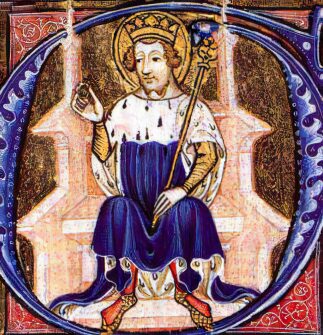
Edward was born in 1003. He was the last Saxon king to rule (for more than a few months) in England. He is called "Edward the Confessor" to distinguish him from another King of England, Edward the Martyr (c962-979).

In Christian biographies, the term "confessor" is often used to denote someone who has born witness to the faith by his life, but who did not die as a martyr. Edward was the son of King Ethelred the Unready. This does not mean that he was unprepared, but rather that he was stubborn and willful, and would not accept "rede," meaning advice or counsel.

Aethelred was followed by several Danish kings of England, during whose rule young Edward and his mother took refuge in Normandy. But the last Danish king named Edward as his successor, and he was crowned in 1042. Opinions on his success as a king vary. Some historians consider him weak and indecisive, and say that his reign paved the way for the Norman Conquest. Others say that his prudent management gave England more than twenty years of peace and prosperity, with freedom from foreign domination, at a time when powerful neighbors might well have dominated a less adroit ruler. He was diligent in public and private worship, generous to the poor, and accessible to subjects who sought redress of grievances.

While in exile, he had vowed to make a pilgrimage to Rome if his family fortunes mended. However, his council told him that it was not expedient for him to be so long out of the country. Accordingly, he spent his pilgrimage money instead on the relief of the poor and the building of Westminster Abbey, which stands today (rebuilt in the thirteenth century) as one of the great churches of England, burial place of her kings and others deemed worthy of special honor.

Edward died on 5 January 1066, leaving no offspring; and after his death, the throne was claimed by his wife's brother, Harold the Saxon, and by William, Duke of Normandy. William defeated and slew Harold at the Battle of Hastings (14 October 1066), and thereafter the kings and upper classes of England were Norman-French rather than Anglo-Saxon. Edward is remembered, not on the day of his death, but on the anniversary of the moving ("translation") of his corpse to a new tomb, a date which is also the anniversary of the eve of the Battle of Hastings, the end of Saxon England.

The Translation of St. Edward the Confessor - 13 October

The Collect.

O GOD, who hast crowned the blessed King Edward, thy Confessor, with everlasting glory: make us, we beseech thee, so to venerate him on earth, that we may reign with him hereafter in heaven; through Jesus Christ our Lord. Amen.


The Epistle - Philippians 4:4-9.


The Gospel - St. Matthew 25:31-40.


References and Resources:

http://elvis.rowan.edu/~kilroy/JEK/10/13.html
http://www.commonprayer.org/calend/propers/s_edwar.cfm
http://en.wikipedia.org/wiki/Edward_the_Confessor


†

Tuesday, October 6, 2020

Bruno of Cologne


(Cologne, c. 1030 – Serra San Bruno, 6 October 1101), the founder of the Carthusian Order, personally founded the order's first two communities. He was a celebrated teacher at Reims, and a close advisor of his former pupil, Pope Urban II.

He was a lecturer in theology at the cathedral school at St. Cunibert's, Cologne. He subsequently left this post and, along with a few of his friends, became a hermit in the mountainous land of the Chartreuse. From this experience grew the Order of the Carthusians, which emphasized penance, poverty, solitude and contemplation.

In our materialistic age, it is hard for many to fathom giving one's life to prayer and contemplation. However, as believers in Christ, we realize our destiny is eternal, not temporal.


Bruno of Cologne - 6 October - Monastic and Confessor

The Collect.

O ALMIGHTY God, who hast called us to faith in thee, and hast compassed us about with so great a cloud of witnesses; Grant that we, encouraged by the good examples of thy Saints, and especially of thy servant Bruno, may persevere in running the race that is set before us, until at length, through thy mercy, we with them attain to thine eternal joy; through him who is the author and finisher of our faith, thy Son Jesus Christ our Lord. Amen.


The Epistle - Ecclesiasticus 31:8-11

Blessed is the man that is found without blemish: and hath not gone after gold. Who is he? and we will call him blessed: for wonderful things hath he done among his people. Who hath been tried thereby and found perfect? Then let him glory. Who might offend and hath not offended? or done evil, and hath not done it? His goods shall be established, and the congregation shall declare his alms.


The Gospel - St. Luke 12:35-40

Let your loins be girded about, and your lights burning; And ye yourselves like unto men that wait for their lord, when he will return from the wedding; that when he cometh and knocketh, they may open unto him immediately. Blessed are those servants, whom the lord when he cometh shall find watching: verily I say unto you, that he shall gird himself, and make them to sit down to meat, and will come forth and serve them. And if he shall come in the second watch, or come in the third watch, and find them so, blessed are those servants. And this know, that if the goodman of the house had known what hour the thief would come, he would have watched, and not have suffered his house to be broken through. Be ye therefore ready also: for the Son of man cometh at an hour when ye think not.


Reference and Resources:

http://en.wikipedia.org/wiki/Bruno_of_Cologne
http://www.newadvent.org/cathen/03014b.htm
http://www.episcopalnet.org/Kalendars/OctoberSaints.html#anchor263175

+

Sunday, September 27, 2020

Vincent de Paul

St. Vincent was born of poor parents in the village of Pouy in Gascony, France, about 1580. He enjoyed his first schooling under the Franciscan Fathers at Acqs. Such had been his progress in four years that a gentleman chose him as sub receptor to his children, and he was thus enabled to continue his studies without being a burden to his parents. In 1596, he went to the University of Toulouse for theological studies, and there he was ordained priest in 1600.

In 1605 while traveling aboard ship in the Mediterranean Sea, Vincent was captured by North African Pirates and sold into slavery. Vincent remained in bondage for two years eventually gaining his freedom by converting his Mohammedan owner to Christianity. After leaving North Africa, Vincent traveled to Rome and then back to France serving in Various Chaplaincies and Parishes for a time.

This brought him into contact with the peasants, and he became concerned for their needs, physical and spiritual. A peasant who believed himself to be dying confessed to him that his previous confessions for many years had been dishonest. Vincent began to preach in the local church on confession, repentance, forgiveness, and the love of God. His sermons drew such crowds of penitents that he had to call in a group of other priests to assist him. He took on the pastorship of a neighboring church attended by a more fashionable and aristocratic crowd, and there he likewise drew many of his listeners to repentance and amendment of life. Returning to Paris, he worked among the prisoners destined for the galleys who were being held at the Conciergerie.

In 1625 he established the Congregation of the Mission (now known as the Vincentians, or the Lazarists), a community of priests who undertook to renounce all ecclesiastical advancement and devote themselves to work in the small towns and villages of France. In an age not noted for "interdenominational courtesy," he instructed his missioners that Protestants were to be treated as brothers, with respect and love, without patronage or condescension or contentiousness. Wealthy men and women came to him, expressing a wish to amend their lives, and he organized them into a Confraternity of Charity and set them to work caring for the poor and sick in hospitals and in home visits. In 1633 the Archbishop or Paris gave him the Priory of St Lazare as a headquarters. There he offered retreats six times a year for those who were preparing for the ministry. These lasted two weeks each, and each involved about eighty students. He then began to offer similar retreats for laypersons of all classes and widely varying backgrounds.

Out of his Confraternity of Charity there arose an order of nuns called the Daughters (or Sisters) of Charity, devoted to nursing those who were sick and poor. He said of them, "Their convent is the sick-room, their chapel the parish church, their cloister the streets of the city." Many babies were abandoned in Paris every year, and when Vincent saw some of them, he established an orphanage for them, and thereafter often wandered through the slums, looking in corners for abandoned babies, which he carried back to the orphanage.

He complained to the King that ecclesiastical posts were distributed simply as political favors and that the spiritual qualifications of the appointees were simply ignored. The King responded by creating a Council of Conscience to remedy the matter, with Vincent at the head. On one occasion, a noblewoman of the court, furious with Vincent because he refused to nominate her son for a position as bishop, threw a stool at him. He left the room with a stream of blood pouring from his forehead, and said to a companion who was waiting for him, "Is it not wonderful how strong a mother's love for her son can be?" He died 27 September 1660.


Vincent de Paul - 27 September - Priest, Confessor, and Helper of Men

The Collect.

Almighty God, who didst call thy servant Vincent de Paul to serve thee in the person of those in need: Grant, we beseech thee, that we, following his example, may fulfil thy commandments by loving our neighbour, and by loving thee with all our hearts, through Jesus Christ our Lord, who liveth and reigneth with thee and the Holy Ghost, one God, for ever and ever. Amen.


The Epistle - Philippians 4:4-9.


The Gospel - St. Luke 10:1-9.


Reference and Resources:

http://elvis.rowan.edu/~kilroy/JEK/09/27.html
http://saints.sqpn.com/saint-vincent-de-paul/
http://www.monasteryicons.com/cgi-bin/hazel.cgi?action=DETAIL&item=397&EXPANDED=1
http://en.wikipedia.org/wiki/Vincent_de_Paul
http://tridentine-mass.blogspot.com/search/label/Saint%20Vincent%20de%20Paul
http://www.ttstm.com/2009/09/september-27-vincent-de-paul-slave.html

†

Monday, September 7, 2020

Evurtius of Orleans


is said to have been a martyr; but nothing really known of him. He might possibly be identified with an Eortius who took part in the council of Valencia (374). Nothing is known about the date of his death, but in 1604 his name was added to the calendar of the Book of Common Prayer from the York Breviary to distinguish the birthday of Queen Elizabeth I.


Evurtius - 7 September - Bishop and Confessor

The Collect.

GRANT, we beseech thee, Almighty God, that the devout observance of this festival of blessed Evurtius, thy Confessor and Bishop, may be profitable unto us for our advancement in all godliness, and for the attainment of everlasting salvation. Through the same our Lord Jesus Christ, who liveth and reigneth with thee and the Holy Ghost ever, one God, world without end. Amen.


The Epistle - St. James 1:12–18.

Dearly beloved: Blessed is the man that endureth temptation: for when he is tried, he shall receive the crown of life, which the Lord hath promised to them that love him. Let no man say when he is tempted, I am tempted of God: for God cannot be tempted with evil, neither tempteth he any man: But every man is tempted, when he is drawn away of his own lust, and enticed. Then when lust hath conceived, it bringeth forth sin: and sin, when it is finished, bringeth forth death. Do not err, my beloved brethren. Every good gift and every perfect gift is from above, and cometh down from the Father of lights, with whom is no variableness, neither shadow of turning. Of his own will begat he us with the word of truth, that we should be a kind of first fruits of his creatures.


The Gospel - St. Luke 14:25–33.

At that time: Jesus unto the multitudes: If any man come to me, and hate not his father, and mother, and wife, and children, and brethren, and sisters, yea, and his own life also, he cannot be my disciple. And whosoever doth not bear his cross, and come after me, cannot be my disciple. For which of you, intending to build a tower, sitteth not down first, and counteth the cost, whether he have sufficient to finish it? Lest haply, after he hath laid the foundation, and is not able to finish it, all that behold it begin to mock him, Saying, This man began to build, and was not able to finish. Or what king, going to make war against another king, sitteth not down first, and consulteth whether he be able with ten thousand to meet him that cometh against him with twenty thousand? Or else, while the other is yet a great way off, he sendeth an ambassage, and desireth conditions of peace. So likewise, whosoever he be of you that forsaketh not all that he hath, he cannot be my disciple.


Reference and Resources:

http://www.eskimo.com/~lhowell/bcp1662/notes/saints.html
http://societies.anglican.org/anglocatholic/anglicanmissal/s_mass02.htm
http://www.answers.com/topic/evurtius

†