Friday, October 14, 2016

Samuel Isaac Joseph Schereschewsky

Schereschewsky was born in Tauroggen, Russian Lithuania 6 May 1831. He appears to have been named for his father. His mother was Rosa Salvatha. Orphaned as a young boy, it is speculated he was raised by a half-brother who was a timber merchant in good circumstance. Having shown himself to be a promising student, he was given the best education available and it was his family's intention that he become a rabbi.

At age 15 he entered The Rabbinical School at Zhitomir and was responsible for supporting himself working as a tutor and a glazier. While at the school he came into possession of a Hebrew translation of the New Testament which had been left by English missionaries to the Jews that were operating in the Zhitomir area. It was in his study of the New Testament that Samuel began to see the messianic prophecies of the Jews had been met in the person of Jesus Christ.

By the time he was 19 (1850), Schereschewsky found himself caught in a struggle of religious identity and moved to the German states to further his learning and to sort thing out and added German to the growing list of languages he had mastered (Hebrew, Yiddish, Polish, Lithuanian and Russian)

In 1854 Schereschewsky emigrated to the United States and it was in New York he made company with Christian Jews, but did not enter the Christian faith until the next spring (1855). He was Baptized in a Baptist congregation but then left for Presbyterianism and studying at the Western Theological Seminary after two years (1857) he left for the the Episcopal Church and the General Theological Seminary and had added English to his mastered tongues.

In 1859 Schereschewsky volunteered for missionary work in China and won an appointment to the Shanghai mission and was Ordained to the Diaconate 17 July 1859. Schereschewsky sailed for China, learning Shanghainese dialect of Chinese on the voyage, he arrived at Wusung on 21 December 1859.

On 28 October 1860 Schereschewsky was Ordained to the Priesthood in his mission school chapel later designated as the Church of Our Saviour by Bishop William Jones Boone of Shanghai. While serving as a Priest, Schereschewsky worked with his talent for languages, translating the Psalms into Shanghainese.

In 1877 Schereschewsky was elected Bishop of Shanghai and founded St. John's University to help educate and win converts among the local Chinese. He also began his next project of translating the Bible into the Wenli dialect of Chinese. Schereschewsky served as Bishop until 1884 as illness had slowed his work and eventually confined him to a wheelchair.

Bishop Schereschewsky moved to Tokyo, Japan with his wife to continue his work of learning languages and then translating the Bible and Book of Common Prayer into his newly learned tongues, including Mandarin, Wenli, Shanghainese and Mongolian and by my estimation he had learned and mastered at least thirteen languages - Hebrew, Yiddish, Polish, Lithuanian, Russian, German, English, Shanghainese, Mandarin, Wenli, Mongolian and Japanese.

Samuel Isaac Joseph Schereschewsky passed to the eternal life 15 October 1906 and is buried in the Aoyama Cemetery in Tokyo, next to his wife, who supported him constantly during his labors and illness. Four years before his death, he said, “I have sat in this chair for over twenty years. It seemed very hard at first. But God knew best. He kept me for the work for which I am best fitted.”

Propers for Samuel Isaac Joseph Schereschewsky - 14 October - Missionary, Translator and Bishop

The Collect.

O God, who in thy providence didst call Joseph Schereschewsky from his home in Eastern Europe to the ministry of this Church, and didst send him as a missionary to China, upholding him in his infirmity, that he might translate the Holy Scriptures into languages of that land: Lead us, we pray thee, to commit our lives and talents to thee, in the confidence that when thou givest unto thy servants any work to do, thou dost also supply the strength to do it; through Jesus Christ our Lord, who liveth and reigneth with thee and the Holy Ghost, one God, for ever and ever. Amen.


The Epsitle - 2 Corinthians 4:11-18


The Gospel - St. Luke 24:44-48


Reference and Resources:

http://en.wikipedia.org/wiki/Samuel_Isaac_Joseph_Schereschewsky
http://www.ttstm.com/2009/10/october-14-samuel-isaac-joseph.html
http://elvis.rowan.edu/~kilroy/JEK/10/14.html
http://anglicangradual.stsams.org/FTP/MSWord/2723-SIJSchereschewsky.doc

†

Thursday, October 13, 2016

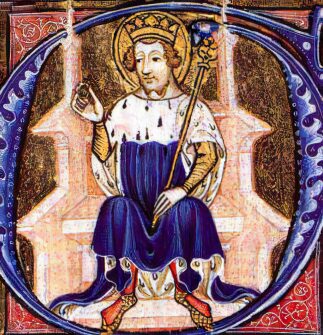
Translation of St. Edward the Confessor

Edward was born in 1003. He was the last Saxon king to rule (for more than a few months) in England. He is called "Edward the Confessor" to distinguish him from another King of England, Edward the Martyr (c962-979).

In Christian biographies, the term "confessor" is often used to denote someone who has born witness to the faith by his life, but who did not die as a martyr. Edward was the son of King Ethelred the Unready. This does not mean that he was unprepared, but rather that he was stubborn and willful, and would not accept "rede," meaning advice or counsel.

Aethelred was followed by several Danish kings of England, during whose rule young Edward and his mother took refuge in Normandy. But the last Danish king named Edward as his successor, and he was crowned in 1042. Opinions on his success as a king vary. Some historians consider him weak and indecisive, and say that his reign paved the way for the Norman Conquest. Others say that his prudent management gave England more than twenty years of peace and prosperity, with freedom from foreign domination, at a time when powerful neighbors might well have dominated a less adroit ruler. He was diligent in public and private worship, generous to the poor, and accessible to subjects who sought redress of grievances.

While in exile, he had vowed to make a pilgrimage to Rome if his family fortunes mended. However, his council told him that it was not expedient for him to be so long out of the country. Accordingly, he spent his pilgrimage money instead on the relief of the poor and the building of Westminster Abbey, which stands today (rebuilt in the thirteenth century) as one of the great churches of England, burial place of her kings and others deemed worthy of special honor.

Edward died on 5 January 1066, leaving no offspring; and after his death, the throne was claimed by his wife's brother, Harold the Saxon, and by William, Duke of Normandy. William defeated and slew Harold at the Battle of Hastings (14 October 1066), and thereafter the kings and upper classes of England were Norman-French rather than Anglo-Saxon. Edward is remembered, not on the day of his death, but on the anniversary of the moving ("translation") of his corpse to a new tomb, a date which is also the anniversary of the eve of the Battle of Hastings, the end of Saxon England.

Propers for The Translation of St. Edward the Confessor - 13 October

The Collect.

O GOD, who hast crowned the blessed King Edward, thy Confessor, with everlasting glory: make us, we beseech thee, so to venerate him on earth, that we may reign with him hereafter in heaven; through Jesus Christ our Lord. Amen.


The Epistle - Philippians 4:4-9.


The Gospel - St. Matthew 25:31-40.


References and Resources:

http://elvis.rowan.edu/~kilroy/JEK/10/13.html
http://www.commonprayer.org/calend/propers/s_edwar.cfm
http://en.wikipedia.org/wiki/Edward_the_Confessor


†

Wednesday, October 12, 2016

Edwin of Northumbria

(c. 586 – 12 October 632/633) was the son of Ælle king of Deira and seems to have had (at least) two siblings. His sister Acha was married to Æthelfrith, king of neighboring Bernicia. An otherwise unknown sibling fathered Hereric, who in turn fathered Abbess Hilda of Whitby and Hereswith, wife to king Anna of East Anglia's brother Æthelric.

After the death of his father, Edwin was deposed and exiled by Æthelric an usurper. Edwin traveled around the kingdoms of Britain and had found refuge in several royal houses, eventually marrying Cwenburg, Princess of Mercia. From refuge with King Rædwald of the East Angles, Edwin with his allies fought his rival Æthelric with the usurper being killed in the battle, thus Edwin was placed on the throne of Northumbria and made a vassal of Rædwald.

During his exile, Edwin had learned about Christianity from several of his hosts and with his restoration was contemplating his own conversion along with that of his kingdom. Edwin was very indecisive and held-back in his decision for fear of risk to his throne, but eventually, he gave in to the counsel of Paulinus of York and was Baptized on 12 April 627.

After his conversion, Edwin's star seems to rise with many victories, both political and military and Edwin was the most powerful king among the Anglo-Saxons, ruling Bernicia, Deira and much of eastern Mercia, the Isle of Man and Anglesey. His alliance with Kent, the subjection of Wessex, and his recent successes added to his power and authority. The imperium, as Bede calls it, that Edwin possessed was later equated with the idea of a Bretwalda, a later concept invented by West Saxon kings in the 9th century. Put simply, success confirmed Edwin's overlordship, and failure would diminish it.

It wasn't until the early 630's that Edwin was challenged for regional power. In 632/633 his vassals Penda of Mercia and Cadwallon of Gwynedd formed an alliance to resist Northumbrian overlordship. Edwin faced Penda and Cadwallon at the Battle of Hatfield Chase in the autumn of 632/633, and was defeated and killed. For a time his body was (allegedly) hidden in Sherwood Forest at a location that became the village of Edwinstowe (trans. Edwin's resting place). Of his two grown sons by Cwenburh of Mercia, Osfrith died at Hatfield, and Eadfrith was captured by Penda and killed some time afterward.

Edwin is considered a martyr as that his adversary Penda and the Mercians were pagans.


Propers for Edwin of Northumbria - 12 October - King, Convert, and Martyr

The Collect.

ALMIGHTY and everlasting God, who didst strengthen thy blessed martyr Edwin with the virtue of constancy in faith and truth: Grant us in like manner for love of thee to despise the prosperity of this world, and to fear none of its adversities; through Jesus Christ our Lord. Amen.


The Epistle - 2 Esdras 2:42-48


The Gospel - St. Matthew 10:16-22


Reference and Resources:

http://www.commonprayer.org/calend/propers/com_mart.cfm
http://en.wikipedia.org/wiki/Edwin_of_Northumbria
http://comfortablewords.blogspot.com/2009/10/conversion-of-st-edwin.html

†

Tuesday, October 11, 2016

Philip the Protodeacon


He is first mentioned in the Acts of the Apostles (6:5) as one of "the seven" who were chosen to attend to certain temporal affairs of the church in Jerusalem in consequence of the murmurings of the Hellenists against the Hebrews.

After the martyrdom of Saint Stephen he went to "the city of Samaria", where he preached with much success, Simon Magus being one of his converts.

He afterwards instructed and baptized the Ethiopian eunuch on the road between Jerusalem and Gaza; next he was "caught away" by the Spirit and "found at Azotus" (Ashdod), then "passing through he preached in all the cities till he came to Caesarea" (Acts 8).

Here some years afterwards, according to Acts 21:8-9, where he is described as "the evangelist" (a term found again in the New Testament only in Ephesians 4:11; 2 Timothy 4:5), he entertained Paul and his companion on their way to Jerusalem; at that time "he had four daughters which did prophesy".

At a very early period he came to be confused with the apostle Philip; the confusion was all the more easy because, as an esteemed member of the apostolic company, he may readily have been described as an apostle in the wider sense of that word, beyond the original 12 Apostles. A late tradition describes him as settling at Tralles in Anatolia, where he became the bishop of that church.


Propers for Philip the Protodeacon - 11 October

The Collect.

Almighty and everlasting God, we thank thee for thy servant Philip the Deacon, whom thou didst call to preach the Gospel to the peoples of Samaria and Ethiopia. Raise up, we beseech thee, in this and every land heralds and evangelists of thy kingdom, that thy Church may make known the immeasurable riches of our Saviour Jesus Christ, who liveth and reigneth with thee and the Holy Ghost, now and for ever.Amen.


The Epistle - Acts 1:1-9.

THE former treatise have I made, O Theophilus, of all that Jesus began both to do and teach, until the day in which he was taken up, after that he through the Holy Ghost had given commandments unto the apostles whom he had chosen: to whom also he shewed himself alive after his passion by many infallible proofs, being seen of them forty days, and speaking of the things pertaining to the kingdom of God: and, being assembled together with them, commanded them that they should not depart from Jerusalem, but wait for the promise of the Father, which, saith he, ye have heard of me. For John truly baptized with water; but ye shall be baptized with the Holy Ghost not many days hence. When they therefore were come together, they asked of him, saying, Lord, wilt thou at this time restore again the kingdom to Israel? And he said unto them, It is not for you to know the times or the seasons, which the Father hath put in his own power. But ye shall receive power, after that the Holy Ghost is come upon you: and ye shall be witnesses unto me both in Jerusalem, and in all Judea, and in Samaria, and unto the uttermost part of the earth. And when he had spoken these things. while they beheld, he was taken up; and a cloud received him out of their sight.


The Gospel - St. Luke 10:1-9.

AFTER these things the Lord appointed other seventy also, and sent them two and two before his face into every city and place, whither he himself would come. Therefore said he unto them, The harvest truly is great, but the labourers are few: pray ye therefore the Lord of the harvest, that he would send forth labourers into his harvest. Go your ways: behold, I send you forth as lambs among wolves. Carry neither purse, nor pack, nor shoes: and salute no man by the way. And into whatsoever house ye enter, first say, Peace be to this house. And if the son of peace be there, your peace shall rest upon it: if not, it shall turn to you again. And in the same house remain, eating and drinking such things as they give: for the labourer is worthy of his hire. Go not from house to house. And into whatsoever city ye enter, and they receive you, eat such things as are set before you: and heal the sick that are therein, and say unto them, The kingdom of God is come nigh unto you.


Reference and Resources:


+

Monday, October 10, 2016

Paulinus of York

In the middle 400's the pagan Anglo-Saxons invaded Britain, driving the Christian Britons north and west into Cornwall, Wales, Scotland, and Ireland. In 597 a band of monks headed by Augustine of Canterbury (feast 26 May--not to be confused with Augustine of Hippo) arrived in southeastern England, in the kingdom of Kent, and began to evangelize the people there, with considerable success. In 601 a second group of monks arrived, including Paulinus (born around 584).


Sometime after 616, Edwin, the pagan king of Northumbria (the region north of the Humber river--roughly the northern quarter of England), asked for the hand in marriage of Ethelburga, the sister of the king of Kent. He was told that a Christian princess could not marry a pagan, but he promised that she would be free to practice her religion, and that he would listen to Christian preachers, and seriously consider becoming a Christian himself. At this Ethelburga agreed to marry him, and went north in 625, taking with her as chaplain the monk Paulinus, who was consecrated bishop for the purpose.

Edwin heard the preaching of Paulinus for many months, and finally consulted his advisors. Coifi, the high priest of the pagan religion, advised adopting Christianity, since he said that the pagan religion had not proved satisfactory. Another nobleman agreed, saying: "Life is like a banquet hall. Inside is light and fire and warmth and feasting, but outside it is cold and dark. A sparrow flies in through a window at one end, flies the length of the hall, and out through a window at the other end. That is what life is like. At birth we emerge from the unknown, and for a brief while we are here on this earth, with a fair amount of comfort and happiness. But then we fly out the window at the other end, into the cold and dark and unknown future. If the new religion can lighten that darkness for us, then let us follow it."

The other elders and counselors of the king gave similar advice, and so in 627 the king and many of his chief men were baptized. Other conversions followed, and the Church in Northumbria flourished. However, six years later, King Edwin was defeated and killed by Cadwallon of Wales and Penda of Mercia at the battle of Hatfield Chase. Paulinus left his deacon James in charge of what remained of the Church there, and took Queen Ethelburga and her children back to Kent by ship. There the elderly Paulinus was given the bishopric of Rochester, which he held till his death on 10 October 644.


Propers for Paulinus of York - 10 October - Missionary and Bishop

The Collect.

ALMIGHTY and everlasting God, we thank thee for thy servant Paulinus, whom thou didst call to preach the Gospel to the people of England: Raise up, we pray thee, in this and every land, heralds and evangelists of thy kingdom, that thy Church may make known the unsearchable riches of Christ, and may increase with the increase of God; through the same thy Son Jesus Christ our Lord. Amen.


The Epistle - Acts 1:1-9.

THE former treatise have I made, O Theophilus, of all that Jesus began both to do and teach, until the day in which he was taken up, after that he through the Holy Ghost had given commandments unto the apostles whom he had chosen: to whom also he shewed himself alive after his passion by many infallible proofs, being seen of them forty days, and speaking of the things pertaining to the kingdom of God: and, being assembled together with them, commanded them that they should not depart from Jerusalem, but wait for the promise of the Father, which, saith he, ye have heard of me. For John truly baptized with water; but ye shall be baptized with the Holy Ghost not many days hence. When they therefore were come together, they asked of him, saying, Lord, wilt thou at this time restore again the kingdom to Israel? And he said unto them, It is not for you to know the times or the seasons, which the Father hath put in his own power. But ye shall receive power, after that the Holy Ghost is come upon you: and ye shall be witnesses unto me both in Jerusalem, and in all Judea, and in Samaria, and unto the uttermost part of the earth. And when he had spoken these things. while they beheld, he was taken up; and a cloud received him out of their sight.


The Gospel - St. Luke 10:1-9.

AFTER these things the Lord appointed other seventy also, and sent them two and two before his face into every city and place, whither he himself would come. Therefore said he unto them, The harvest truly is great, but the labourers are few: pray ye therefore the Lord of the harvest, that he would send forth labourers into his harvest. Go your ways: behold, I send you forth as lambs among wolves. Carry neither purse, nor pack, nor shoes: and salute no man by the way. And into whatsoever house ye enter, first say, Peace be to this house. And if the son of peace be there, your peace shall rest upon it: if not, it shall turn to you again. And in the same house remain, eating and drinking such things as they give: for the labourer is worthy of his hire. Go not from house to house. And into whatsoever city ye enter, and they receive you, eat such things as are set before you: and heal the sick that are therein, and say unto them, The kingdom of God is come nigh unto you.


Reference and Resources:

http://en.wikipedia.org/wiki/Paulinus_of_York
http://www.missionstclare.com/english/people/oct10.html

+

Sunday, October 9, 2016

The 20th Sunday After Trinity

The Collect.

ALMIGHTY and most merciful God, of thy bountiful goodness keep us, we beseech thee, from all things that may hurt us; that we, being ready both in body and soul, may cheerfully accomplish those things which thou commandest; through Jesus Christ our Lord. Amen.


The Epistle - Ephesians v. 15.

SEE then that ye walk circumspectly, not as fools, but as wise, redeeming the time, because the days are evil. Wherefore be ye not unwise, but understanding what the will of the Lord is. And be not drunk with wine, wherein is excess; but be filled with the Spirit; speaking to yourselves in psalms and hymns and spiritual songs, singing and making melody in your heart to the Lord; giving thanks always for all things unto God and the Father in the name of our Lord Jesus Christ; submitting yourselves one to another in the fear of God.


The Gospel - St. Matthew xxii. 1.

JESUS said, The kingdom of heaven is like unto a certain king, which made a marriage for his son, and sent forth his servants to call them that were bidden to the wedding: and they would not come. Again, he sent forth other servants, saying, Tell them which are bidden, Behold, I have prepared my dinner: my oxen and my fatlings are killed, and all things are ready: come unto the marriage. But they made light of it, and went their ways, one to his farm, another to his merchandise: and the remnant took his servants, and entreated them spitefully, and slew them. But when the king heard thereof, he was wroth: and he sent forth his armies, and destroyed those murderers, and burned up their city. Then saith he to his servants, The wedding is ready, but they which were bidden were not worthy. Go ye therefore into the highways, and as many as ye shall find, bid to the marriage. So those servants went out into the highways, and gathered together all as many as they found, both bad and good: and the wedding was furnished with guests. And when the king came in to see the guests, he saw there a man which had not on a wedding-garment: and he saith unto him, Friend, how camest thou in hither not having a wedding-garment? And he was speechless. Then said the king to the servants, Bind him hand and foot, and take him away, and cast him into outer darkness; there shall be weeping and gnashing of teeth. For many are called, but few are chosen.

†

Denis of Paris

also called Dionysius, Dennis, or Denys) is a Christian martyr and saint. In the third century, he was bishop of Paris. He was martyred in approximately 250, and is venerated especially in the Roman Catholic Church as patron of Paris, France and one of the Fourteen Holy Helpers. The modern name "Denis" derives from the ancient name Dionysius, "servant of Dionysus".

Gregory of Tours states that Denis was bishop of the Parisii and was martyred by being beheaded by a sword. The earliest document giving an account of his life and martyrdom, the Passio SS. Dionysii Rustici et Eleutherii dates from c. 600, is mistakenly attributed to the poet Venantius Fortunatus, and is legendary. Nevertheless, it appears from the Passio that Denis was sent from Italy to convert Gaul in the third century, forging a link with the "apostles to the Gauls" reputed to have been sent out under the direction of Pope Fabian. This was after the persecutions under Emperor Decius had all but dissolved the small Christian community at Lutetia. Denis, with his inseparable companions Rusticus and Eleutherius, who were martyred with him, settled on the Île de la Cité in the River Seine. Roman Paris lay on the higher ground of the Left Bank, away from the river.

Denis, having irritated the tempers of heathen priests for his many conversions, was executed by beheading on the highest hill near Paris (now Montmartre), which was likely to have been a druidic holy place. The martyrdom of Denis and his companions gave it its current name, which in Old French means "mountain of martyrs". According to the Golden Legend, after his head was chopped off, Denis picked it up and walked several miles, preaching a sermon the entire way. The site where he stopped preaching and actually died was made into a small shrine that developed into the Saint Denis Basilica, which became the burial place for the kings of France. Another account has his corpse being thrown in the Seine, but recovered and buried later that night by his converts.


Propers for Denis of Paris - 9 October - Bishop and Martyr


The Collect:

ALMIGHTY and everlasting God, who didst strengthen thy blessed martyr Denis with the virtue of constancy in faith and truth: Grant us in like manner for love of thee to despise the prosperity of this world, and to fear none of its adversities; through Jesus Christ our Lord. Amen.


The Epistle - 2 Esdras 2:42-48


The Gospel - St. Matthew 10:16-22


References and Resources:

http://en.wikipedia.org/wiki/Denis
http://www.commonprayer.org/calend/cal10_07.cfm?PropersYear=1637
http://www.commonprayer.org/calend/propers/com_mart.cfm

†

Saturday, October 8, 2016

Robert Grosseteste

English statesman, scholastic philosopher, theologian and bishop of Lincoln, was born of humble parents at Stradbroke in Suffolk. A.C. Crombie calls him "the real founder of the tradition of scientific thought in medieval Oxford, and in some ways, of the modern English intellectual tradition".

Had the leaders of the thirteenth century heeded this preacher, many of the disasters of the following three centuries might have been avoided. Robert was a peasant lad from Suffolk, born about 1175. He distinguished himself at Oxford in law, medicine, languages, natural sciences, and theology. He became what is now called Chancellor of Oxford University.

In 1235, he was elected Bishop of Lincoln, in area the largest diocese in England. He promptly visited all the churches in the diocese and quickly removed many of the prominent clergy because they were neglecting their pastoral duties. He vigorously opposed the practice by which the Pope appointed Italians as absentee clergy for English churches (collecting salaries from said churches without ever setting foot in the country). He insisted that his priests spend their time in the service of their people, in prayer, and in study. He went on a pilgrimage to Rome, where he spoke out boldly against ecclesiastical abuses. Back in England, he spoke against unlawful usurpations of power by the monarch, and was one of those present at the signing of the Magna Carta.

Grosseteste's scholarly writings embraced many fields of learning. He translated into Latin the Ethics of Aristotle and the theological works of John of Damascus and of the fifth-century writer known as Dionysius the Areopagite. He was skilled in poetry, music, architecture, mathematics, astronomy, optics, and physics (one of his pupils was Roger Bacon). His writings on the first chapter of Genesis include an interesting anticipation of modern cosmological ideas. (He read that the first thing created was light, and said that the universe began with pure energy exploding from a point source.) He knew Hebrew and Greek, and his Biblical studies were a notable contribution to the scholarship of the day.


Propers for Robert Grosseteste - 8 October - Teacher, Reformer, and Bishop

The Collect:

O God our heavenly Father, who didst raise up thy faithful servant Robert Grosseteste to be a bishop and pastor in thy Church and to feed thy flock: Give to all pastors abundant gifts of thy Holy Spirit, that they may minister in thy household as true servants of Christ and stewards of thy divine mysteries; through Jesus Christ our Lord, who liveth and reigneth with thee and the Holy Ghost, one God, now and for ever.Amen.


Bible Readings: Psalm 112:1-9, Psalm 23 Acts 20:28-32 and St. Luke 16:10-15


Reference and Resources:

http://elvis.rowan.edu/~kilroy/JEK/10/09.html
http://en.wikipedia.org/wiki/Robert_Grosseteste

†

Friday, October 7, 2016

Morning Prayer Readings Friday after Trinity 19

The Psalter

Psalm 119:145-160 (Section XIX - XX)

The One Hundred Nineteenth Psalm

I. Beati immaculati (vs 1-8)
 
BLESSED are those that are undefiled in the way, * and walk in the law of the LORD.
 Blessed are they that keep his testimonies, * and seek him with their whole heart;
 Even they who do no wickedness, * and walk in his ways.
 Thou hast charged * that we shall diligently keep thy commandments.
 O that my ways were made so direct, * that I might keep thy statutes!
 So shall I not be confounded, * while I have respect unto all thy commandments.
 I will thank thee with an unfeigned heart, * when I shall have learned the judgments of thy righteousness.
 I will keep thy statutes; * O forsake me not utterly.

II. In quo corrigit? (vs 9-16)
 
WHEREWITHAL shall a young man cleanse his way? * even by ruling himself after thy word.
 With my whole heart have I sought thee; * O let me not go wrong out of thy commandments.
 Thy word have I hid within my heart, * that I should not sin against thee.
 Blessed art Thou, O LORD; * O teach me thy statutes.
 With my lips have I been telling * of all the judgments of thy mouth.
 I have had as great delight in the way of thy testimonies, * as in all manner of riches.
 I will talk of thy commandments, * and have respect unto thy ways.
 My delight shall be in thy statutes, * and I will not forget thy word.

III. Retribue servo tuo (vs 17-24)
 
O DO well unto thy servant; * that I may live, and keep thy word.
 Open thou mine eyes; * that I may see the wondrous things of thy law.
 I am a stranger upon earth; * O hide not thy commandments from me.
 My soul breaketh out for the very fervent desire * that it hath alway unto thy judgments.
 Thou hast rebuked the proud; * and cursed are they that do err from thy commandments.
 O turn from me shame and rebuke; * for I have kept thy testimonies.
 Princes also did sit and speak against me; * but thy servant is occupied in thy statutes.
 For thy testimonies are my delight, * and my counsellors.

IV. Adhaesit pavimento (vs 25-32)
 
MY soul cleaveth to the dust; * O quicken thou me, according to thy word.
 I have acknowledged my ways, and thou heardest me: * O teach me thy statutes.
 Make me to understand the way of thy commandments; * and so shall I talk of thy wondrous works.
 My soul melteth away for very heaviness; * comfort thou me according unto thy word.
 Take from me the way of lying, * and cause thou me to make much of thy law.
 I have chosen the way of truth, * and thy judgments have I laid before me.
 I have stuck unto thy testimonies; * O LORD, confound me not.
 I will run the way of thy commandments, * when thou hast set my heart at liberty.

V. Legem pone (vs 33-40)
 TEACH me, O LORD, the way of thy statutes, * and I shall keep it unto the end.
 Give me understanding, and I shall keep thy law; * yea, I shall keep it with my whole heart.
 Make me to go in the path of thy commandments; * for therein is my desire.
 Incline my heart unto thy testimonies, * and not to covetousness.
 O turn away mine eyes, lest they behold vanity; * and quicken thou me in thy way.
 O stablish thy word in thy servant, * that I may fear thee.
 Take away the rebuke that I am afraid of; * for thy judgments are good.
 Behold, my delight is in thy commandments; * O quicken me in thy righteousness.

VI. Et veniat super me (vs 41-48)
 
LET thy loving mercy come also unto me, O LORD, * even thy salvation, according unto thy word.
 So shall I make answer unto my blasphemers; * for my trust is in thy word.
 O take not the word of thy truth utterly out of my mouth; * for my hope is in thy judgments.
 So shall I alway keep thy law; * yea, for ever and ever.
 And I will walk at liberty; * for I seek thy commandments.
 I will speak of thy testimonies also, even before kings, * and will not be ashamed.
 And my delight shall be in thy commandments, * which I have loved.
 My hands also will I lift up unto thy commandments, which I have loved; * and my study shall be in thy statutes.

VII. Memor esto verbi tui (vs 49-56)
 
O THINK upon thy servant, as concerning thy word, * wherein thou hast caused me to put my trust.
 The same is my comfort in my trouble; * for thy word hath quickened me.
 The proud have had me exceedingly in derision; * yet have I not shrinked from thy law.
 For I remembered thine everlasting judgments, O LORD, * and received comfort.
 I am horribly afraid, * for the ungodly that forsake thy law.
 Thy statutes have been my songs, * in the house of my pilgrimage.
 I have thought upon thy Name, O LORD, in the night season, * and have kept thy law.
 This I had, * because I kept thy commandments.

VIII. Portio mea, Domine (vs 57-64)
 
THOU art my portion, O LORD; * I have promised to keep thy law.
 I made my humble petition in thy presence with my whole heart; * O be merciful unto me, according to thy word.
 I called mine own ways to remembrance, * and turned my feet unto thy testimonies.
 I made haste, and prolonged not the time, * to keep thy commandments.
 The snares of the ungodly have compassed me about; * but I have not forgotten thy law.
 At midnight I will rise to give thanks unto thee, * because of thy righteous judgments.
 I am a companion of all them that fear thee, * and keep thy commandments.
 The earth, O LORD, is full of thy mercy: * O teach me thy statutes.

IX. Bonitatem fecisti (vs 65-72)
 
O LORD, thou hast dealt graciously with thy servant, * according unto thy word.
 O teach me true understanding and knowledge; * for I have believed thy commandments.
 Before I was troubled, I went wrong; * but now have I kept thy word.
 Thou art good and gracious; * O teach me thy statutes.
 The proud have imagined a lie against me; * but I will keep thy commandments with my whole heart.
 Their heart is as fat as brawn; * but my delight hath been in thy law.
 It is good for me that I have been in trouble; * that I may learn thy statutes.
 The law of thy mouth is dearer unto me * than thousands of gold and silver.

X. Manus tuae fecerunt me (vs 73-80)
 
THY hands have made me and fashioned me: * O give me understanding, that I may learn thy commandments.
 They that fear thee will be glad when they see me; * because I have put my trust in thy word.
 I know, O LORD, that thy judgments are right, * and that thou of very faithfulness hast caused me to be troubled.
 O let thy merciful kindness be my comfort, * according to thy word unto thy servant.
 O let thy loving mercies come unto me, that I may live; * for thy law is my delight.
 Let the proud be confounded, for they go wickedly about to destroy me; * but I will be occupied in thy commandments.
 Let such as fear thee, and have known thy testimonies, * be turned unto me.
 O let my heart be sound in thy statutes, * that I be not ashamed.

XI. Defecit anima mea (vs 81-88)
 
MY soul hath longed for thy salvation, * and I have a good hope because of thy word.
 Mine eyes-long sore for thy word; * saying, O when wilt thou comfort me?
 For I am become like a bottle in the smoke; * yet do I not forget thy statutes.
 How many are the days of thy servant? * when wilt thou be avenged of them that persecute me?
 The proud have digged pits for me, * which are not after thy law.
 All thy commandments are true: * they persecute me falsely; O be thou my help.
 They had almost made an end of me upon earth; * but I forsook not thy commandments.
 O quicken me after thy loving-kindness; * and so shall I keep the testimonies of thy mouth.

XII. In aeternum, Domine (vs 89-96)
 
O LORD, thy word * endureth for ever in heaven.
 Thy truth also remaineth from one generation to another; * thou hast laid the foundation of the earth, and it abideth.
 They continue this day according to thine ordinance; * for all things serve thee.
 If my delight had not been in thy law, * I should have perished in my trouble.
 I will never forget thy commandments; * for with them thou hast quickened me.
 I am thine: O save me, * for I have sought thy commandments.
 The ungodly laid wait for me, to destroy me; * but I will consider thy testimonies.
 I see that all things come to an end; * but thy commandment is exceeding broad.

XIII. Quomodo dilexi! (vs 97-104)
 
LORD, what love have I unto thy law! * all the day long is my study in it.
 Thou, through thy commandments, hast made me wiser than mine enemies; * for they are ever with me.
 I have more understanding than my teachers; * for thy testimonies are my study.
 I am wiser than the aged; * because I keep thy commandments.
 I have refrained my feet from every evil way, * that I may keep thy word.
 I have not shrunk from thy judgments; * for thou teachest me.
 O how sweet are thy words unto my throat; * yea, sweeter than honey unto my mouth!
 Through thy commandments I get understanding: * therefore I hate all evil ways.

XIV. Lucerna pedibus meus (vs 105-112)
 
THY word is a lantern unto my feet, * and a light unto my paths.
 I have sworn, and am stedfastly purposed, * to keep thy righteous judgments.
 I am troubled above measure: * quicken me, O LORD, according to thy word.
 Let the free-will offerings of my mouth please thee, O LORD; * and teach me thy judgments.
 My soul is alway in my hand; * yet do I not forget thy law.
 The ungodly have laid a snare for me; * but yet I swerved not from thy commandments.
 Thy testimonies have I claimed as mine heritage for ever; * and why? they are the very joy of my heart.
 I have applied my heart to fulfil thy statutes alway, * even unto the end.

XV. Iniquos odio habui (vs 113-120)
 
I HATE them that imagine evil things; * but thy law do I love.
 Thou art my defence and shield; * and my trust is in thy word.
 Away from me, ye wicked; * I will keep the commandments of my God.
 O stablish me according to thy word, that I may live; * and let me not be disappointed of my hope.
 Hold thou me up, and I shall be safe; * yea, my delight shall be ever in thy statutes.
 Thou hast trodden down all them that depart from thy statutes; * for they imagine but deceit.
 Thou puttest away all the ungodly of the earth like dross; * therefore I love thy testimonies.
 My flesh trembleth for fear of thee; * and I am afraid of thy judgments.

XVI. Feci judicium (vs 121-128)
 
I DEAL with the thing that is lawful and right; * O give me not over unto mine oppressors.
 Make thou thy servant to delight in that which is good, * that the proud do me no wrong.
 Mine eyes are wasted away with looking for thy health, * and for the word of thy righteousness.
 O deal with thy servant according unto thy loving mercy, * and teach me thy statutes.
 I am thy servant; O grant me understanding, * that I may know thy testimonies.
 It is time for thee, LORD, to lay to thine hand; * for they have destroyed thy law.
 For I love thy commandments * above gold and precious stones.
 Therefore hold I straight all thy commandments; * and all false ways I utterly abhor.

XVII. Mirabilia (vs 129-136)
 
THY testimonies are wonderful; * therefore doth my soul keep them.
 When thy word goeth forth, * it giveth light and understanding unto the simple.
 I opened my mouth, and drew in my breath; * for my delight was in thy commandments.
 O look thou upon me, and be merciful unto me, * as thou usest to do unto those that love thy Name.
 Order my steps in thy word; * and so shall no wickedness have dominion over me.
 O deliver me from the wrongful dealings of men; * and so shall I keep thy commandments.
 Show the light of thy countenance upon thy servant, * and teach me thy statutes.
 Mine eyes gush out with water, * because men keep not thy law.

XVIII. Justus es, Domine (vs 137-144)
 
RIGHTEOUS art thou, O LORD; * and true are thy judgments.
 The testimonies that thou hast commanded * are exceeding righteous and true.
 My zeal hath even consumed me; * because mine enemies have forgotten thy words.
 Thy word is tried to the uttermost, * and thy servant loveth it.
 I am small and of no reputation; * yet do I not forget thy commandments.
 Thy righteousness is an everlasting righteousness, * and thy law is the truth.
 Trouble and heaviness have taken hold upon me; * yet is my delight in thy commandments.
 The righteousness of thy testimonies is everlasting: * O grant me understanding, and I shall live.

XIX. Clamavi in toto corde meo (vs 145-152)
 
I CALL with my whole heart; * hear me, O LORD; I will keep thy statutes.
 Yea, even unto thee do I call; * help me, and I shall keep thy testimonies.
 Early in the morning do I cry unto thee; * for in thy word is my trust.
 Mine eyes prevent the night watches; * that I might be occupied in thy word.
 Hear my voice, O LORD, according unto thy loving-kindness; * quicken me, according to thy judgments.
 They draw nigh that of malice persecute me, * and are far from thy law.
 Be thou nigh at hand, O LORD; * for all thy commandments are true.
 As concerning thy testimonies, I have known long since, * that thou hast grounded them for ever.

XX. Vide humilitatem (vs 153-160)
 
O CONSIDER mine adversity, and deliver me, * for I do not forget thy law.
 Avenge thou my cause, and deliver me; * quicken me according to thy word.
 Health is far from the ungodly; * for they regard not thy statutes.
 Great is thy mercy, O LORD; * quicken me, as thou art wont.
 Many there are that trouble me, and persecute me; * yet do I not swerve from thy testimonies.
 It grieveth me when I see the transgressors; * because they keep not thy law.
 Consider, O LORD, how I love thy commandments; * O quicken me, according to thy loving- kindness.
 Thy word is true from everlasting; * all the judgments of thy righteousness endure for evermore.

XXI. Principes persecuti sunt (vs 161-168)
 
PRINCES have persecuted me without a cause; * but my heart standeth in awe of thy word.
 I am as glad of thy word, * as one that findeth great spoils.
 As for lies, I hate and abhor them; * but thy law do I love.
 Seven times a day do I praise thee; * because of thy righteous judgments.
 Great is the peace that they have who love thy law; * and they have none occasion of stumbling.
 LORD, I have looked for thy saving health, * and done after thy commandments.
 My soul hath kept thy testimonies, * and loved them exceedingly.
 I have kept thy commandments and testimonies; * for all my ways are before thee.

XXII. Appropinquet deprecatio (vs 169-176)
 
LET my complaint come before thee, O LORD; * give me understanding according to thy word.
 Let my supplication come before thee; * deliver me according to thy word.
 My lips shall speak of thy praise, * when thou hast taught me thy statutes.
 Yea, my tongue shall sing of thy word; * for all thy commandments are righteous.
 Let thine hand help me; * for I have chosen thy commandments.
 I have longed for thy saving health, O LORD; * and in thy law is my delight.
 O let my soul live, and it shall praise thee; * and thy judgments shall help me.
 I have gone astray like a sheep that is lost; * O seek thy servant, for I do not forget thy commandments.

The First Lesson
II Kings 1:2-8, 17a
And Ahaziah fell down through a lattice in his upper chamber that was in Samaria, and was sick: and he sent messengers, and said unto them, Go, inquire of Baalzebub the god of Ekron whether I shall recover of this disease. But the angel of the Lord said to Elijah the Tishbite, Arise, go up to meet the messengers of the king of Samaria, and say unto them, Is it not because there is not a God in Israel, that ye go to inquire of Baalzebub the god of Ekron? Now therefore thus saith the Lord, Thou shalt not come down from that bed on which thou art gone up, but shalt surely die. And Elijah departed. And when the messengers turned back unto him, he said unto them, Why are ye now turned back? And they said unto him, There came a man up to meet us, and said unto us, Go, turn again unto the king that sent you, and say unto him, Thus saith the Lord, Is it not because there is not a God in Israel, that thou sendest to inquire of Baalzebub the god of Ekron? therefore thou shalt not come down from that bed on which thou art gone up, but shalt surely die. And he said unto them, What manner of man was he which came up to meet you, and told you these words? And they answered him, He was an hairy man, and girt with a girdle of leather about his loins. And he said, It is Elijah the Tishbite. So he died according to the word of the Lord which Elijah had spoken.


The Second Lesson
I Timothy 2:1-10
I exhort therefore, that, first of all, supplications, prayers, intercessions, and giving of thanks, be made for all men; For kings, and for all that are in authority; that we may lead a quiet and peaceable life in all godliness and honesty. For this is good and acceptable in the sight of God our Saviour; Who will have all men to be saved, and to come unto the knowledge of the truth. For there is one God, and one mediator between God and men, the man Christ Jesus; Who gave himself a ransom for all, to be testified in due time. Whereunto I am ordained a preacher, and an apostle, (I speak the truth in Christ, and lie not;) a teacher of the Gentiles in faith and verity. I will therefore that men pray every where, lifting up holy hands, without wrath and doubting. In like manner also, that women adorn themselves in modest apparel, with shamefacedness and sobriety; not with broided hair, or gold, or pearls, or costly array; But (which becometh women professing godliness) with good works.


Collects and Prayers
ALMIGHTY God, the fountain of all wisdom, who knowest our necessities before we ask, and our ignorance in asking; We beseech thee to have compassion upon our infirmities; and those things which for our unworthiness we dare not, and for our blindness we cannot ask, vouchsafe to give us, for the worthiness of thy Son Jesus Christ our Lord. Amen.

Nineteenth Sunday after Trinity
O GOD, forasmuch as without thee we are not able to please thee; Mercifully grant that thy Holy Spirit may in all things direct and rule our hearts; through Jesus Christ our Lord. Amen.


Prayer for Grace to enable us to perform that Resolution.

BUT, O God, who knowest the weakness and corruption of our nature, and the manifold temptations which we daily meet with; We humbly beseech thee to have compassion on our infirmities, and to give us the constant assistance of thy Holy Spirit; that we may be effectually restrained from sin, and incited to our duty. Imprint upon our hearts such a dread of thy judgments, and such a grateful sense of thy goodness to us, as may make us both afraid and ashamed to offend thee. And, above all, keep in our minds a lively remembrance of that great day, in which we must give a strict account of our thoughts, words, and actions to him whom thou hast appointed the Judge of quick and dead, thy Son Jesus Christ our Lord. Amen.

For Those in Mental Darkness.

O HEAVENLY Father, we beseech thee to have mercy upon all thy children who are living in mental darkness. Restore them to strength of mind and cheerfulness of spirit, and give them health and peace; through Jesus Christ our Lord. Amen.


The Commemoration of the Christian Victory at Lepanto - 7 October

O ALMIGHTY God, the Sovereign Commander of all the world, in whose hand is power and might, which none is able to withstand; We bless and magnify thy great and glorious Name for this happy Victory, the whole glory whereof we do ascribe to thee, who art the only giver of Victory. And. we beseech thee, give us grace to improve this great mercy to thy glory, the advancement of thy Gospel, the honour of our country, and. as much as in us lieth, to the good of all mankind. And, we beseech thee, give us such a sense of this great mercy, as may engage us to a true thankfulness, such as may appear in our lives by an humble, holy and obedient walking before thee all our days; through Jesus Christ our Lord; to whom, with thee and the Holy Ghost, as for all thy mercies, so in particular for this Victory and Deliverance, be all glory and honour, world without end. Amen.


Lepanto


The Battle of Lepanto took place on 7 October 1571 when a fleet of the Holy League, a coalition of Catholic maritime states, Spain, Naples, Sicily and Sardinia, the Republic of Venice, the Papacy, the Republic of Genoa, the Duchy of Savoy, the Knights Hospitaller with additional troops from Germany and Croatia decisively defeated the main fleet of the Muslim Ottoman Empire.

The battle lasted for five hours on the northern edge of the Gulf of Patras, off western Greece, where the Ottoman forces sailing westwards from their naval station in Lepanto (Turkish: İnebahtı; Naupaktos or Épahtos) met the Holy League forces, which had come from Messina ships were manned by Berbers, Egyptians and Syrians

The Victory of the Holy League prevented the Mediterranean Sea from becoming an uncontested highway for Muslim forces, protected Italy from a major Ottoman invasion, and prevented the Ottomans from advancing further into the southern flank of Europe. Lepanto was the last major naval battle fought entirely between galleys, and has been assigned great symbolic importance.


Propers for the Commemoration of the Christian Victory at Lepanto - 7 October

The Collect.

O ALMIGHTY God, the Sovereign Commander of all the world, in whose hand is power and might, which none is able to withstand; We bless and magnify thy great and glorious Name for this happy Victory, the whole glory whereof we do ascribe to thee, who art the only giver of Victory. And. we beseech thee, give us grace to improve this great mercy to thy glory, the advancement of thy Gospel, the honour of our country, and. as much as in us lieth, to the good of all mankind. And, we beseech thee, give us such a sense of this great mercy, as may engage us to a true thankfulness, such as may appear in our lives by an humble, holy and obedient walking before thee all our days; through Jesus Christ our Lord; to whom, with thee and the Holy Ghost, as for all thy mercies, so in particular for this Victory and Deliverance, be all glory and honour, world without end. Amen.


A Prayer for Protection From and the Conversion of the Mohammedans.....

O MERCIFUL God, who hast made all men, and hatest nothing that thou hast made, nor wouldest the death of a sinner, but rather that he should be converted and live; Have mercy upon all Mohammedans, and take from them all ignorance, hardness of heart, and contempt of thy Word; and so fetch them home, blessed Lord, to thy flock, that they may be saved among the remnant of the true Israelites, and be made one fold under one shepherd, Jesus Christ our Lord, who liveth and reigneth with thee and the Holy Ghost, one God, world without end. Amen.


The Epistle - Ephesians 6:10-20.

Finally, my brethren, be strong in the Lord, and in the power of his might. Put on the whole armour of God, that ye may be able to stand against the wiles of the devil. For we wrestle not against flesh and blood, but against principalities, against powers, against the rulers of the darkness of this world, against spiritual wickedness in high places. Wherefore take unto you the whole armour of God, that ye may be able to withstand in the evil day, and having done all, to stand. Stand therefore, having your loins girt about with truth, and having on the breastplate of righteousness; And your feet shod with the preparation of the gospel of peace; Above all, taking the shield of faith, wherewith ye shall be able to quench all the fiery darts of the wicked. And take the helmet of salvation, and the sword of the Spirit, which is the word of God: Praying always with all prayer and supplication in the Spirit, and watching thereunto with all perseverance and supplication for all saints; And for me, that utterance may be given unto me, that I may open my mouth boldly, to make known the mystery of the gospel, For which I am an ambassador in bonds: that therein I may speak boldly, as I ought to speak.


The Holy Gospel - St. John 14:1-4.

Let not your heart be troubled: ye believe in God, believe also in me. In my Father’s house are many mansions: if it were not so, I would have told you. I go to prepare a place for you. And if I go and prepare a place for you, I will come again, and receive you unto myself; that where I am, there ye may be also. And whither I go ye know, and the way ye know.


+

Thursday, October 6, 2016

Evening Prayer Readings Thursday after Trinity 19

The Psalter

Psalm 116

The One Hundred Sixteenth Psalm
Dilexi, quoniam.

MY delight is in the LORD; * because he hath heard the voice of my prayer;

Because he hath inclined his ear unto me; * therefore will I call upon him as long as I live.

The snares of death compassed me round about, * and the pains of hell gat hold upon me.

I found trouble and heaviness; then called I upon the Name of the LORD; * O LORD, I beseech thee, deliver my soul.

Gracious is the LORD, and righteous; * yea, our God is merciful.

The LORD preserveth the simple: * I was in misery, and he helped me.

Turn again then unto thy rest, O my soul; * for the LORD hath rewarded thee.

And why? thou hast delivered my soul from death, * mine eyes from tears, and my feet from falling.

I will walk before the LORD * in the land of the living.

I believed, and therefore will I speak; but I was sore troubled: * I said in my haste, All men are liars.

What reward shall I give unto the LORD * for all the benefits that he hath done unto me?

I will receive the cup of salvation, * and call upon the Name of the LORD.

I will pay my vows now in the presence of all his people: * right dear in the sight of the LORD is the death of his saints.

Behold, O LORD, how that I am thy servant; * I am thy servant, and the son of thine handmaid; thou hast broken my bonds in sunder.

I will offer to thee the sacrifice of thanksgiving, * and will call upon the Name of the LORD.

I will pay my vows unto the LORD, in the sight of all his people, * in the courts of the LORD'S house; even in the midst of thee, O Jerusalem. Praise the LORD.


The First Lesson

Job 38:31-38

Canst thou bind the sweet influences of Pleiades, or loose the bands of Orion? Canst thou bring forth Mazzaroth in his season? or canst thou guide Arcturus with his sons? Knowest thou the ordinances of heaven? canst thou set the dominion thereof in the earth? Canst thou lift up thy voice to the clouds, that abundance of waters may cover thee? Canst thou send lightnings, that they may go, and say unto thee, Here we are? Who hath put wisdom in the inward parts? or who hath given understanding to the heart? Who can number the clouds in wisdom? or who can stay the bottles of heaven, When the dust groweth into hardness, and the clods cleave fast together?


The Second Lesson

St. Matthew 18:1-14

At the same time came the disciples unto Jesus, saying, Who is the greatest in the kingdom of heaven? And Jesus called a little child unto him, and set him in the midst of them, And said, Verily I say unto you, Except ye be converted, and become as little children, ye shall not enter into the kingdom of heaven. Whosoever therefore shall humble himself as this little child, the same is greatest in the kingdom of heaven. And whoso shall receive one such little child in my name receiveth me. But whoso shall offend one of these little ones which believe in me, it were better for him that a millstone were hanged about his neck, and that he were drowned in the depth of the sea. Woe unto the world because of offences! for it must needs be that offences come; but woe to that man by whom the offence cometh! Wherefore if thy hand or thy foot offend thee, cut them off, and cast them from thee: it is better for thee to enter into life halt or maimed, rather than having two hands or two feet to be cast into everlasting fire. And if thine eye offend thee, pluck it out, and cast it from thee: it is better for thee to enter into life with one eye, rather than having two eyes to be cast into hell fire. Take heed that ye despise not one of these little ones; for I say unto you, That in heaven their angels do always behold the face of my Father which is in heaven. For the Son of man is come to save that which was lost. How think ye? if a man have an hundred sheep, and one of them be gone astray, doth he not leave the ninety and nine, and goeth into the mountains, and seeketh that which is gone astray? And if so be that he find it, verily I say unto you, he rejoiceth more of that sheep, than of the ninety and nine which went not astray. Even so it is not the will of your Father which is in heaven, that one of these little ones should perish.


Collect and Prayers

ALMIGHTY God, the fountain of all wisdom, who knowest our necessities before we ask, and our ignorance in asking; We beseech thee to have compassion upon our infirmities; and those things which for our unworthiness we dare not, and for our blindness we cannot ask, vouchsafe to give us, for the worthiness of thy Son Jesus Christ our Lord. Amen.


Nineteenth Sunday after Trinity

O GOD, forasmuch as without thee we are not able to please thee; Mercifully grant that thy Holy Spirit may in all things direct and rule our hearts; through Jesus Christ our Lord. Amen.


Bruno of Cologne - 6 October - Monastic and Confessor

O ALMIGHTY God, who hast called us to faith in thee, and hast compassed us about with so great a cloud of witnesses; Grant that we, encouraged by the good examples of thy Saints, and especially of thy servant Bruno, may persevere in running the race that is set before us, until at length, through thy mercy, we with them attain to thine eternal joy; through him who is the author and finisher of our faith, thy Son Jesus Christ our Lord. Amen.


William Tyndale - 6 October - Priest, and Translator

ACCEPT, O Lord, our thanksgiving this day for thy servant William Tyndale; and grant unto us in like manner such constancy and zeal in thy service, that we may obtain with him and thy servants everywhere a good confession and the crown of everlasting life; through Jesus Christ our Lord. Amen.


Thursday Evening Prayer

Gracious and most merciful God, eternal Father, what heartfelt love and fatherly care Thou hast for me, a poor sinner, in that Thou hast so graciously preserved me all the days and hours of my life, from my earliest youth to the present time, against all the wiles of the devil, and the danger and harm of the wicked world; and I humbly pray Thee, that, according to Thy paternal love toward me, Thou wouldst to all eternity not remember against me what I have done against Thee this day, but mercifully forgive it, and be gracious unto me for the sake of Thy dear Son, Jesus Christ, who became the Surety for all my sins, and keep me and all who are near and dear to me safe this night from sudden death, from danger by fire and water, pestilence and all harm. I therefore commend myself, my body and soul and everything that I have to Thy fatherly protection; may Thy holy angel be with me, that, I may fear no danger. Amen.